
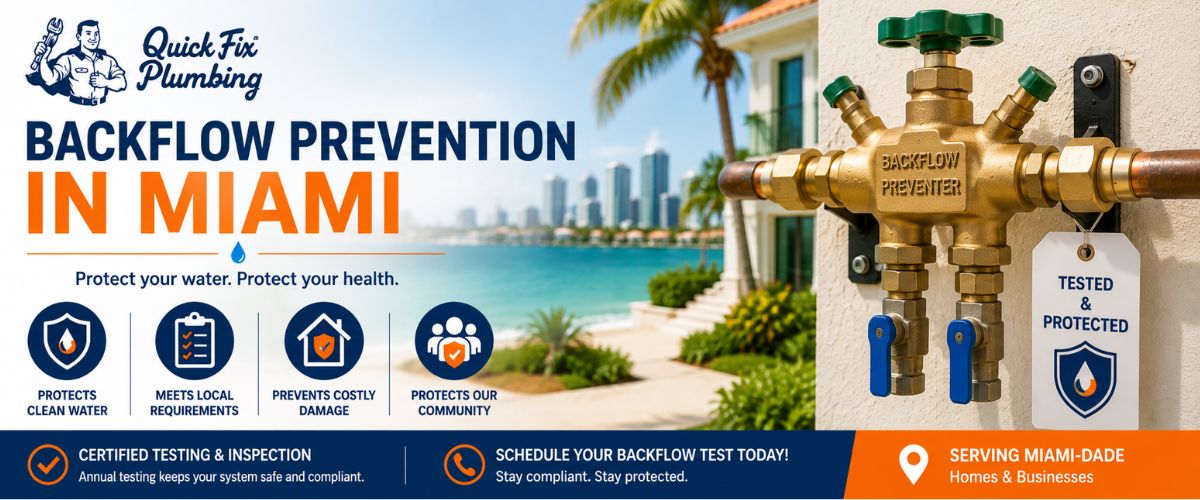
If you’re a property owner in Miami, backflow prevention is one of the most important steps you can take to protect your drinking water from contamination. Whether you own a home, commercial building, restaurant, office, or rental property, installing and maintaining a backflow prevention device helps keep your water supply safe, ensures compliance with local regulations, and prevents costly plumbing problems.
Miami’s plumbing systems face unique challenges due to aging infrastructure, high population density, seasonal storms, and fluctuating water pressure. These factors increase the risk of contaminated water flowing back into the public water supply. Understanding how backflow prevention works and knowing when to schedule inspections or repairs can help you avoid health hazards, expensive repairs, and potential compliance issues. In this guide, we’ll answer the most common questions property owners ask about backflow prevention in Miami and explain how professional plumbing services can help protect your property.
What Is Backflow Prevention?
Backflow prevention is a plumbing safety measure designed to stop contaminated water from flowing backward into your clean water supply. Normally, water flows in one direction, from the municipal water system to your faucets, appliances, and plumbing fixtures.
However, changes in water pressure can reverse this flow, allowing contaminated water to enter the potable water system. A properly installed backflow prevention device automatically prevents this from happening.
Backflow can introduce contaminants such as:
- Chemicals from lawn irrigation systems
- Fertilizers and pesticides
- Dirty water from commercial equipment
- Industrial fluids
- Bacteria and other harmful microorganisms
- Wastewater from cross-connections
Without proper protection, these contaminants can affect both your property and the surrounding public water system.
Why Is Backflow Prevention So Important in Miami?
Miami’s growing population, heavy rainfall, hurricanes, and extensive irrigation systems make backflow prevention especially important. Pressure changes caused by water main breaks, firefighting activities, or sudden water demand can create conditions where contaminated water flows backward.
For homeowners and business owners, proper backflow prevention offers several important benefits.
It Protects Your Drinking Water
The biggest advantage is protecting your family’s or employees’ health by preventing contaminated water from entering your plumbing system.
It Helps Meet Local Requirements
Certain commercial properties, irrigation systems, and specialized plumbing installations require certified backflow prevention devices and periodic testing to comply with local water authority requirements.
It Prevents Expensive Plumbing Problems
Ignoring backflow issues can result in contaminated water, damaged plumbing components, costly repairs, and potential service interruptions.
It Protects Public Health
Every properly functioning backflow preventer helps safeguard the entire community’s water supply.
How Does a Backflow Preventer Work?
A backflow prevention device acts as a one-way valve within your plumbing system.
Small Homes (1–2 Bathrooms)
Smaller properties are usually the fastest to complete because plumbers have fewer fixtures and shorter pipe runs to replace.
Under normal operating conditions:
- Clean water flows into your property.
- The valve remains open.
- Water pressure moves in the intended direction.
If pressure suddenly drops or reverses:
- The valve automatically closes.
- Contaminated water cannot flow backward.
- Your drinking water remains protected.
Different plumbing systems require different types of backflow prevention assemblies depending on the property’s specific risk level.
Which Properties Typically Need Backflow Prevention?
Many people assume only commercial buildings require backflow devices. In reality, several property types benefit from or require them.
- Residential homes with irrigation systems
- Apartment buildings
- Restaurants
- Medical facilities
- Schools
- Office buildings
- Warehouses
- Industrial facilities
- Retail centers
- Commercial kitchens
If your property contains equipment connected to the potable water system that could create a cross-connection, professional evaluation is recommended.
What Are the Signs Your Backflow Preventer May Need Service?
Backflow prevention devices should not be ignored once installed. Like any plumbing component, they require regular inspections and maintenance.
Watch for these warning signs:
- Water has an unusual taste or odor.
- Water appears cloudy or discolored.
- Reduced water pressure throughout the building.
- Leaking around the backflow device.
- Visible corrosion.
- Water backing up unexpectedly.
- Frequent plumbing pressure fluctuations.
- Device is making unusual noises.
If you notice any of these symptoms, scheduling a professional inspection promptly can help prevent larger plumbing issues.
How Often Should Backflow Devices Be Tested?
Testing frequency depends on your property’s plumbing system and local requirements. Many commercial properties and irrigation systems require periodic certified testing to verify that the device is functioning properly.
Routine testing helps:
- Detect worn components early.
- Prevent unexpected failures.
- Maintain water quality.
- Reduce emergency plumbing repairs.
- Keep your plumbing system operating safely.
If you’re unsure whether your property requires testing, a qualified plumbing professional can inspect your system and provide guidance.
You may also be interested in learning about backflow testing costs in Florida if you’re planning routine maintenance and budgeting for annual inspections.
Can Backflow Problems Affect Businesses?
Absolutely.
Commercial properties often have more complex plumbing systems than residential homes, increasing the risk of cross-connections.
Businesses commonly requiring backflow protection include:
- Restaurants
- Hotels
- Manufacturing facilities
- Medical offices
- Office buildings
- Shopping centers
- Schools
- Warehouses
A properly maintained backflow prevention system helps protect employees, customers, and business operations while reducing the risk of plumbing-related disruptions.
For larger commercial plumbing systems, working with an experienced commercial plumber in Miami can help ensure your plumbing infrastructure remains safe and compliant.
Can Homeowners Ignore Backflow Prevention?
No.
Even if your property doesn’t legally require annual testing, backflow prevention remains an important part of protecting your home’s drinking water.
Homeowners often have hidden cross-connections through:
- Garden hoses
- Swimming pools
- Irrigation systems
- Outdoor faucets
- Water softeners
- Boiler systems
Routine inspections can identify potential risks before they become expensive problems.
What Other Plumbing Problems Can Indicate Water Quality Issues?
Backflow isn’t always the only plumbing concern affecting your property’s water quality.
For example, if you notice a persistent sewer gas smell in your house, it may indicate venting problems, damaged drain lines, or sewer system issues that also deserve professional attention.
Addressing plumbing concerns early often prevents larger and more expensive repairs later.
Why Hire a Licensed Professional for Backflow Prevention?
Backflow prevention involves more than installing a valve.
A qualified plumbing professional can:
- Inspect your plumbing system.
- Identify cross-connections.
- Recommend the appropriate backflow prevention device.
- Perform repairs when needed.
- Test existing assemblies.
- Help maintain compliance with applicable regulations.
Choosing a licensed plumber in Miami-Dade gives property owners confidence that work is completed safely and according to accepted plumbing standards.
If you’re located in western Miami-Dade County, working with an experienced plumber in Doral, FL, also provides faster response times for inspections, repairs, and ongoing plumbing maintenance.
Frequently Asked Questions
What causes backflow?
Backflow usually occurs when water pressure suddenly drops or reverses due to water main breaks, heavy water usage, firefighting activities, or plumbing system failures.
Is backflow dangerous?
Yes. Backflow can introduce contaminated water containing bacteria, chemicals, fertilizers, or wastewater into your clean drinking water supply.
Does every property need a backflow preventer?
Modern repiping methods are generally far less disruptive than many homeowners expect. Professional crews focus on minimizing property impact.
How long does a backflow preventer last?
With proper maintenance and routine inspections, many backflow prevention devices provide reliable protection for many years.
Can I inspect my own backflow device?
While you can visually inspect it for leaks or visible damage, professional testing and maintenance are recommended to verify proper operation.
Final Thoughts
Backflow prevention is one of the most effective ways to protect your property’s drinking water and maintain a safe plumbing system. Whether you own a home, restaurant, office building, apartment complex, or commercial property in Miami, understanding how backflow occurs and taking preventive measures can save you from costly repairs, water contamination, and unnecessary disruptions.
Routine inspections, timely maintenance, and professional plumbing services help ensure your backflow prevention system continues to perform when it matters most. If you have questions about your property’s plumbing system or need assistance with inspections, testing, repairs, or installations, consulting an experienced plumbing professional is the best way to protect your investment and your water supply.
Protect Your Water Supply with Trusted Backflow Prevention Services in Miami
Backflow prevention isn’t just about meeting plumbing requirements; it’s about protecting your family, employees, customers, and property from contaminated water. Whether you need a new backflow prevention device installed, routine maintenance, or professional testing, working with experienced plumbers ensures your system remains safe and reliable.
Don’t wait until a backflow issue becomes a costly emergency. Contact Quick Fix Plumbing today to schedule your backflow prevention service, and let our experienced professionals help keep your property’s water clean, safe, and compliant.
