
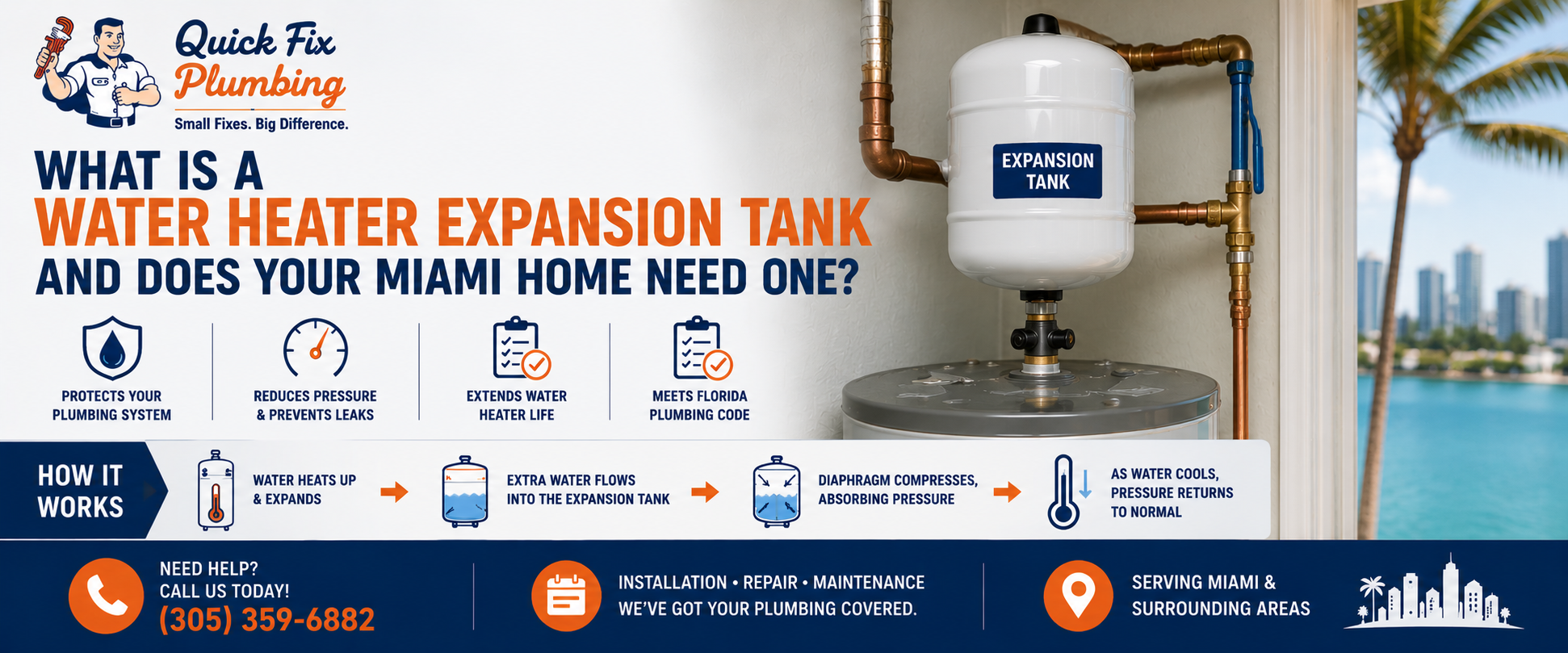
A water heater expansion tank is a small metal tank installed on your water heater’s cold water supply line that absorbs the extra pressure created when water heats up and expands. Most Miami homes with a closed plumbing system, which is the standard for newer construction and homes with a backflow preventer or check valve, do need one to stay compliant and protect the system. Below, we’ll cover exactly what it does, whether your home needs one, and what happens if you skip it.
Homeowners often discover they need one during a routine water heater installation in Miami when a technician checks the supply line for a backflow preventer or check valve. If one is present, code typically requires an expansion tank alongside it.
What Is a Water Heater Expansion Tank?
An expansion tank is a small, pressurized tank, usually about the size of a basketball, mounted near the top of your water heater. Inside, an air-filled bladder separates from the water side, giving heated water somewhere to expand into instead of pushing against your pipes.
- Size: Typically 2–5 gallons for residential systems.
- Material: Steel tank with an internal rubber bladder or diaphragm.
- Location: Mounted on the cold water line feeding into the water heater.
- Function: Absorbs pressure spikes caused by thermal expansion.
How Does a Water Heater Expansion Tank Work?
When water is heated, it expands in volume, and in a sealed plumbing system, that extra volume has nowhere to go. The expansion tank gives it somewhere safe to go instead of forcing pressure back through your pipes and fixtures.
- Heated water pushes into the tank's air-filled chamber.
- The bladder compresses, absorbing the added pressure.
- Once water cools or draws down, pressure releases back to normal.
- The cycle repeats every time the water heater runs.
Why Would My Miami Home Need One?
Florida’s building code, along with most South Florida municipalities, requires an expansion tank whenever your home has a closed plumbing system. This typically means a backflow preventer, pressure-reducing valve, or check valve is already installed on your main water line.
- Newer Miami-Dade homes almost always have a closed system by code.
- A check valve at the meter is the most common trigger for the requirement.
- Homes with a pressure-reducing valve also need an expansion tank.
- Older homes without these components may have an open system that doesn't require one, though it's worth confirming.
Does Florida Plumbing Code Require an Expansion Tank?
- Local code ties the requirement to closed systems, not water heater types.
- Both tank and tankless installations can require one, depending on the supply line setup.
- Skipping this step can affect inspection approval on new installs or major repairs.
What Happens If You Don't Have One (But Need One)?
- Pressure relief valve dripping as it releases excess pressure repeatedly.
- Shortened water heater lifespan from constant internal stress.
- Loud banging or a water heater making a rumbling noise as pressure builds and releases unevenly.
- Leaks at pipe joints or fixtures from pressure spikes finding the weakest point in the system.
What Are Signs Your Expansion Tank Is Failing?
Expansion tanks don’t last forever, and a failed one puts your system right back into the same unprotected state as having none at all. A quick check can usually confirm whether it’s still doing its job.
- Water dripping from the pressure relief valve on the water heater.
- A tank that feels heavy or sloshes when tapped, suggesting the bladder has failed.
- Visible rust or corrosion on the tank's exterior.
- Fluctuating water pressure throughout the house.
How Long Do Expansion Tanks Last?
Most expansion tanks last 5 to 10 years, though the exact lifespan depends on water pressure, water quality, and how often the water heater cycles. Regular checks during routine maintenance can catch a failing bladder before it causes bigger problems.
- Higher incoming water pressure can shorten the tank's lifespan.
- Sediment or mineral buildup in the water can accelerate wear on the bladder.
- A pre-charge check every year or two keeps the tank working as designed.
If you’re also noticing mineral buildup elsewhere in the house, it’s worth understanding the difference between a water softener vs whole house filter, since each addresses a different water quality issue that can indirectly affect tank and appliance lifespan.
Water Heater Installation vs Repair: When Do You Need an Expansion Tank Added?
Whether you need an expansion tank added often comes down to whether you’re replacing the whole unit or just repairing a component. New installations almost always require one if your system is closed, while repairs may reveal a missing or failed tank that wasn’t caught before.
- New installation: Code typically requires an expansion tank on a closed system.
- Tank replacement: A good opportunity to add one if your old system didn't have it.
- Repair visit: A dripping relief valve during a water heater repair in Miami often points to a missing or failed expansion tank.
- Tankless conversion: Supply line setup should be reassessed for expansion tank needs.
If you’re a plumber in Miami Lakes searching for local help, our technicians check for expansion tank compliance during every installation, replacement, and repair visit across Miami-Dade.
