
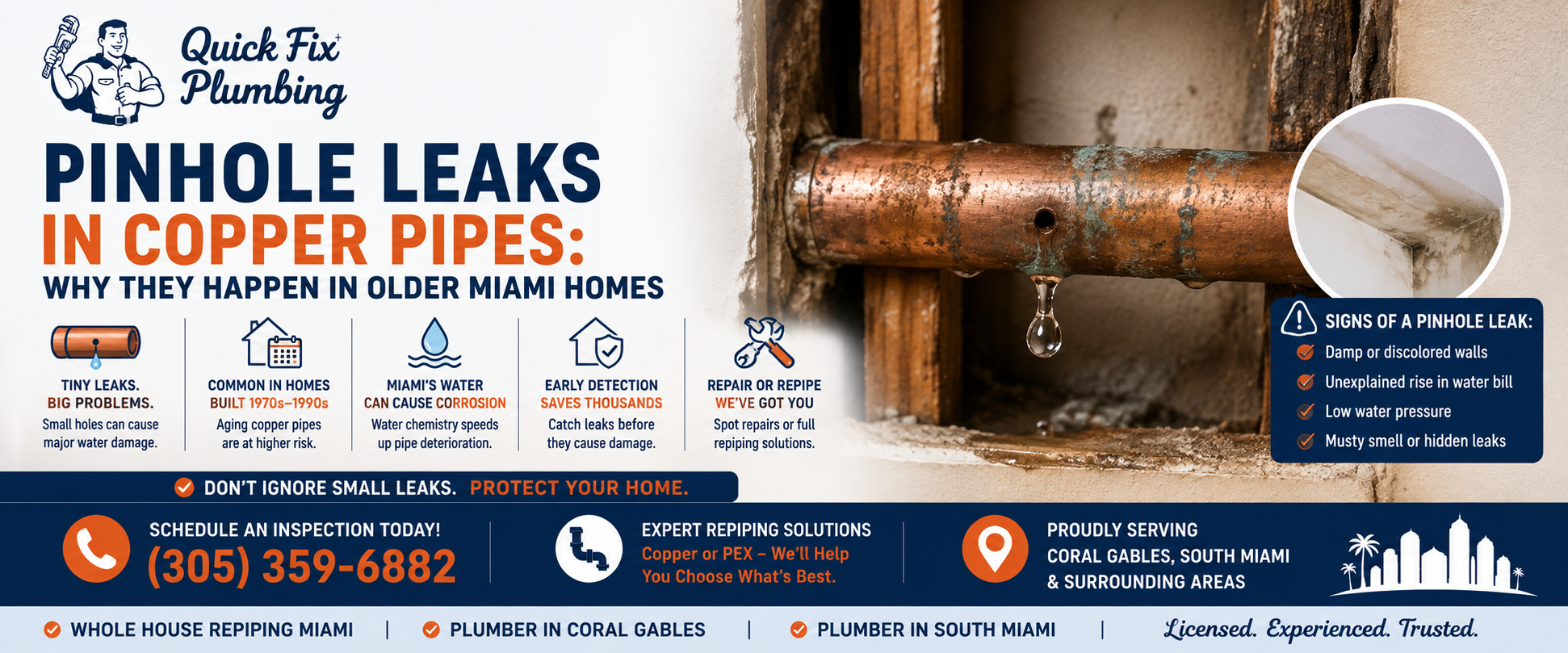
A pinhole leak in copper pipes is a tiny, pinprick-sized hole that forms from the inside out, usually caused by a chemical reaction between the pipe and Miami’s water chemistry over many years. These leaks are especially common in homes built in the 1970s through 1990s, when copper piping was standard, and they often show up as small, damp spots on walls, ceilings, or slabs long before any obvious plumbing symptom appears. Here’s why they happen so often in older Miami homes and what typically needs to happen once they do.
If you’re noticing recurring pinhole leaks across multiple pipes rather than just one isolated spot, it’s usually a sign of system-wide corrosion rather than a one-time defect, and that’s often when whole house repiping in Miami becomes the more practical long-term fix.
What Exactly Is a Pinhole Leak?
A pinhole leak is a small, localized point of failure in a copper pipe where the metal has corroded through from the inside. Unlike a burst pipe, it doesn’t happen all at once; it develops slowly, often over years, before finally breaking through.
- Size: Often smaller than a pencil tip, easy to miss at first.
- Location: Can occur anywhere along a copper line, though it's most common at joints and bends.
- Symptom: A slow drip or damp spot rather than a sudden gush of water.
- Pattern: Frequently appears in clusters once one section of pipe starts corroding.
Why Do Pinhole Leaks Happen in Older Miami Copper Pipes?
Miami’s water supply and the specific properties of copper piping installed decades ago create conditions that speed up internal corrosion. It’s rarely one single cause, usually a combination of water chemistry, pipe age, and installation factors working together.
- High water velocity inside undersized pipes can erode the internal protective layer.
- Water chemistry, including pH levels and mineral content typical of South Florida, can be mildly corrosive to copper over time.
- Flux residue left behind from soldering during original installation can create a localized corrosion point.
- Manufacturing inconsistencies in copper pipe produced during certain decades have been linked to higher pinhole leak rates.
- Electrical grounding connected to plumbing can sometimes accelerate corrosion through stray electrical currents.
Which Miami Homes Are Most at Risk?
Age and original construction era matter more than almost any other factor when it comes to pinhole leak risk. Homes built during a specific window are statistically far more likely to experience this issue than newer construction.
- Homes built between the 1970s and 1990s, when copper piping was the industry standard.
- Properties that have never had plumbing replaced or inspected since original construction.
- Homes on well water or with unusually soft or acidic water conditions.
- Properties where multiple leaks have already occurred, even if repaired individually.
How Do You Know If You Have a Pinhole Leak?
Because pinhole leaks are so small, they often go unnoticed until water damage becomes visible somewhere else in the home. Catching the early signs can save significant repair costs down the line.
- A small, damp, or discolored spot on a wall, ceiling, or floor.
- An unexplained increase in your water bill.
- A faint hissing or dripping sound inside a wall.
- Low water pressure at a single fixture, sometimes caused by mineral buildup around the leak site.
- The sound or feeling of a hidden water leak behind wall surfaces, even without any visible moisture yet.
Can a Pinhole Leak Be Repaired Without Repiping the Whole House?
A single pinhole leak can often be repaired on its own, especially if it’s an isolated incident in an otherwise healthy plumbing system. The real question is whether it’s a one-time issue or an early sign of broader corrosion.
- Spot repair: Replacing the affected section of pipe if it's an isolated leak.
- Patch and monitor: A temporary fix combined with monitoring for further leaks nearby.
- Camera inspection: Checking surrounding sections of pipe for early signs of corrosion.
- Full repipe: Recommended once multiple leaks appear, since it usually means the whole system is reaching the end of its lifespan.
What Are the Repiping Options for Older Copper Systems?
When repiping becomes the right call, homeowners typically choose between replacing copper with new copper or switching to PEX piping, which has become increasingly common in South Florida renovations. Each material comes with its own tradeoffs worth understanding before deciding.
- Copper: Durable and long-lasting, but carries the same corrosion risk under similar water conditions.
- PEX: Flexible, resistant to the type of corrosion that causes pinhole leaks, and generally faster to install.
- Cost: PEX is typically less expensive to install than copper, though copper often has a longer proven track record.
- Code considerations: Both materials are approved under Florida plumbing code, though some homeowners associations have their own preferences.
Weighing PEX vs. copper repipe options is one of the biggest decisions homeowners face once multiple pinhole leaks appear, and it’s worth discussing your specific water conditions and budget with a licensed plumber before committing either way.
How Long Does Whole House Repiping Take?
Repiping timelines vary depending on the size of the home and whether pipes are accessible through walls, attics, or slabs. Most residential repipes are completed faster than homeowners expect, especially with proper planning beforehand.
- Smaller homes often complete in 2–3 days.
- Larger or multi-story homes may take up to a week.
- Slab homes typically involve overhead repiping through attics to avoid breaking concrete.
- Drywall and patching are usually the final step after the new pipes are pressure-tested.
When Should You Call a Plumber About Pinhole Leaks?
A single small leak might not feel urgent, but pinhole leaks rarely stay isolated once corrosion starts in a copper system. Catching the pattern early is what keeps a manageable repair from turning into a major water damage claim.
- You've had more than one pinhole leak in the past year.
- You notice damp spots, discoloration, or a musty smell without an obvious source.
- Your water bill has increased without a clear explanation.
- Your home was built in the 1970s–1990s and has never been repiped or inspected.
If you’re a plumber in Coral Gables or a South Miami resident dealing with recurring leaks, our technicians can inspect your copper piping, confirm the cause, and walk you through whether a spot repair or full repipe makes more sense for your home.
Frequently Asked Questions
Are pinhole leaks covered by homeowners insurance?
Often partially, but coverage varies by policy and depends on whether the damage is considered sudden or the result of gradual wear. Check with your provider directly.
How much does whole-house repiping cost?
Cost depends on home size, pipe material chosen, and accessibility, so a licensed plumber’s on-site evaluation gives the most accurate estimate.
Is PEX better than copper for Miami homes?
PEX resists the type of internal corrosion that causes pinhole leaks, making it a popular choice for South Florida homes with older, corrosion-prone systems.
Can I just keep patching individual pinhole leaks instead of repiping?
You can, but if leaks keep recurring across different sections of pipe, ongoing patch repairs usually end up costing more than a single repipe over time.
Conclusion
A pinhole leak in copper pipes is often more than a minor plumbing issue. In many older Miami homes, recurring leaks point to aging pipes and widespread corrosion. Addressing the problem early can help prevent costly water damage, improve plumbing reliability, and determine whether a targeted repair or a full repiping solution is the best long-term investment.
Schedule a Pinhole Leak Inspection Before Small Leaks Become Big Repairs
Recurring pinhole leaks shouldn’t be ignored. Our expert plumbers in South Miami or Coral Gables inspect your copper piping, identify the source of corrosion, and recommend the most cost-effective solution, whether that’s a spot repair or whole-house repiping in Miami. Contact Quick Fix Plumbing today to protect your home from hidden water damage and future plumbing failures.
