
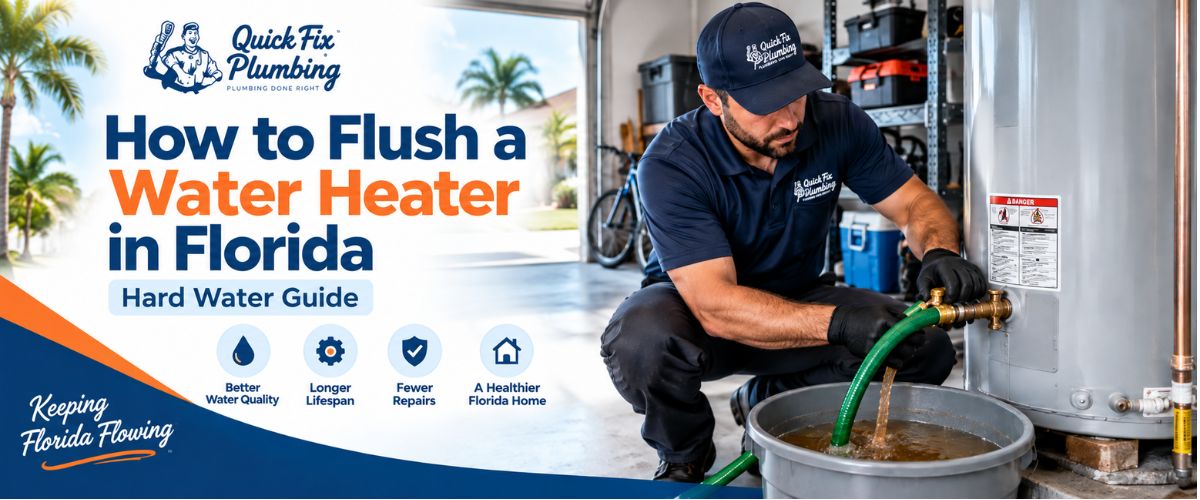
Flushing a water heater in Florida takes about 30 to 60 minutes, and in most of Miami-Dade’s hard water you should do it every six months, not once a year. Draining the sediment keeps the tank efficient, quiets that rumbling noise, and adds years to its life. Below is the full step-by-step, plus how often to flush, the warning signs, and when it’s smarter to call a pro.
Florida’s water carries heavy calcium and magnesium, and every heating cycle drops more of it to the bottom of your tank. Left alone, that layer hardens like scale and forces the heater to work harder. The same minerals that wear down your home’s plumbing also collect fastest inside a water heater, which is why regular flushing matters more here than up north.
Why Florida Hard Water Makes Flushing Essential
A tank water heater fills with the same mineral-heavy water that comes out of your taps. As it heats, the calcium and magnesium separate and settle on the tank floor, right over the burner or lower heating element. That sediment acts like an insulating blanket the heater has to fight through.
The result is longer heating cycles, higher power bills, and a shorter tank life. In hard-water regions, sediment builds up roughly twice as fast as in soft-water areas, which is why national “flush once a year” advice falls short for Miami homes.
Not a DIY Person?
Our licensed plumbers flush water heaters across Miami the same day you call. Skip the hassle and mess with professional service you can trust.
Signs Your Water Heater Needs a Flush
Your tank usually warns you before it fails. Watch for these signs:
- A rumbling, popping, or crackling sound when the heater runs
- Rusty, brown, or cloudy hot water — which can also point to a leak worth checking with electronic detection
- Less hot water than the tank used to deliver
- Hot water that runs out faster than it should
- A higher power bill with no change in your habits
Any one of these is a good reason to flush the tank soon, before the sediment hardens into a mass a standard drain valve can’t clear.
What You'll Need Before You Start
Gather these first — the job is simple but you don’t want to stop halfway:
Check:
- A standard garden hose
- Heat-resistant gloves (the water drains out hot)
- A flathead screwdriver, in case the drain valve needs one
- A bucket or a clear path to a floor drain or outside
Set aside 30 to 60 minutes, and give the tank an hour to cool first if you want to avoid scalding-hot water.
How to Flush a Water Heater: Step-by-Step
Here is the exact process a professional follows. Take the steps in order and don’t skip the safety points.
- Turn off the power or gas. For an electric heater, switch off its breaker. For a gas heater, set the thermostat to "pilot" or shut off the gas supply. Never drain a tank with the power still heating an empty element.
- Shut off the cold water valve at the top of the tank. This stops new water from refilling it while you drain.
- Open a hot water faucet somewhere in the house. This lets air into the system so the tank drains smoothly.
- Attach the garden hose to the drain valve near the bottom of the tank. Run the other end to a bucket, floor drain, driveway, or outside.
- Open the drain valve and let the tank empty completely. The water will be hot, so keep gloves on and hands clear.
- Once drained, turn the cold water valve on in short bursts. This stirs up leftover sediment and rinses it out through the hose.
- Repeat the cold-water bursts until the water runs clear with no grit or brown tint.
- Close the drain valve, remove the hose, and turn the cold water supply back on fully. Let the tank refill.
- Restore power or gas. Close the hot faucet once water flows steadily, and give the tank time to reheat before use.

Safety Note
Water leaves the tank hot enough to burn. If a valve is stuck, the tank won't drain, or a pipe bursts during the process, stop and call an emergency plumber right away.
How Often Should You Flush a Water Heater in Florida?
The national baseline is once a year, but that assumes average water. Florida’s hard water changes the math. Here’s a clear comparison:
| Water Type | Flush Frequency |
Why |
|---|---|---|
| Soft / treated water | Once a year | Sediment builds slowly |
| Hard water (most of Miami-Dade) | Every 6 months | Calcium and magnesium build up about twice as fast |
| Very hard water + heavy use | Every 4 months | Sediment hardens quickly and can clog the valve |
If you’re not sure how hard your water is, a rumbling tank or scale on your faucets is a reliable clue. Pairing a flush with routine drain and pipe maintenance keeps your whole system running clean through Florida’s heavy-use summer months.
Tank vs. Tankless: What's Different in Florida
The steps above are for a standard tank heater. A tankless unit doesn’t store water, so it isn’t drained — it’s descaled instead. You circulate a vinegar or manufacturer solution through the unit to dissolve the mineral scale that Florida’s hard water leaves inside the heat exchanger.
Tankless heaters still need this at least once a year here, and more often on hard water. The goal is the same as a flush: clear the mineral buildup before it chokes performance.
When to Call a Professional
A yearly flush is a manageable DIY job for most homeowners. Call a pro when:
- The tank hasn't been flushed in several years and sediment has likely hardened
- The drain valve is stuck, leaking, or won't fully close
- Your tank is 8 to 12 years old and you want it inspected, not just flushed
- You'd rather have the anode rod and pressure valve checked at the same time
A professional water heater service clears buildup a standard flush can’t reach and catches small problems before they become a cold-shower emergency.
Ready to Book a Professional Flush?
Get same-day service, upfront pricing, and a cleaner running water heater all year.
Frequently Asked Questions
How often should I flush my water heater in Florida?
In most of Miami-Dade’s hard water, flush the tank every six months. Homes with very hard water or heavy use may need it every four months, while soft or treated water can go a full year.
How long does it take to flush a water heater?
The full process takes about 30 to 60 minutes, including drain time. Letting the tank cool first adds an hour but reduces the risk of scalding water.
Can flushing damage an old water heater?
It can if the sediment has already hardened into a solid mass, which may clog or crack a fragile valve. If your tank is old and has never been flushed, have a professional handle the first one.
Does Florida hard water shorten water heater life?
Yes. Faster sediment buildup makes the heater work harder and can corrode the tank from the bottom up, cutting years off its lifespan without regular flushing.
What are the signs my water heater needs flushing?
Listen for rumbling or popping sounds, watch for rusty or cloudy hot water, and note if you’re getting less hot water or a higher power bill than usual.
Keep Your Hot Water Running in Florida
Flushing your water heater every six months is one of the cheapest ways to protect it from Florida’s hard water. Do it yourself with the steps above, or leave it to a pro who can flush, inspect, and service the tank in one visit. Our licensed plumbers across Miami-Dade handle both routine flushes and full water heater repairs, day or night.
