
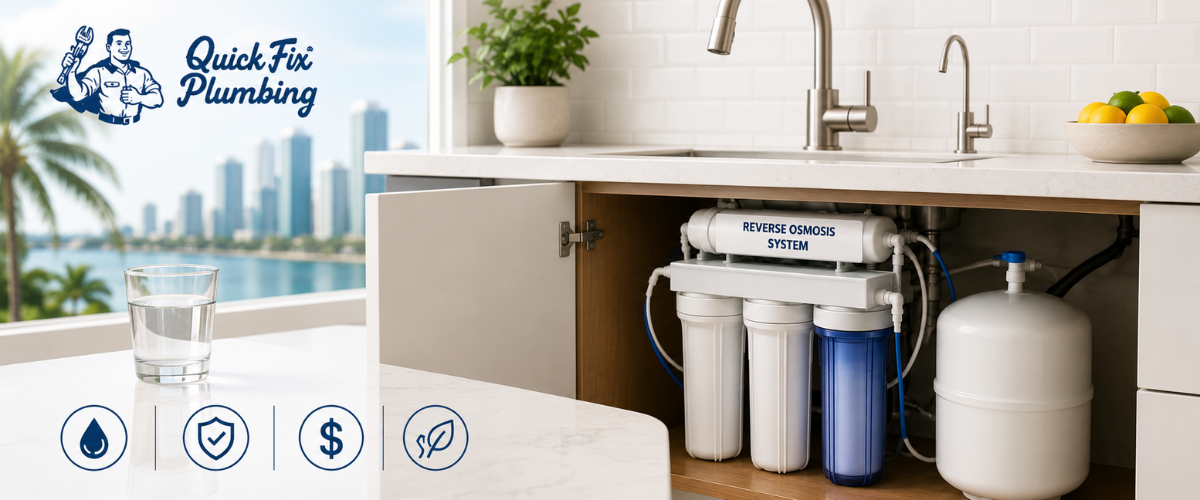
For most Florida homes, yes, a reverse osmosis system is worth it, especially if your tap water tastes off, leaves spots on glasses, or you’re already buying bottled water every week. The bigger question isn’t whether RO works. It’s whether your specific water and your specific budget make it worth the investment.
Florida’s water is a strange mix. Depending on your zip code, you’re dealing with limestone-filtered groundwater, heavy chlorination, or aging pipes feeding water into homes that were built decades before anyone worried about lead or sediment. Before you drop money on a system, it helps to actually understand what you’re paying for. And if you’re already noticing scale buildup on fixtures or a mineral smell from the tap, that’s usually a sign it’s worth having a professional look at your setup, the same way you’d want a proper water heater installation in Miami done right instead of guessing at it yourself.
In this blog, we will discuss: Is reverse osmosis worth it in Florida? Look at the cost, water quality, and savings.
Key Takeaways
- Reverse osmosis removes far more contaminants than a standard pitcher filter, including lead, chlorine byproducts, and dissolved solids common in Florida tap water.
- Most homeowners pay between $200 and $600 for a quality under-sink RO system, plus modest annual filter costs.
- RO water tends to taste noticeably cleaner, which matters in areas with heavy chlorination or well-water sulfur smells.
- Savings show up fastest for households currently buying bottled water regularly.
- Not every home needs it. If your water already tests clean, you might be solving a problem you don't have.
What Reverse Osmosis Actually Does to Your Water
Here’s the simple version. Water gets pushed through a semi-permeable membrane under pressure, and that membrane physically blocks particles, minerals, and contaminants too large to pass through. What comes out the other side is stripped-down, clean water.
Compare that to a basic carbon filter, the kind in most refrigerator dispensers, which mostly improves taste and smell but doesn’t touch dissolved solids the way RO does. It’s the difference between wiping a dusty shelf and actually vacuuming the whole room.
Why Florida Water Makes This Question More Relevant
Hard Water Is Common Across the State
Florida sits on a lot of limestone, and limestone means calcium and magnesium leaching into groundwater. That’s what causes the white, chalky buildup on faucets and showerheads. RO systems handle this well, though for whole-house hardness issues, people often compare a water softener vs. a whole-house filter before landing on the right combination for their home.
Chlorine and Chloramine Levels
Municipal water in South Florida is treated heavily to keep it safe, which is a good thing for public health but not always great for taste. RO strips out chlorine byproducts along with everything else, which is usually the first thing people notice once they switch.
Aging Pipes in Older Homes
Homes built before the 1980s sometimes still run on original galvanized or cast iron plumbing. Over time, those pipes corrode from the inside, and that corrosion doesn’t stay put. If you’ve ever turned on the tap and gotten a rusty tint, you already know one of the more common brown water from tap causes, and no amount of filtering fixes water quality if the pipe itself is the source.
The Real Cost Breakdown
Let’s talk numbers, because “worth it” only means something once you know what you’re actually spending.
- Under-sink RO system: $200–$600 for the unit itself, depending on stages and brand.
- Professional installation: Usually a flat labor cost, worth it to avoid leaks under the cabinet.
- Filter replacements: $50–$150 per year, depending on usage and water quality.
- Membrane replacement: Every 2–3 years, typically $30–$80.
Compare that to bottled water. A family of four easily spends $30–$50 a month on cases of water. Over a year, that’s $360–$600, right around what an entire RO system costs upfront. After year one, you’re basically drinking for free.
What You Gain (Beyond Just Taste)
- Cleaner drinking and cooking water, since RO pulls out sediment and dissolved solids that affect flavor.
- Less scale buildup on coffee makers, kettles, and ice machines.
- Peace of mind if your home has older plumbing or you're on well water.
- Fewer plastic bottles, which your recycling bin will thank you for.
When It Might Not Be Worth It
Not every home needs one, and it’s worth being honest about that. If you’ve had your water tested and it comes back clean, if you’re on a newer municipal system with minimal hardness, or if you’re just chasing a trend without an actual problem, RO might be overkill.
The smartest move before spending anything is getting your water tested first. That tells you exactly what you’re dealing with instead of guessing.
A Quick Story From Our Service Calls
We had a homeowner in Aventura convinced her water was “just Florida water,” the usual chlorine smell everyone complains about. Turned out her actual issue was a corroding section of galvanized pipe feeding her kitchen, not something RO alone was going to fix. Once that section got replaced, her water cleared up on its own. If something feels off with your water and you’re not sure what’s causing it, a plumber in Aventura FL, can usually tell within one visit whether it’s a filtration issue or a pipe issue.
We’ve seen the opposite too. A homeowner in Weston had perfectly fine pipes but well-fed water with a strong mineral taste that no amount of cleaning could touch. RO was exactly the right call there. If you’re unsure which category your home falls into, a plumber in Weston FL, can run through both possibilities before you spend money on the wrong fix.
So, Is It Worth It?
For most Florida households dealing with hard water, chlorine taste, or aging plumbing, yes, reverse osmosis pays for itself within a year or two, especially once you factor in what you’re not spending on bottled water anymore. The trick is figuring out whether RO alone solves your problem, or whether there’s a pipe or hardness issue underneath it that needs handling first.
That’s really the whole point of getting a professional opinion before you buy anything. Quick Fix Plumbing offers free water quality testing across Miami-Dade, so you’ll know exactly what’s in your water and what actually fixes it, instead of installing a system and hoping for the best.
Frequently Asked Questions
Does reverse osmosis remove all contaminants from Florida tap water?
It removes the vast majority, including lead, chlorine byproducts, and dissolved minerals, though it won’t fix a corroding pipe that’s the actual source of the problem.
How long does an RO system last?
The system itself can last 10–15 years with proper maintenance, while filters and membranes need replacing every few months to a few years depending on the component.
Is reverse osmosis better than a water softener for Florida homes?
They solve different problems; RO improves drinking water purity, while a softener targets whole-house hardness, so many homes benefit from both.
Can I install a reverse osmosis system myself?
You can, but professional installation reduces the risk of leaks under the sink and ensures the system is sized correctly for your home’s water pressure.
Conclusion
Reverse osmosis genuinely pays off for most Florida homes, but only once you know what’s actually in your water. Test first, then decide. Skip that step, and you might fix a taste problem while a bigger pipe issue keeps brewing underneath. Get the full picture before you spend a dime on filtration.
Ready to find out what’s really in your tap water? Call Quick Fix Plumbing at (305) 359-6882 for free water quality testing across Miami-Dade, or book online today.
