
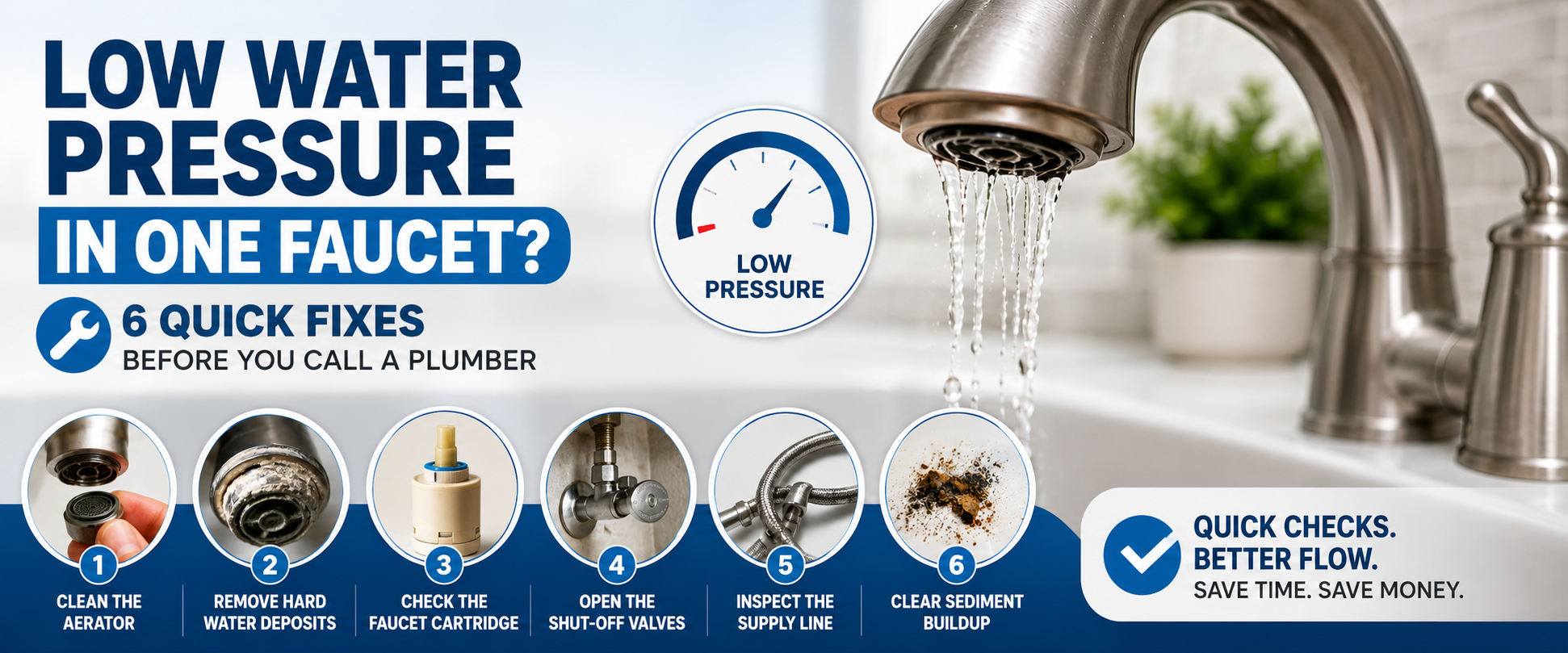
If you have low water pressure in one faucet while the rest of your home has normal water flow, the problem is usually isolated to that fixture rather than your entire plumbing system. In many cases, a clogged aerator, faulty cartridge, partially closed shut-off valve, or mineral buildup can be fixed without major plumbing work.
Before scheduling a service call, there are several quick troubleshooting steps you can take. This guide answers the most common homeowner questions, explains the likely causes, and shows you when it is time to call a professional plumber.
Why Do I Have Low Water Pressure in One Faucet?
When only one faucet experiences weak water flow, the issue is typically located within the faucet assembly or its immediate water supply line.
Unlike whole-house pressure problems, a single-faucet issue often indicates a localized blockage or worn component. Identifying the root cause early can prevent unnecessary repairs and help restore proper performance faster.
Common causes include:
- Clogged faucet aerator
- Mineral buildup from hard water
- Faulty faucet cartridge
- Partially closed shut-off valve
- Damaged supply line
- Sediment accumulation inside the faucet
- Internal faucet wear and tear
Quick Fix #1: Is the Faucet Aerator Clogged?
The faucet aerator is the most common reason for low water pressure in one-faucet situations. It sits at the tip of the faucet and controls water flow while reducing splashing.
Over time, debris, sediment, and mineral deposits collect inside the aerator, restricting water movement.
How to Check the Aerator
A clogged aerator can often be cleaned in less than 15 minutes.
Follow these steps:
- Unscrew the aerator from the faucet tip
- Inspect the screen for debris
- Soak it in vinegar for 30–60 minutes
- Rinse thoroughly
- Reinstall and test the water flow
If pressure improves immediately, you’ve likely solved the problem.
Quick Fix #2: Could Hard Water Deposits Be Restricting Flow?
Many plumbing systems experience mineral accumulation over time. Calcium and magnesium deposits gradually narrow internal water pathways.
This is especially common in older plumbing fixtures and homes with untreated water.
Signs of hard water buildup include:
- White chalky residue around faucets
- Reduced water flow
- Uneven spray patterns
- Frequent fixture clogs
If mineral buildup appears throughout your plumbing system, you may also want to explore issues related to hard water damaging pipes, as prolonged exposure can affect fixture performance and pipe longevity.
Quick Fix #3: Is the Faucet Cartridge Failing?
Inside most modern faucets is a cartridge that regulates water flow and temperature. When the cartridge becomes worn or clogged, pressure can drop significantly.
A damaged cartridge often causes symptoms that resemble larger plumbing issues.
Common signs include:
- Reduced hot and cold water flow
- Stiff faucet handle movement
- Uneven water pressure
- Dripping after shut-off
Quick Fix #4: Are the Shut-Off Valves Fully Open?
Many homeowners overlook the shut-off valves located beneath sinks. During previous repairs or maintenance, these valves may have been partially closed and never fully reopened.
Even a slight restriction can noticeably reduce water pressure.
How to Inspect Shut-Off Valves
Before assuming a major plumbing problem exists, check these components carefully.
Steps:
- Locate the valves beneath the sink
- Turn them counterclockwise
- Ensure they are fully open
- Test the water pressure afterward
If pressure returns, the issue may have been resolved in minutes.
For homeowners experiencing kitchen fixture issues, professional sink repair Miami services can help diagnose hidden restrictions and supply line problems.
Quick Fix #5: Could the Supply Line Be Blocked or Kinked?
The flexible water supply line connecting the faucet to the plumbing system can become damaged over time.
A kinked, bent, or partially blocked supply line may reduce water flow without affecting other fixtures in the home.
Things to inspect:
- Visible bends in the line
- Corrosion around fittings
- Signs of leakage
- Mineral buildup near connections
If the line shows signs of deterioration, replacement may be necessary.
Quick Fix #6: Is Sediment Trapped Inside the Faucet?
After municipal water work, pipe repairs, or aging plumbing systems, sediment can travel through water lines and become lodged inside faucet components.
This issue is frequently mistaken for a pressure problem originating elsewhere in the home.
Potential warning signs include:
- Sudden pressure loss
- Discolored water
- Intermittent flow
- Debris visible in aerators
A professional inspection can determine whether sediment is isolated to the faucet or is affecting multiple fixtures.
When Should You Call a Professional Plumber?
DIY troubleshooting works well for simple blockages and minor fixture issues. However, some pressure problems indicate deeper plumbing concerns.
You should contact a plumber if:
- Multiple repairs fail to restore pressure
- Water pressure continues to decline
- Leaks develop around the faucet
- Pipes make unusual noises
- Water quality changes
- Pressure issues spread to other fixtures
Professional diagnostics can identify hidden pipe restrictions, valve failures, and water supply issues before they become expensive repairs.
If low pressure occurs in bathroom fixtures, our shower repair Miami service can help identify underlying causes and restore reliable water flow.
Property owners in northern Miami-Dade communities can also benefit from working with an experienced plumber in Aventura, FL, when advanced diagnostics are required.
Can Low Water Pressure Lead to Bigger Plumbing Problems?
In some situations, yes.
Persistent pressure issues may indicate developing plumbing failures that worsen over time. Ignoring the symptoms can lead to more extensive repairs later.
Potential consequences include:
- Hidden leaks
- Fixture damage
- Increased water waste
- Pipe corrosion
- Water supply restrictions
Frequently Asked Questions
Can a clogged aerator really cause low water pressure in one faucet?
Why does only my kitchen faucet have low pressure?
Can hard water affect faucet pressure?
Yes. Mineral buildup from hard water can gradually reduce water flow through aerators, cartridges, and supply lines.
Should I replace the faucet if the pressure is low?
How much does it cost to fix low water pressure in one faucet?
Final Thoughts
Most cases of low water pressure in one faucet are caused by localized issues rather than major plumbing failures. Starting with simple checks such as cleaning the aerator, inspecting shut-off valves, and examining supply lines can often restore normal water flow quickly.
If these fixes do not solve the problem, professional diagnosis is the safest way to identify hidden restrictions, damaged components, or developing plumbing issues. Quick action helps prevent further damage, protects your plumbing system, and ensures your fixtures continue operating efficiently.
Need Professional Help Fixing Low Water Pressure in One Faucet?
At Quick Fix Plumbing, our experienced technicians identify the root cause of water pressure problems and provide reliable solutions tailored to your home’s plumbing system.
Don’t wait for a minor pressure problem to turn into a costly plumbing repair. Contact Quick Fix Plumbing today to schedule an inspection and get your water flowing properly again.
