
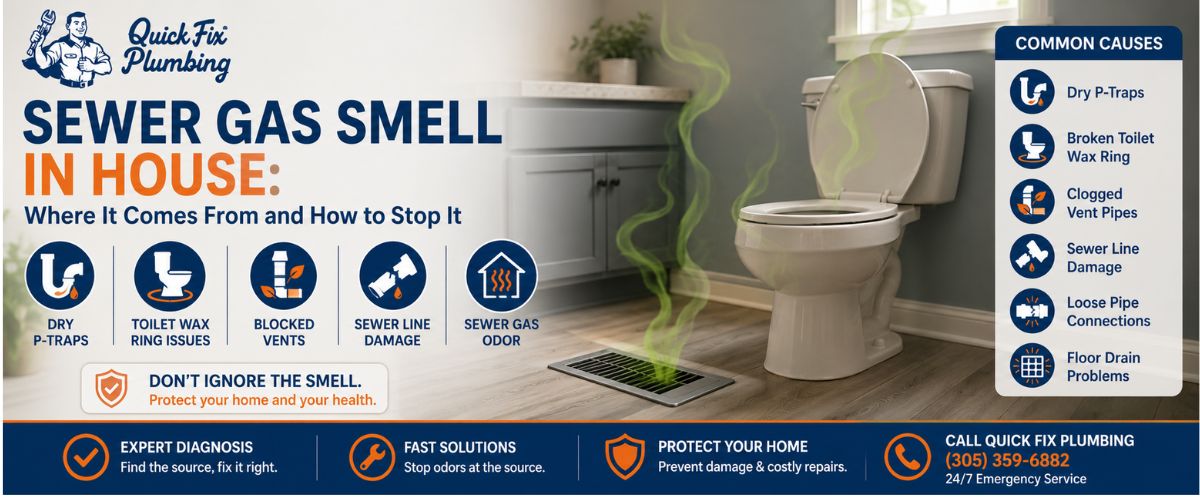
If you notice a sewer gas smell in your house, it usually means sewer gases are escaping somewhere in your plumbing system due to a dry drain trap, damaged sewer line, blocked vent pipe, or faulty plumbing fixture. While some causes are simple to fix, persistent sewer odors should never be ignored because they often indicate a plumbing issue that requires professional attention before it leads to more expensive repairs.
That unpleasant, rotten egg or sewage odor can quickly make your home uncomfortable and raise concerns about your family’s health. Many property owners assume the smell is coming from the sewer itself, but the source is often much closer than expected. Understanding why sewer gas enters your home is the first step toward eliminating the odor permanently. In this guide, we’ll answer the most common questions homeowners ask about sewer gas smells, explain what causes them, discuss what you can safely check yourself, and help you determine when it’s time to contact a professional plumber.
What Is Sewer Gas?
Before identifying the source of the odor, it’s important to understand what sewer gas actually is. Knowing where it comes from makes it much easier to identify the problem before it becomes serious.
Sewer gas is a mixture of gases produced when organic waste breaks down inside sewer pipes. It commonly contains:
- Methane
- Hydrogen sulfide (responsible for the rotten egg smell)
- Carbon dioxide
- Ammonia
- Small amounts of other gases
A properly functioning plumbing system keeps these gases safely inside your drain and sewer pipes. If you’re smelling them indoors, something is preventing your plumbing system from sealing or venting correctly.
Why Does My House Smell Like Sewer Gas?
Several plumbing issues can allow sewer gas to escape into your home. Some are simple maintenance problems, while others require professional diagnosis.
Common causes include:
- Dry P-traps
- Cracked or damaged drain pipes
- Broken toilet wax ring
- Clogged plumbing vent
- Sewer line damage
- Loose pipe connections
- Floor drain problems
- Improper plumbing installation
Even if the odor comes and goes, it’s worth investigating. Intermittent smells often indicate an issue that’s gradually getting worse.
How Do Dry P-Traps Cause Sewer Gas Smells?
One of the most common and easiest to fix causes of sewer odors is a dry P-trap. This problem frequently occurs in guest bathrooms, laundry rooms, or drains that aren’t used regularly.
A P-trap is the curved section of pipe beneath sinks, tubs, and floor drains. It holds water, creating a barrier that prevents sewer gases from entering your home.
Signs of a dry trap include:
- Odor near an unused sink
- A smell is coming from a shower drain
- Sewer odor in a guest bathroom
- Smell near the basement floor drains
How to Fix It
Fortunately, this issue is often simple to resolve.
- Run water for 30–60 seconds.
- Pour a small amount of mineral oil into the drain to slow evaporation.
- Repeat every few weeks for infrequently used drains.
If the smell returns quickly, another plumbing issue may be present.
Can a Broken Toilet Cause Sewer Gas?
Your toilet creates an airtight seal between your bathroom and the sewer system. When that seal fails, sewer gases can leak into your home.
Common warning signs include:
- Sewer smell around the toilet
- The toilet rocks when you sit down
- Water is leaking around the base
- Loose toilet bolts
In many cases, the wax ring beneath the toilet has deteriorated and needs replacement. If your toilet is leaking or smells consistently, scheduling toilet repair in Miami can help prevent water damage and eliminate sewer odors before they worsen.
Can a Blocked Plumbing Vent Cause Sewer Odors?
Your plumbing vent system allows sewer gases to exit safely through the roof while maintaining proper air pressure in your drains.
When the vent becomes blocked by:
- Leaves
- Bird nests
- Debris
- Storm damage
airflow becomes restricted, causing sewer gases to back up into your home.
airflow becomes restricted, causing sewer gases to back up into your home.
Common symptoms include:
- Slow drains
- Gurgling toilets
- Bubbling sink drains
- Sewer odor after flushing
Because roof vent inspections can be hazardous, it’s generally safer to have a licensed plumber inspect and clear the blockage.
Could My Sewer Line Be the Problem?
Sometimes the smell isn’t coming from a drain at all. Instead, the sewer line connecting your home to the municipal sewer system may be damaged.
Potential causes include:
- Tree root intrusion
- Pipe corrosion
- Ground movement
- Aging sewer pipes
- Cracked underground piping
Warning signs include:
- Persistent sewer smell indoors
- Sewage odors outside your home
- Multiple slow drains
- Frequent drain backups
- Wet patches in the yard
If these symptoms occur together, professional sewer line repair in Miami may be necessary to identify and correct the issue before it escalates.
Is Sewer Gas Dangerous?
Many homeowners worry about the health risks associated with sewer odors. While occasional exposure isn’t typically dangerous, ongoing sewer gas leaks shouldn’t be ignored.
Possible effects include:
- Headaches
- Nausea
- Eye irritation
- Dizziness
- Respiratory discomfort
High concentrations of sewer gas are uncommon in residential properties, but persistent odors indicate your plumbing system isn’t functioning properly.
What Can I Check Before Calling a Plumber?
Not every sewer smell requires immediate repairs. There are several safe troubleshooting steps property owners can perform first.
Start with these checks:
- Run water into every drain.
- Inspect under sinks for leaks.
- Check around toilet bases.
- Look for visible drain damage.
- Clean overflow openings in bathroom sinks.
- Verify floor drains contain water.
If the odor disappears after these steps, you’ve likely identified the issue. If not, further inspection is recommended.
When Should I Call a Professional Plumber?
Some plumbing problems simply can’t be diagnosed without specialized equipment.
Call a plumber if you notice:
- Sewer smell lasting several days
- Multiple drains producing odors
- Sewage backups
- Water leaks
- Frequent drain clogs
- Sewer odors inside and outside the home
Professional camera inspections and diagnostic tools can locate hidden plumbing defects without unnecessary excavation.
If you’re looking for an experienced plumber in Homestead FL, choosing a licensed plumbing professional ensures the underlying problem is accurately diagnosed instead of temporarily masked.
How Can You Prevent Sewer Gas Smells?
Preventive maintenance is the best way to keep sewer odors from returning.
Simple prevention tips include:
- Run water through unused drains monthly.
- Schedule routine plumbing inspections.
- Repair leaking fixtures promptly.
- Avoid flushing grease and wipes.
- Keep plumbing vents clear.
- Address slow drains before they worsen.
Routine maintenance helps identify small issues before they become costly repairs.
Related Plumbing Issues You Shouldn't Ignore
Some plumbing symptoms may seem unrelated, but can point to larger system problems. Understanding these warning signs can help you address issues before they escalate.
If your sump pump smells like sewage, the odor may indicate drainage problems, improper venting, or sewer gas entering through the sump system.
Similarly, if you’ve noticed discolored tap water, learning about brown water from tap causes can help determine whether the issue stems from aging pipes, sediment buildup, or municipal water supply conditions.
Frequently Asked Questions
Why does my house smell like sewer gas only at night?
Temperature changes and reduced water usage can make sewer odors more noticeable during the evening. Dry drain traps or venting issues are common causes.
Why does my bathroom smell like sewage even after cleaning?
Cleaning removes surface odors but won’t fix plumbing issues such as a failed wax ring, blocked vent, or dry drain trap.
Will sewer gas smell go away on its own?
Sometimes, adding water to a dry drain trap eliminates the odor. However, recurring smells usually indicate a plumbing issue that requires further inspection.
Is a sewer smell always a sewer line problem?
No. Many sewer odors originate from fixtures inside the home rather than the main sewer line. A professional inspection can determine the exact source.
Can I use air fresheners to solve the problem?
Air fresheners only mask the smell. They don’t address the underlying plumbing issue that’s allowing sewer gas to enter your home.
Final Thoughts
A sewer gas smell in the house is more than just an unpleasant odor; it signals that something in your plumbing system isn’t working as intended. While simple issues like dry drain traps can often be resolved quickly, persistent sewer smells may point to damaged sewer lines, blocked vents, leaking drain pipes, or failing plumbing fixtures. Ignoring these warning signs can lead to more extensive repairs, unpleasant living conditions, and unnecessary expenses.
Eliminate Sewer Gas Smells Before They Turn Into Costly Plumbing Problems
If a sewer gas smell keeps returning, don’t ignore it. The experienced team at Quick Fix Plumbing can identify the source, whether it’s a dry trap, blocked vent, damaged sewer line, or faulty plumbing fixture, and provide the right solution. From professional drain diagnostics to sewer line and toilet repairs, we’re committed to restoring a clean, safe, and odor-free home. Contact Quick Fix Plumbing today to schedule an inspection and get your plumbing system back to working at its best.
