
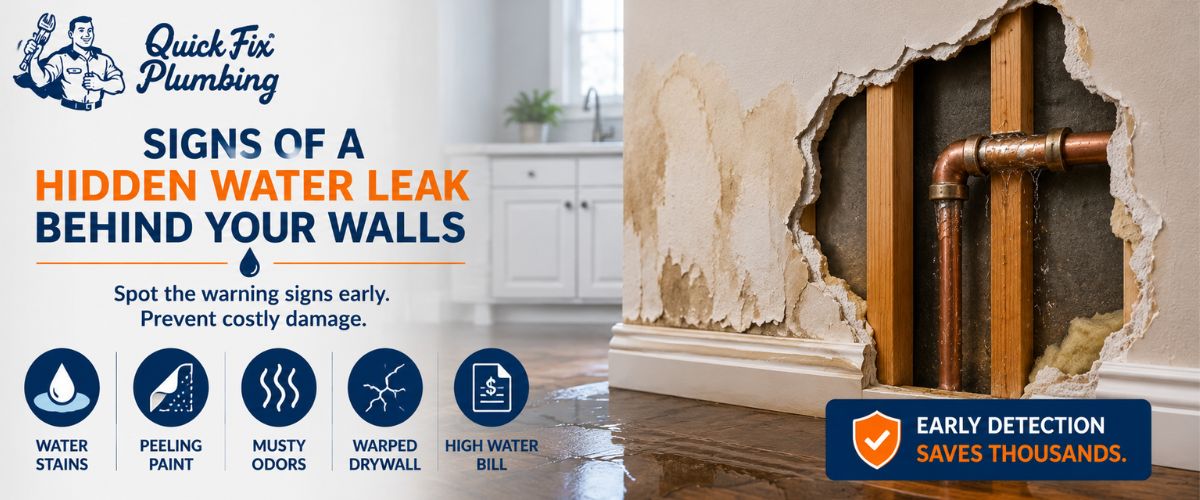
A hidden water leak behind a wall can often be identified by water stains, peeling paint, musty odors, warped drywall, mold growth, or an unexplained increase in your water bill. Detecting these warning signs early and scheduling professional leak detection can prevent costly structural damage, mold remediation, and extensive drywall replacement.
For property owners in South Florida, hidden plumbing leaks are especially concerning because the region’s humidity creates the perfect environment for moisture-related problems to spread quickly. Whether the leak comes from a deteriorating pipe, a loose plumbing connection, or a small crack hidden inside the wall cavity, recognizing the warning signs early can save thousands of dollars in repairs.
This guide answers the most common questions property owners ask about hidden wall leaks and explains why they happen. It also helps you recognize when it’s time to contact professionals for leak detection in Miami before drywall, insulation, and structural components suffer permanent damage.
What Causes a Hidden Water Leak Behind a Wall?
Most hidden plumbing leaks don’t happen overnight. They usually develop slowly as plumbing materials age, water pressure fluctuates, or pipe joints begin to fail. Understanding the common causes can help you recognize problems before they become expensive emergencies.
Some causes are impossible to spot without specialized equipment, while others leave subtle clues long before visible water damage appears.
Common causes include:
- Aging or corroded plumbing pipes
- Loose or deteriorating pipe fittings
- High water pressure stressing plumbing connections
- Corrosion inside copper or galvanized pipes
- Cracked water supply lines
- Frozen or expanding pipes in colder climates
- Improper plumbing installation
- Slab movement causing pipe stress
- Small punctures from nails or screws during renovations
Even a tiny leak can release gallons of water over several days or weeks. Since the leak remains trapped behind drywall, homeowners often discover it only after cosmetic damage becomes visible.
What Are the First Signs of a Hidden Water Leak Behind a Wall?
The earliest warning signs are often subtle. Many property owners mistake them for normal wear and tear, allowing the leak to continue, causing hidden damage.
Paying attention to these changes can help you schedule a professional inspection before repairs become significantly more expensive.
1. Why Are Water Stains Appearing on My Walls?
Water stains are usually one of the first visible indicators of a hidden water leak behind the wall. Moisture travels through drywall before eventually surfacing as discoloration.
Look for:
- Yellow stains
- Brown rings
- Dark patches
- Expanding water spots
- Uneven discoloration
2. Why Is My Paint Bubbling or Peeling?
Drywall absorbs moisture like a sponge. As moisture builds inside the wall, paint gradually loses adhesion and begins separating from the surface.
Common warning signs include:
- Bubbling paint
- Peeling paint
- Flaking texture
- Cracked wall finishes
- Wallpaper lifting away from the wall
Many people repaint these areas without fixing the plumbing issue, only to watch the damage return weeks later.
3. Why Does My House Smell Musty Even After Cleaning?
Persistent musty odors usually indicate moisture trapped somewhere inside the home. Hidden plumbing leaks create damp environments where mold and mildew thrive behind drywall.
Watch for odors that:
- Become stronger after showers
- Increase during humid weather
- Stay in one specific room
- Return shortly after cleaning
- Seem strongest near plumbing fixtures
4. Why Is My Drywall Soft or Warped?
Drywall is highly vulnerable to prolonged moisture exposure. As water accumulates behind the wall, drywall begins losing structural strength.
Signs include:
- Soft spots
- Bulging walls
- Sagging drywall
- Warped surfaces
- Crumbling drywall corners
5. Why Has My Water Bill Suddenly Increased?
One of the most overlooked signs of a hidden plumbing leak is a water bill that rises without any change in household water usage.
A hidden leak may continuously waste water every hour of the day, even when every faucet is turned off.
Ask yourself:
- Has your water usage stayed the same?
- Have your utility bills increased unexpectedly?
- Is your irrigation system operating normally?
- Have you noticed no obvious plumbing leaks?
Can a Hidden Wall Leak Cause Mold Growth?
Absolutely. Mold requires three things to grow: moisture, warmth, and organic material. A leaking pipe behind drywall provides all three.
Because mold develops out of sight, many homeowners don’t realize the problem exists until they notice odors, allergy symptoms, or visible discoloration.
Hidden leaks commonly lead to:
- Mold growth behind drywall
- Damaged insulation
- Wood rot
- Indoor air quality concerns
- Higher restoration costs
- Structural deterioration
How Can You Confirm There's a Hidden Water Leak Behind Your Wall?
While the warning signs discussed earlier strongly suggest a plumbing problem, they don’t always reveal the exact source. Moisture can travel along framing, insulation, and pipes before becoming visible, making it difficult to pinpoint the leak without the right tools.
Instead of opening up drywall based on guesswork, start with a few basic checks. If multiple signs point to a leak, a professional inspection can identify the source while minimizing unnecessary damage to your walls.
Simple ways to check for a hidden wall leak include:
- Monitor your water meter. Turn off all faucets, appliances, and irrigation systems. If the meter continues moving, water is likely escaping somewhere in your plumbing system.
- Inspect nearby plumbing fixtures. Look around sinks, toilets, showers, and water supply lines for moisture or dripping connections.
- Check adjoining rooms. A leak may originate in a bathroom or kitchen but appear on the opposite side of the wall.
- Feel the wall surface. Cold, damp, or unusually soft drywall can indicate trapped moisture.
- Listen for unusual sounds. Hissing or faint running water behind the wall, even when no fixtures are in use, can signal a hidden leak.
These checks can help confirm that something is wrong, but they rarely identify the exact location of the problem. Modern leak detection technology allows plumbers in Coral Gables to locate hidden leaks accurately without unnecessary demolition.
How Do Professionals Detect Hidden Water Leaks Without Opening Every Wall?
Many property owners assume plumbers must remove large sections of drywall to find a hidden leak. Fortunately, modern diagnostic equipment has made leak detection far more precise.
The goal is to identify the source of the leak first and only access the area that actually requires repair.
Professional leak detection methods may include:
- Electronic leak detection equipment
- Acoustic listening devices
- Moisture meters
- Thermal imaging technology
- Pressure testing
- Camera inspections where appropriate
These non-invasive techniques help reduce unnecessary demolition while allowing repairs to begin sooner.
If a hidden leak is confirmed, scheduling timely water leak repair in Miami helps prevent additional damage to drywall, insulation, flooring, and nearby structural materials.
How Can You Prevent a Hidden Water Leak Behind Your Walls?
Not every plumbing leak is preventable, but routine maintenance dramatically reduces the chances of a hidden leak becoming a costly emergency.
Being proactive allows property owners to identify small plumbing issues before they develop into major repairs.
Practical prevention tips include:
- Schedule periodic plumbing inspections.
- Address small leaks immediately.
- Monitor your monthly water bill for unusual increases.
- Watch for new wall stains or paint damage.
- Replace aging plumbing components when recommended.
- Avoid driving nails or screws into walls without checking for plumbing lines.
- Keep water pressure within recommended levels.
- Pay attention to unusual plumbing noises.
Routine maintenance also helps identify other plumbing issues before they worsen. For example, a recurring pinhole leak in copper pipes can eventually lead to hidden wall leaks if left unrepaired.
Likewise, a water heater making a rumbling noise may indicate sediment buildup that affects the overall efficiency and longevity of your plumbing system. Addressing these warning signs early can help prevent more extensive plumbing repairs later.
Frequently Asked Questions
Can a hidden wall leak stop on its own?
How serious is a small hidden plumbing leak?
How quickly should a hidden wall leak be repaired?
Final Thoughts
A hidden water leak behind the wall rarely stays hidden forever. What begins as a small plumbing issue can quickly turn into damaged drywall, mold growth, weakened framing, and costly repairs if left unresolved.
The good news is that most hidden leaks leave early warning signs.Water stains, peeling paint, musty odors, warped drywall, unexplained increases in your water bill, and persistent moisture are all signals that your plumbing system deserves immediate attention. Acting early not only reduces repair costs but also helps protect the long-term value of your property.
