
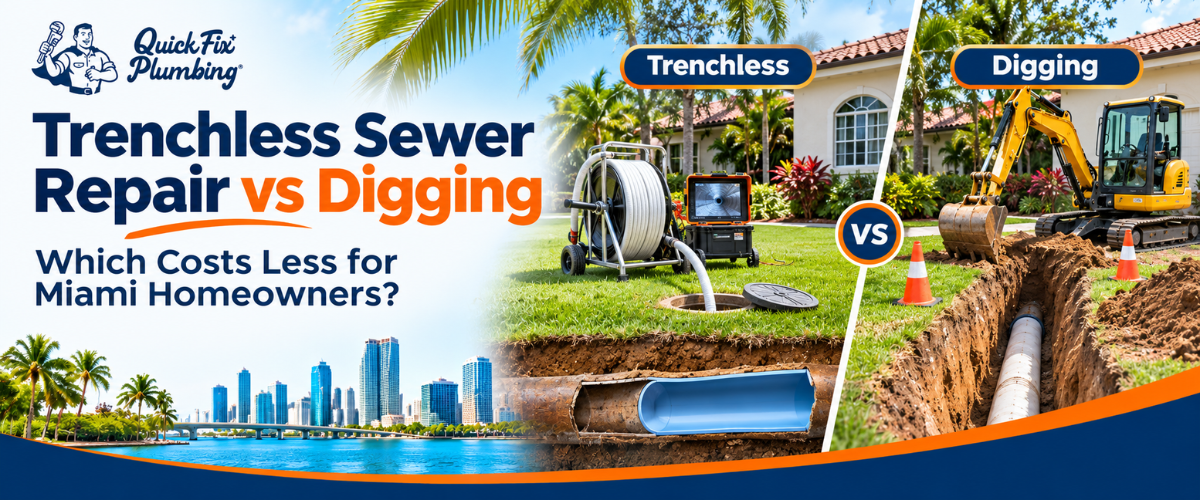
Trenchless sewer repair often costs more per foot than digging, but it usually costs less overall once you add the price of putting your yard back together. Digging can still be the cheaper choice for a short, shallow, easy-to-reach line, or when the pipe has fully collapsed. Trenchless uses two no-dig methods, pipe lining and pipe bursting, to fix the line through small access points. This guide compares the real costs of each, what drives the price in Miami, and how to tell which one your home needs.
Facing a sewer repair quote and unsure which method to pick? The right call can save thousands in restoration alone. Contact us and we’ll scope the line and lay out both options with real numbers.
What Is Trenchless Sewer Repair?
Trenchless sewer repair fixes or replaces a buried sewer line without digging a long trench. The plumber works through one or two small access points, so your yard, driveway, and floors stay mostly untouched. There are two main methods:
- Pipe lining (CIPP). A resin-soaked liner is pushed into the old pipe and cured hard, forming a new pipe inside the old one. It works when the pipe still holds its shape but has cracks, root intrusion, or corrosion.
- Pipe bursting. A bursting head breaks the old pipe outward while pulling a new pipe through the same path. It works when the old pipe is too damaged to line but the route is still clear.
What Is Open-Trench (Dig-and-Replace) Repair?
Open-trench repair is the traditional method. The crew digs down to the broken sewer line, removes the bad section, lays new pipe, and fills the trench back in. On a slab home, that can mean cutting concrete to reach a line under the floor. The plumbing excavation itself is only part of the bill. The larger cost is often the restoration afterward: new sod, a repoured driveway, or patched flooring and concrete.
Trenchless vs Digging: The Real Cost Comparison
Here is how the two methods line up in South Florida in 2026. Prices move with depth, length, and access, so treat these as planning ranges, not quotes.
| Factor | Trenchless (lining or bursting) | Open-Trench Digging |
|---|---|---|
| Pipe work, per foot | About $120–$350 | About $80–$250 |
| Yard, driveway, slab restoration | Little to none | Often $2,000–$10,000 extra |
| Time to finish | Usually 1–2 days | 2–5+ days with rebuild |
| Mess and disruption | Minimal, 1–2 access holes | High, open trench across the yard |
| Best for | Cracks, roots, corrosion in a pipe still in line | Collapsed, bellied, or badly misaligned pipe |
| How long it lasts | 50+ years with new liner or pipe | 50+ years with new pipe |
The per-foot price is only half the story. Digging looks cheaper on the pipe line, but the restoration can flip the math. That trade-off is the heart of the trenchless sewer repair vs dig cost question, and it is why a shallow, open yard favors digging while a slab, driveway, or finished patio usually favors trenchless.
What a Full Sewer Job Usually Costs
Per-foot numbers help, but most homeowners want the total. A typical home sewer lateral runs about 40 to 80 feet. On that length, an open-trench replacement often lands around $4,000 to $15,000 once you add digging and restoration. A trenchless job on the same line often runs about $6,000 to $20,000, yet it usually comes out lower in total because you are not paying to rebuild a driveway, a slab, or a landscaped yard. A short spot repair costs far less than a full line, which is why an accurate measurement matters before you compare quotes.
What Drives the Price in Miami
A few local factors push Miami sewer costs up or down:
- Depth and the high water table. Miami’s shallow water table can flood a deep trench, which slows digging and raises the price. Trenchless avoids most of that.
- Slabs and hardscape. Many Miami homes sit on concrete slabs, and cutting and repouring concrete or a paver driveway adds a lot to a dig. A slab leak repair or under-slab sewer job is where trenchless savings show up most.
- Root intrusion. Mature oak, ficus, and mango roots invade old laterals. Heavy roots often need hydro jetting to clear the line before a liner can go in.
- Old cast iron. Pre-1980 homes often run cast iron sewers. If the pipe is rusted through, lining may not hold, and bursting or cast iron pipe replacement becomes the better fix.
- Permits and length. Longer runs and city permit requirements add to both methods, but they hit open-trench jobs harder because of the surface work involved.
Not sure how deep or how long your line runs? That answer decides the price. Contact us for a camera scope and an upfront quote on both repair options before any work starts.with real numbers.
When Trenchless Wins and When Digging Wins
Trenchless usually costs less overall when:
- The line runs under a driveway, patio, slab, or mature landscaping you don’t want torn up.
- The pipe is cracked, root-invaded, or corroded but still roughly in line.
- You want the job done in a day with little mess.
Digging is often cheaper when:
- The bad section is short, shallow, and sits under bare grass or soil.
- The pipe has collapsed, sagged into a belly, or shifted out of line, so there’s no clear path for a liner.
- The line needs to be re-sloped, which lining can’t fix. A sudden full blockage or backup is an emergency plumbing call that may force a dig to get flowing fast.
Does Insurance Change the Math?
How to Know Which One You Need
Don’t guess, and don’t let anyone dig before the line is scoped. Here is the order that saves money:
- Scope the line. A camera inspection shows the exact break, how long it is, and whether the pipe can be lined or must be replaced.
- Pinpoint and measure. Accurate leak detection locates the damage and its depth, which decides the method and the price.
- Catch it early. Learning how to find your water meter and checking it for movement can flag a sewer or supply problem before it turns into a full collapse that forces a dig.
Frequently Asked Questions
Is trenchless sewer repair cheaper than digging?
How much does trenchless sewer repair cost in Miami?
In 2026, trenchless pipe lining or bursting commonly runs about $120 to $350 per foot for the pipe work, while open-trench repair runs about $80 to $250 per foot before restoration. Depth, length, and access set the final number.
What is the difference between pipe lining and pipe bursting?
Lining places a new pipe inside the old one, best when the pipe still holds its shape. Bursting breaks the old pipe and pulls a new one through, best when the old pipe is too damaged to line.
Can every sewer line be repaired trenchless?
How long does trenchless sewer repair last?
A quality liner or a new bursting pipe can last 50 years or more, similar to a dug-and-replaced pipe. The main difference is the mess and restoration cost, not the lifespan.
Get the Lower-Cost Fix, Not the Louder One
Whether trenchless or digging costs less comes down to one thing: what sits above your pipe. Over bare, shallow ground, a dig can be cheaper. Under a slab, driveway, or finished yard, trenchless usually wins once restoration is counted. The only way to be sure is to scope the line first, then compare the full price of each. Our Miami plumbing team cameras the line, explains both methods in plain words, and quotes the total before any work begins.
Ready to compare your real options? Contact us today for a sewer camera inspection and honest, upfront pricing on trenchless and dig repairs. Call (305) 359-6882.
