
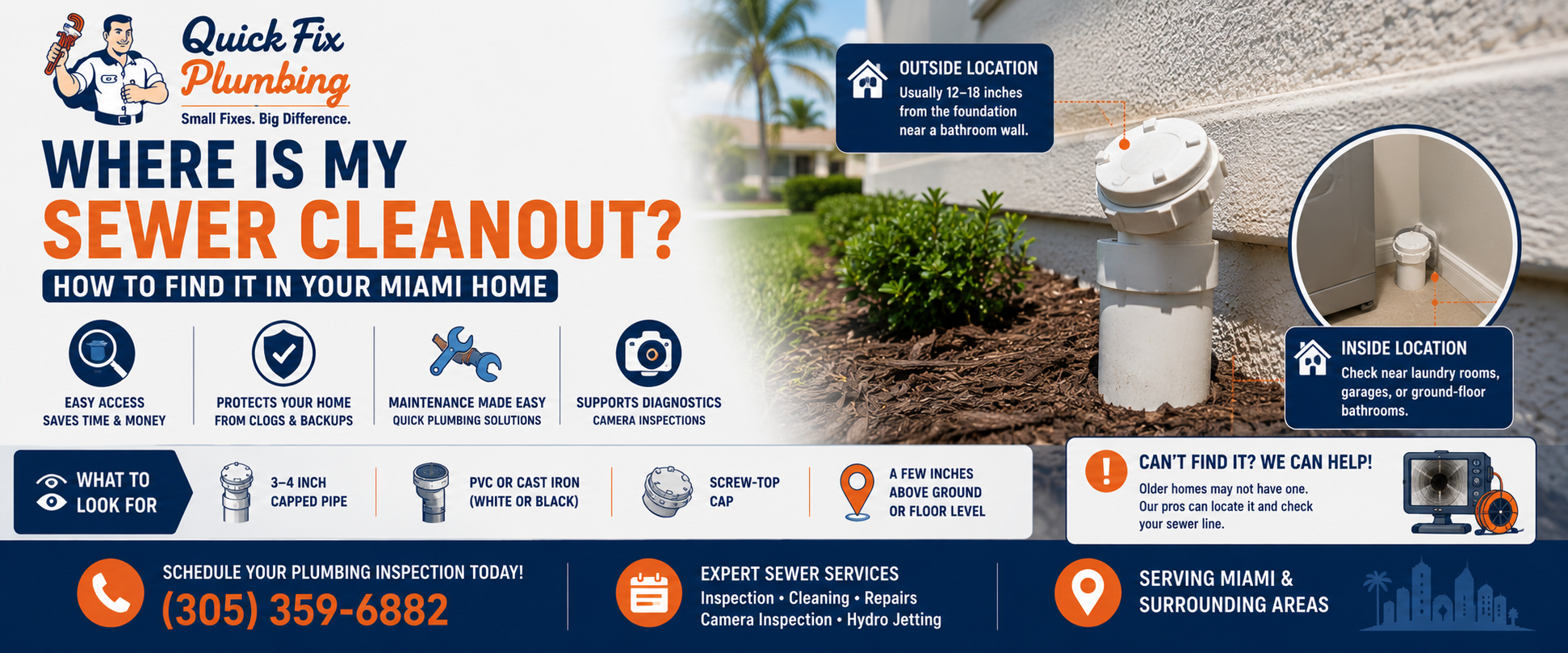
In most Miami homes, your sewer cleanout is a capped pipe located 12 to 18 inches from your home’s foundation, usually near the front or side yard closest to a bathroom wall. If you can’t spot it outside, check indoors near the laundry room, garage, or a ground-floor bathroom, since many Miami slab-foundation homes route the cleanout inside instead.
This guide walks you through exactly where is my sewer cleanout, what to look for, why it matters, and what to do once you find it, or if you can’t.
What Is a Sewer Cleanout, and Why Does It Matter?
- It saves your yard. Without it, clearing a clog often means digging up landscaping or driveways.
- It saves money. Easy access usually means a faster, less invasive repair.
- It protects your home. The cap keeps sewer gas, pests, and debris from creeping back into your plumbing.
- It supports diagnostics. It's also the entry point technicians use for a sewer camera inspection in Miami to see exactly what's happening inside the pipe.
Where Is My Sewer Cleanout Usually Located in a Miami Home?
South Florida’s mix of older homes and slab-foundation construction means cleanout locations vary more here than in other regions. Here’s where to look first, starting outside and then moving indoors.
Outside your home:
- Along the foundation wall, roughly 12–18 inches out, closest to a bathroom.
- In the front yard, near the property line or sidewalk.
- Along the side yard, sometimes tucked behind shrubs, mulch, or landscaping edging.
- Near the water meter or main shutoff valve.
- Look for a white, black, or gray-capped pipe, usually 3–4 inches wide, sticking a few inches above the ground.
Inside your home:
- Ground-floor bathrooms, especially in slab-foundation houses common throughout Miami-Dade.
- Laundry rooms or utility closets.
- Garage floors, near a floor drain.
- Basements or mechanical rooms (less common in South Florida, but worth checking in older builds).
How Do I Identify a Sewer Cleanout Once I Find It?
- Size: Typically 3–4 inches in diameter.
- Shape: A vertical pipe with a round or square screw-top cap.
- Material: Usually white or black PVC, though older homes may have cast iron.
- Position: Standing a few inches above ground level, or flush with the floor if it's indoors.
Why Can't I Find My Sewer Cleanout?
- Your home predates the local building code requirement for cleanouts.
- Landscaping, mulch, or turf has grown over and buried the cap.
- A previous owner covered it for aesthetic reasons.
- It's located inside a wall or under a slab, making it harder to spot without professional equipment.
In any of these cases, a licensed technician can track down the line and, where needed, handle it as part of a broader sewer line repair in Miami.
What Should I Do If My Cleanout Is Clogged, Damaged, or Missing?
- Slow or gurgling drains throughout the house often point to a blockage further down the main line, not just one fixture.
- A damaged or missing cap leaves the line open to debris, pests, and odor, and should be replaced quickly.
- Recurring clogs in multiple drains are a classic sign of a main line issue rather than a single clogged fixture, the same pattern that also tends to prevent kitchen drain clog advice from working on its own.
- Standing water or soft, soggy ground near the cleanout can indicate a leak or break in the line below.
When Should I Call a Plumber Instead of Checking It Myself?
- Multiple drains are backing up at once.
- You smell sewer gas near the cleanout or inside the home.
- The cap won't budge or appear cracked.
- You're buying a home and want the sewer line checked before closing.
- You've located the cleanout but still don't know what's causing the problem.
If you’re anywhere in Miami-Dade, including a plumber in Palmetto Bay, our licensed technicians can locate your cleanout, run a camera inspection, and diagnose the issue with clear, upfront pricing before any work begins.
