
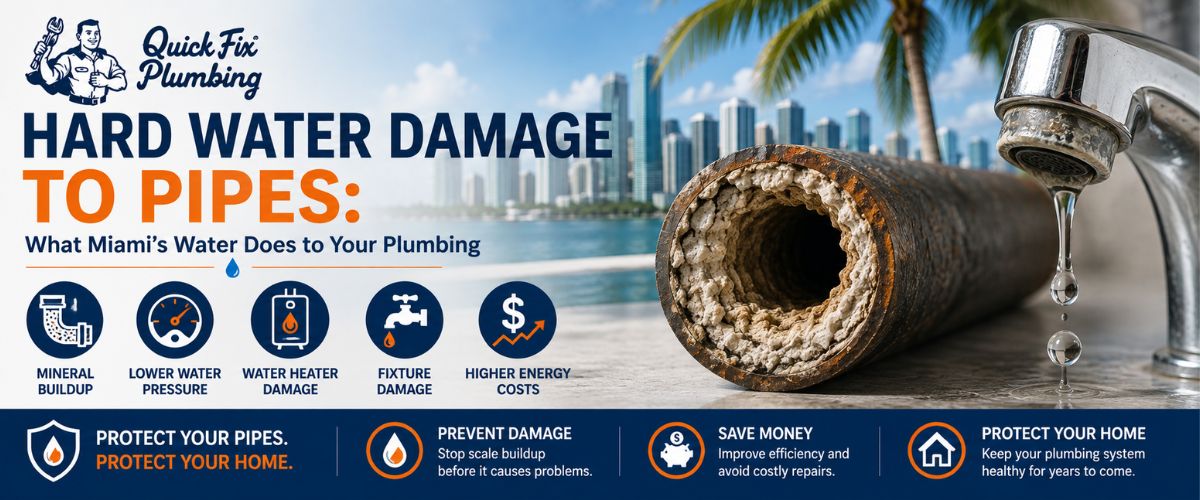
Hard water damages pipes by allowing calcium, magnesium, and mineral deposits to build up inside plumbing lines, gradually restricting water flow, reducing efficiency, and increasing the risk of costly repairs. In Miami, where hard water is a common concern, homeowners often experience lower water pressure, water heater inefficiency, fixture damage, and premature pipe deterioration long before they realize hard water is the cause.
Many property owners focus on visible plumbing issues while overlooking the damage occurring inside their pipes every day. Understanding how hard water affects your plumbing system can help you prevent expensive repairs, extend the life of your fixtures, and maintain reliable water flow throughout your home.
What Is Hard Water and Why Is It Common in Miami?
Hard water contains elevated levels of dissolved minerals, primarily calcium and magnesium. While these minerals are generally safe for household use, they can create significant challenges for plumbing systems over time.
Miami homeowners frequently deal with hard water because of the region’s water sources and mineral content. As water travels through pipes and plumbing fixtures, it leaves behind mineral deposits that gradually accumulate and create restrictions.
Common minerals found in hard water include:
- Calcium
- Magnesium
- Limestone residue
- Silica deposits
- Trace mineral compounds
Over time, these minerals can affect nearly every component connected to your plumbing system.
How Does Hard Water Damage Pipes?
Hard water damage rarely happens overnight. Instead, it develops gradually as mineral deposits accumulate along the interior walls of pipes.
As these deposits continue to build, the available space for water flow becomes smaller, forcing your plumbing system to work harder to deliver the same amount of water.
Common effects include:
- Reduced pipe diameter
- Restricted water flow
- Increased water pressure fluctuations
- Higher strain on plumbing components
- Greater risk of leaks and pipe failure
The longer the scale buildup remains untreated, the more difficult and expensive it becomes to resolve.
What Are the Early Warning Signs of Hard Water-Damaged Pipes?
Many homeowners do not recognize hard water damage until plumbing performance noticeably declines. Fortunately, there are several warning signs that often appear long before major repairs become necessary.
Recognizing these symptoms early can help prevent larger plumbing issues.
Signs You Should Not Ignore
Watch for these common indicators:
- White chalky residue on faucets
- Soap scum buildup in sinks and showers
- Reduced water pressure
- Slow-filling appliances
- Frequent fixture repairs
- Water spots on dishes and glassware
- Increased plumbing maintenance needs
One of the earliest symptoms homeowners notice is low water pressure in one faucet before pressure problems begin affecting other fixtures throughout the house.
Why Does Hard Water Cause Low Water Pressure?
Low water pressure is one of the most common consequences of mineral accumulation inside pipes.
As scale buildup thickens along pipe walls, water has less space to move through the plumbing system. The result is slower flow rates and inconsistent water delivery.
How Scale Restricts Water Flow
Mineral deposits create internal obstructions that affect performance throughout the home.
Common consequences include:
- Weak shower pressure
- Slow sink flow
- Reduced appliance efficiency
- Longer fill times
- Uneven pressure between fixtures
If left untreated, localized pressure issues can eventually spread to multiple areas of the home.
Can Hard Water Damage Your Water Heater?
Your water heater is one of the plumbing components most vulnerable to hard water damage.Every time water is heated, dissolved minerals separate and settle inside the tank or heating components. Over time, this sediment layer reduces efficiency and increases wear on the system.
Common Water Heater Problems Caused by Hard Water
Sediment buildup creates several operational challenges.
Potential issues include the following:
- Reduced heating efficiency
- Higher energy bills
- Rumbling or popping noises
- Shortened equipment lifespan
- Increased repair frequency
For homeowners considering upgrades, professional water heater installation Miami services can help ensure your system is properly sized and protected against future hard water issues.
Can Hard Water Lead to Pipe Corrosion?
Many homeowners assume hard water only causes scale buildup. However, mineral deposits can also contribute to conditions that accelerate pipe deterioration.
As scale accumulates, moisture and mineral interactions may create stress points within older plumbing systems.
Potential long-term consequences include:
- Pipe corrosion
- Pinhole leaks
- Joint deterioration
- Reduced pipe lifespan
- Increased repair costs
Older homes are particularly susceptible to these issues due to aging plumbing materials and years of mineral exposure.
How Can You Protect Your Plumbing from Hard Water Damage?
Preventive maintenance is significantly less expensive than repairing damaged plumbing systems.
The key is reducing mineral accumulation before it becomes severe enough to affect performance.
Effective Prevention Strategies
Several proactive steps can help protect your pipes.
Recommended actions include:
- Schedule routine plumbing inspections
- Flush water heaters regularly
- Clean faucet aerators periodically
- Address pressure issues promptly
- Install appropriate water treatment solutions
- Replace aging plumbing components when necessary
Regular maintenance helps identify developing issues before they become major repairs.
When Does Repiping Become Necessary?
In severe cases, mineral buildup may cause extensive restrictions throughout the plumbing system.
When cleaning, repairs, and maintenance no longer restore proper performance, repiping may be the most cost-effective long-term solution.
Signs Your Home May Need Repiping
Extensive hard water damage often produces recurring symptoms.
Common indicators include:
- Frequent leaks
- Persistent low water pressure
- Discolored water
- Aging pipes
- Repeated plumbing repairs
- Multiple fixture failures
For homes with widespread plumbing deterioration, whole-house repiping in Miami may provide a permanent solution that improves water flow and reliability.
Should You Be Concerned About Your Water Heater Choice?
Many homeowners focus on pipe maintenance while overlooking the impact of water heaters.
Different water heater designs respond differently to mineral accumulation and maintenance requirements.
If you’re evaluating replacement options, comparing tankless vs. tank water heater systems can help determine which solution best fits your home’s water usage and long-term maintenance goals.
When Should You Call a Professional Plumber?
Some hard water issues can be managed through routine maintenance. However, persistent plumbing problems often indicate deeper system-wide concerns.
Professional evaluation becomes important when symptoms continue to worsen despite your efforts.
Situations That Require Professional Inspection
You should contact a plumber if you notice the following:
- Significant water pressure loss
- Recurring pipe leaks
- Water heater performance issues
- Frequent fixture clogs
- Unexplained increases in utility costs
- Visible signs of pipe corrosion
An experienced plumber in Pembroke Pines can identify the extent of hard water damage and recommend the most effective corrective action.
Frequently Asked Questions
How long does it take for hard water to damage pipes?
The timeline varies depending on water hardness levels and pipe materials. Noticeable effects often develop over several years, although some homes experience issues sooner.
Can hard water completely clog pipes?
Yes. Severe mineral buildup can significantly restrict water flow and, in extreme cases, nearly block sections of plumbing.
Is hard water harmful to plumbing fixtures?
Yes. Faucets, showerheads, water heaters, dishwashers, and washing machines can all experience reduced performance due to mineral accumulation.
Does hard water increase plumbing repair costs?
Often, yes. Untreated hard water can contribute to leaks, pressure problems, appliance failures, and premature plumbing replacement.
Can professional plumbing maintenance help prevent hard water damage?
Routine inspections and maintenance can identify developing mineral buildup before it causes extensive damage.
Conclusion
Hard water damages pipes gradually, but the effects can become costly if left unchecked. Mineral buildup can reduce water pressure, strain water heaters, and shorten the lifespan of your plumbing system. By recognizing early warning signs and scheduling timely maintenance, homeowners can avoid major repairs. Protecting your plumbing today helps ensure better performance, efficiency, and reliability for years to come.
Protect Your Plumbing Before Hard Water Causes Costly Repairs
Hard water damages pipes slowly, but the financial impact can be significant when problems go unnoticed. Mineral buildup restricts water flow, reduces appliance efficiency, accelerates wear on plumbing components, and increases the likelihood of leaks and repairs.
If you’re experiencing pressure issues, recurring plumbing problems, or signs of mineral buildup throughout your home, now is the time to act. The team at Quick Fix Plumbing can inspect your plumbing system, identify hard water-related damage, and recommend practical solutions to protect your home’s pipes, fixtures, and water-using appliances for years to come. Contact us today!
