
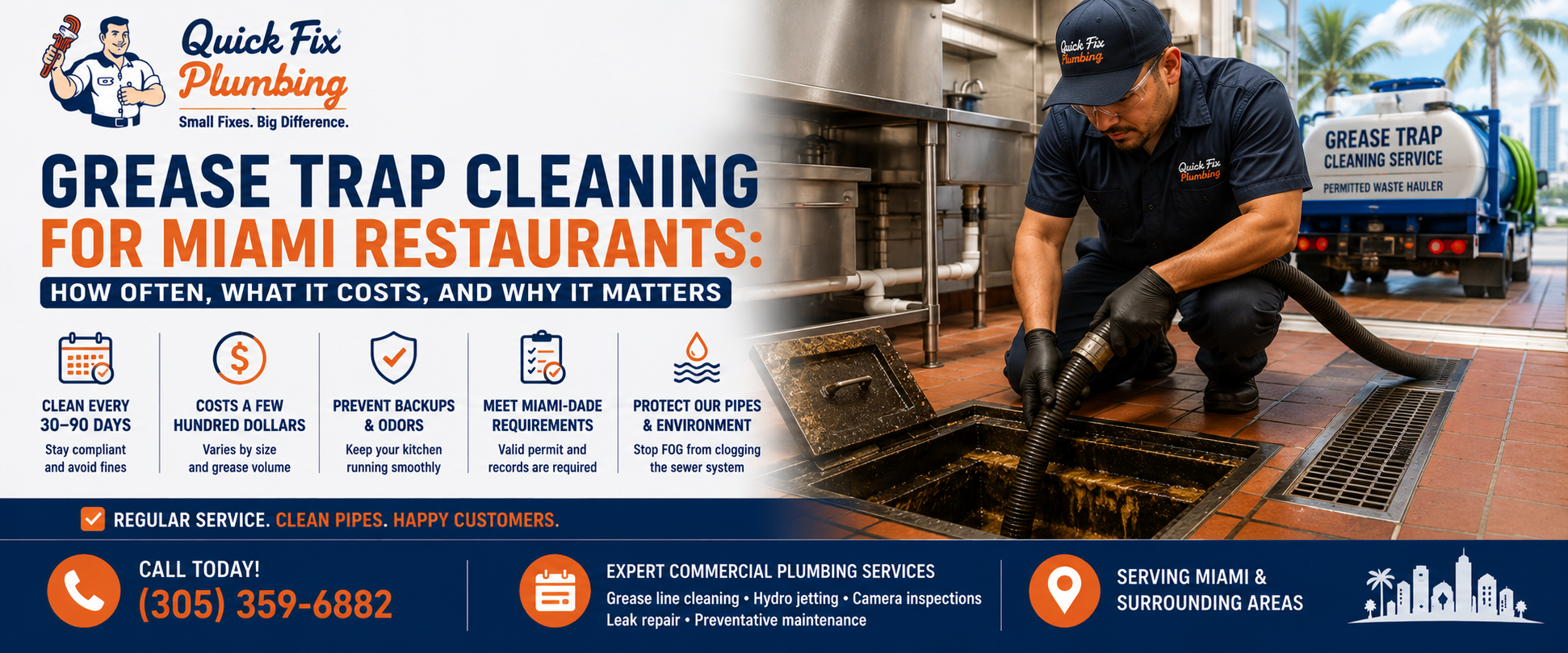
Most Miami-Dade restaurants need grease trap service every 30 to 90 days, and pricing typically runs a few hundred dollars per visit, depending on trap size and grease volume. If you run a commercial kitchen anywhere from Doral to Brickell, that single fact is the difference between passing your next DERM inspection and facing a $250 fine before you’ve even opened for lunch service.
This guide explains the real grease trap cleaning restaurant in Miami rules, honest cost expectations, and the plumbing-side maintenance. This keeps your grease lines, drains, and interceptor working the way they’re supposed to, so you’re not caught off guard by a backup, an odor complaint, or an inspector’s clipboard.
What Is a Grease Trap, and Why Does Miami-Dade Regulate It So Closely?
A grease trap (or grease interceptor) is a plumbing device that sits between your kitchen drains and the municipal sewer line. It slows wastewater down long enough for fats, oils, and grease (FOG) to separate and float to the top instead of traveling into the sewer system.
Miami-Dade’s Fats, Oils, and Grease Control Program exists because unmanaged FOG doesn’t just clog your own pipes. It also clogs county infrastructure, which is why every food service establishment needs an active permit and a documented cleaning schedule.
- Every restaurant, cafe, and commercial kitchen in Miami-Dade must hold a valid FOG discharge permit before opening.
- Grease traps and interceptors must be installed and sized to match your kitchen's wastewater flow, per DERM-reviewed plans.
- Records of every cleaning and pump-out must stay on-site for at least three years for inspection purposes.
How Often Does a Miami Restaurant Need Grease Trap Cleaning?
- Under-sink grease traps: Typically require cleaning at least every 30 days.
- Automatic hydromechanical grease interceptors: Monthly cleaning by a permitted waste hauler, with daily emptying of strainers by kitchen staff.
- Gravity grease interceptors: Generally, every 60 to 90 days, though a functioning monitoring device can sometimes extend that interval.
- The 25% Rule: Regardless of device type, if FOG and solids reach 25% of the trap's capacity before your next scheduled date, it needs to be cleaned immediately.
- High-volume kitchens (busy dinner service, heavy fryer use, tourist-season traffic) often need service more frequently than a slower operation with the same size trap.
If you’re not sure which device you have or when it was last serviced, that’s usually the first sign your maintenance program needs a second look.
What Does Grease Trap Cleaning Cost in Miami?
Cost is one of the most common questions restaurant owners ask, and the honest answer is: it depends on your trap’s size, how accessible it is, and how often you’re servicing it. Most Miami-Dade establishments should expect the following general ranges when budgeting for compliance.
- Under-sink traps generally fall in a lower cost range per service due to smaller capacity.
- Larger underground interceptors cost more per visit due to the volume of waste removed and the equipment required.
- Frequency affects your annual total; a kitchen on a monthly schedule will naturally spend more per year than one that qualifies for quarterly service.
- Tipping fees at approved disposal facilities are often bundled into your service quote but can show up as a separate line item.
- Emergency or after-hours service typically carries an added mobilization cost, so a predictable schedule is usually the more affordable route long-term.
Because full pump-out and waste removal must be performed by a Miami-Dade permitted liquid waste hauler, we always recommend getting a written quote directly from your hauler. This helps you know exactly what’s included, and the service should cover trap emptying, wall and baffle scraping, and disposal documentation rather than treating them as add-ons.
Why Grease Trap Maintenance Matters Beyond the Fine
- Slow drains and backups in dish pits, floor drains, and prep sinks are often the first warning sign of grease buildup working its way into your drain lines.
- Odors develop as trapped grease breaks down, and they tend to show up in the dining room before anyone in the kitchen notices a problem.
- Corrosion and premature equipment failure can result from acidic grease sitting in the trap too long.
- Compliance violations compound quickly; missing manifests, expired permits, and skipped cleanings are the most common causes of fines in Miami-Dade.
Where a Commercial Plumber Fits Into Grease Trap Maintenance
Here’s the part a lot of restaurant owners don’t realize until they’re dealing with a backup mid-shift: pumping and hauling the actual FOG waste out of your trap is a job for a Miami-Dade permitted liquid waste hauler, which requires a separate license from plumbing. What a licensed commercial plumber Miami handles is everything connected to the drain lines and fixtures feeding into that trap, which is just as important to keeping your kitchen compliant.
- Grease line cleaning: Clearing the drain lines that carry wastewater into your interceptor, since grease buildup inside these lines is one of the most common causes of recurring backups.
- Hydro jetting: Using high-pressure water to strip hardened grease and sludge from the interior walls of your commercial drain lines, a service that goes well beyond what a standard snake can clear. Learn more about our hydro jetting Miami process.
- Sewer camera inspections: Identifying blockages, grease buildup, or pipe damage inside your lines without tearing into floors or walls.
- Leak detection and fixture repair: Protecting the plumbing infrastructure around your kitchen so grease and wastewater are actually reaching the interceptor as designed.
- Preventative maintenance plans: Scheduled drain and line cleaning that reduces the odds of an emergency backup during peak service hours.
Frequently Asked Questions
Do I need a permit for my grease trap in Miami-Dade?
Can a plumber pump out my grease trap?
What's the difference between grease trap cleaning and grease line cleaning?
Grease trap (or interceptor) cleaning refers to pumping out the accumulated FOG from the trap itself. Grease line cleaning refers to clearing the drain pipes leading into that trap, which is where hydro jetting and drain cleaning come in.
Does my restaurant need backflow prevention, too?
Most commercial kitchens in Miami-Dade need a functioning backflow prevention in Miami device to keep wastewater from flowing back into the clean water supply, and this is typically inspected alongside your other commercial plumbing systems.
Conclusion
Grease trap cleaning is essential for keeping your Miami restaurant compliant, protecting your plumbing, and avoiding costly disruptions. Following the right maintenance schedule, working with a permitted waste hauler, and partnering with a qualified commercial plumber for drain line care can help prevent backups, reduce emergency repairs, and keep your kitchen ready for every DERM inspection and busy service.
Keep Your Kitchen's Drain Lines Ready for Every Inspection
Grease trap compliance in Miami-Dade is a two-part job: the hauler who pumps your interceptor, and the plumber who keeps everything feeding into it clear, leak-free, and up to code. If your kitchen has been dealing with slow drains, recurring odors, or you just want a professional camera inspection before your next DERM visit, Quick Fix Plumbing is here.
Call (305) 359-6882 or book online to schedule a commercial drain inspection for your restaurant today.
