
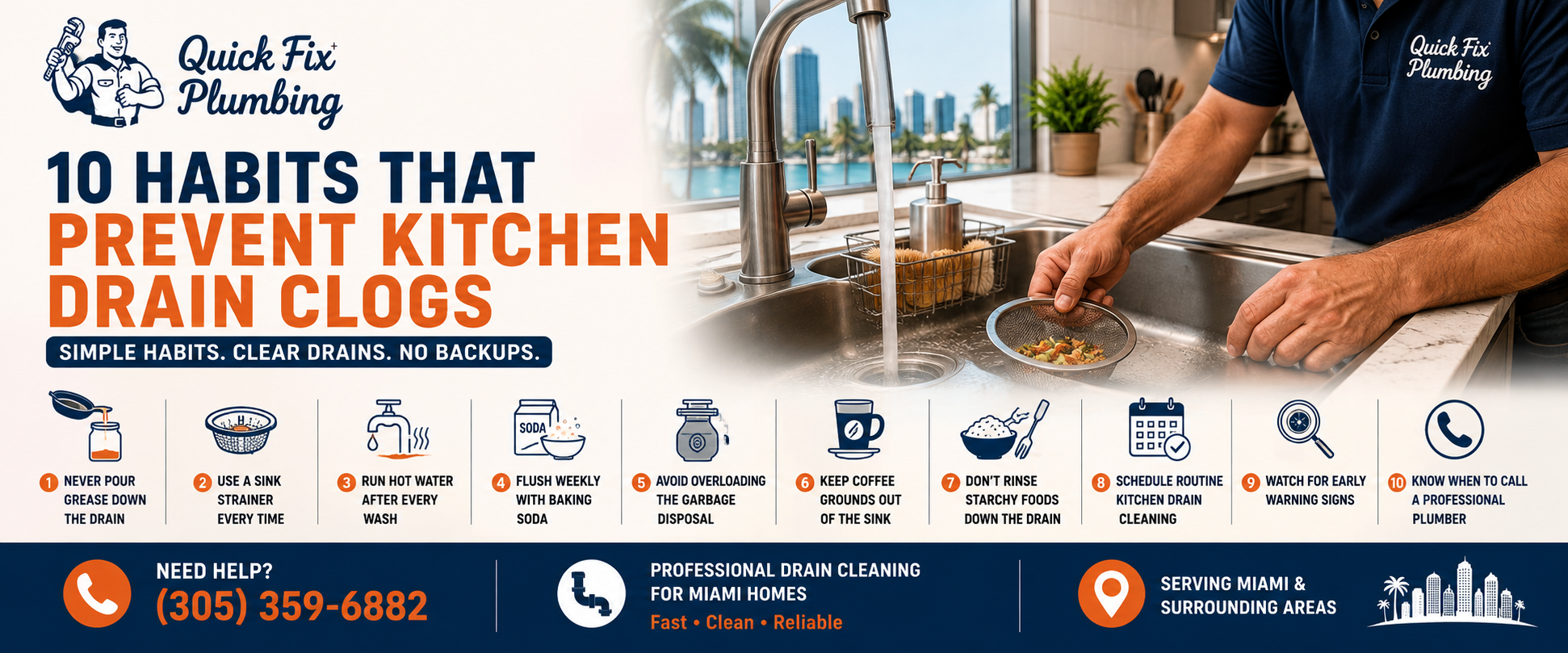
You can prevent kitchen drain clogs by keeping grease, food scraps, and coffee grounds out of the sink and running hot water after every wash. Add a few simple weekly habits, like flushing the line and using a strainer, and you can go years without a backup. Below, we break down the ten habits our technicians actually recommend to Miami homeowners, based on the clogs we see most often in local kitchens.
If a clog has already formed, these habits won’t clear it; that’s when professional drain cleaning in Miami is the faster, safer fix. But for everyday maintenance, the habits below will keep most kitchen sinks running clear.
Why Do Kitchen Drains Clog So Often?
Kitchen sinks handle more daily abuse than almost any other drain in the house; grease, starch, soap film, and food particles all pass through the same narrow pipe. Over time, these materials build up along the pipe walls instead of washing straight through.
- Grease and oil cool and solidify inside the pipe, narrowing the passage.
- Starchy foods like rice and pasta expand and create a paste-like buildup.
- Coffee grounds don't break down in water and settle at pipe bends.
- Soap scum combines with grease to form a sticky residue over time.
Habit 1: Never Pour Grease Down the Drain
Grease is the single biggest cause of kitchen clogs we see across Miami-Dade. It goes down as a liquid but cools and hardens almost immediately once it hits your pipes.
- Pour warm grease into a jar or can instead of the sink.
- Let it solidify, then toss it in the trash.
- Wipe greasy pans with a paper towel before washing them.
Habit 2: Use a Sink Strainer Every Time
A simple mesh strainer catches food scraps before they ever reach your pipes. It’s one of the cheapest and most effective habits you can build into your daily routine.
- Choose a fine-mesh strainer that fits your drain opening snugly.
- Empty it into the trash after each use, not into the disposal.
- Replace it once it starts to warp or the mesh loosens.
Habit 3: Run Hot Water After Every Wash
Hot water helps push grease, soap, and food residue further down the line instead of letting them settle near the drain opening. This habit takes seconds but makes a real difference over months of daily use.
- Run hot water for 15–20 seconds after washing dishes.
- Do the same after using the garbage disposal.
- Avoid scalding-hot water on older PVC pipes to prevent warping.
Habit 4: Flush the Drain With Hot Water and Baking Soda Weekly
A weekly flush helps break down light residue before it turns into a real blockage. It’s a habit that takes five minutes but can meaningfully extend the time between professional cleanings.
- Pour half a cup of baking soda down the drain.
- Follow with a cup of white vinegar and let it fizz for 10 minutes.
- Flush with a kettle of hot (not boiling) water.
Habit 5: Avoid Overloading the Garbage Disposal
Disposals are helpful, but they aren’t designed to handle everything you might be tempted to feed them. Overloading it, or running it too briefly, is one of the most common reasons Miami kitchens end up backed up.
- Feed food scraps in small amounts, not all at once.
- Run cold water while the disposal is on, and for a few seconds after.
- Avoid fibrous foods like celery, corn husks, and onion skins.
Habit 6: Keep Coffee Grounds Out of the Sink
Coffee grounds feel harmless because they’re so fine, but they don’t dissolve and tend to clump together at pipe joints. This is a habit that’s easy to overlook if you’re rinsing a pot straight into the sink each morning.
- Compost grounds instead of rinsing them down the drain.
- If you must rinse the pot, tap out the grounds into the trash first.
- Clean the filter basket over the trash, not the sink.
Habit 7: Don't Rinse Starchy Foods Down the Drain
Rice, pasta, and potato peels expand when they absorb water, which is exactly what happens inside your pipes. This habit is especially important in kitchens that cook these foods often.
- Scrape plates into the trash or compost before rinsing.
- Wipe starchy pots with a paper towel before washing.
- Run the disposal briefly after any starchy food does go down.
Habit 8: Schedule Routine Kitchen Drain Cleaning Homeowners Trust
Even with great habits, buildup happens gradually and invisibly inside the pipe. A periodic professional cleaning clears residue that home remedies can’t fully remove, and it catches small issues before they become full blockages.
- Schedule a cleaning once a year for average households.
- Increase frequency if you cook frequently or entertain often.
- Ask your technician to check for early signs of buildup during other visits.
Habit 9: Watch for Early Warning Signs
Slow drainage, gurgling sounds, or standing water in the sink are all early signs your line needs attention. Catching these signs early is often the difference between a quick cleaning and a costly repair.
- Slow draining after dishes is usually the first sign of buildup.
- Gurgling sounds mean air is trapped behind a partial clog.
- A foul smell near the sink often means trapped food debris.
Kitchen drains aren’t the only fixture that gives early warning signs; a dripping faucet or discolored water are also signals worth learning to read, which is why it helps to know how to fix a leaky faucet before it turns into a bigger issue.
Habit 10: Know When to Call a Professional Plumber
Some clogs are too deep or too stubborn for home remedies, especially if they keep coming back. At that point, continuing to pour chemicals down the drain can actually damage older pipes.
- Call a professional plumber in Hialeah, FL, if the clog returns within a few weeks of clearing it.
- Get a camera inspection if multiple drains are slow at the same time.
- Avoid store-bought chemical cleaners on older cast iron or galvanized pipes.
Frequently Asked Questions
What's the biggest cause of kitchen drain clogs?
Grease and cooking oil are by far the most common cause, since they solidify inside the pipe after going down as a liquid.
How often should I clean my kitchen drain?
Most households benefit from a professional cleaning once a year, more often if you cook frequently or notice slow drainage.
Are chemical drain cleaners safe to use regularly?
No. Repeated use can damage older pipes and often only clears part of the blockage, leaving the rest to build up again.
When should I stop DIY methods and call a plumber?
If a clog returns within a few weeks or multiple drains are slow at once, it’s time to call a professional rather than keep treating the symptom.
Conclusion
Preventing kitchen drain clogs comes down to small daily habits that protect your plumbing over time. Keeping grease, food scraps, and other debris out of the drain, while addressing early warning signs, can help you avoid costly repairs. When a clog won’t clear or keeps returning, professional drain cleaning is the safest and most effective solution.
Keep Your Kitchen Drains Flowing Smoothly
Don’t wait for a slow drain to turn into a major plumbing problem. Quick Fix Plumbing provides fast, professional clog removal and kitchen drain cleaning in Miami and Hialeah. Whether you need routine maintenance or emergency service, or are wondering about the brown water from tap causes, our experienced team is ready to help. Schedule your service today or call (305) 359-6882 for reliable plumbing solutions.
