
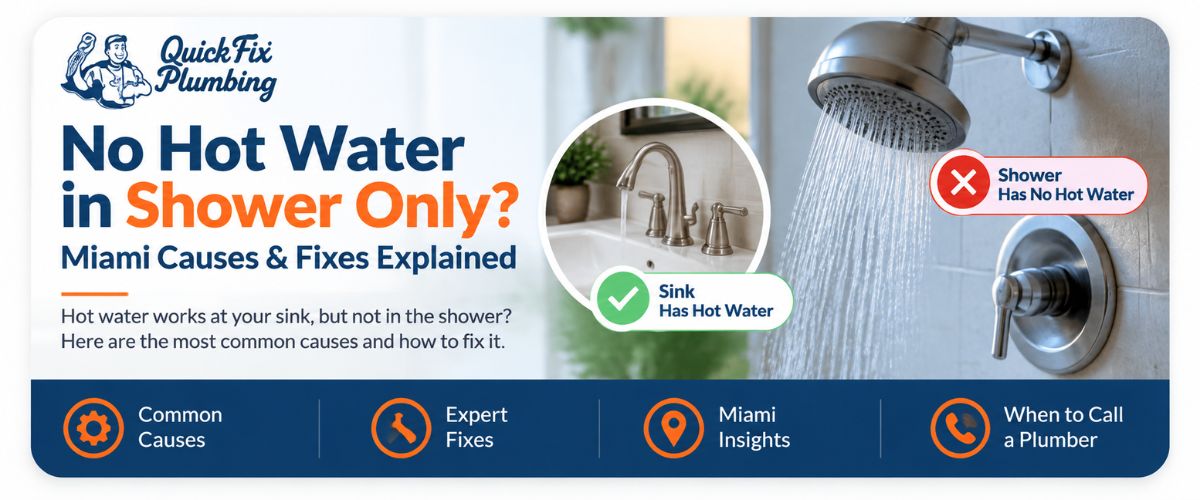
Turning on your shower and getting only cold water can be frustrating, especially when your bathroom sink still produces hot water.
Many homeowners immediately assume the water heater is failing. However, when hot water is still available from other fixtures, the problem is often isolated to the shower itself.
A shower and sink usually rely on separate internal control components. The sink may continue working normally while the shower cartridge, mixing valve, or temperature-control system develops a problem.
When you have no hot water in shower only, the most common causes include:
- A faulty shower cartridge
- A damaged mixing valve
- A pressure-balancing valve problem
- An anti-scald temperature limiter issue
- Mineral buildup inside internal components
- A plumbing crossover
- An aging or worn shower valve
For Miami homeowners, fixture age, local water conditions, and past plumbing work can all contribute to these problems.
Before replacing your water heater, it’s worth taking a few minutes to figure out whether the issue is actually coming from the shower assembly.
Quick Answer: Why Is There No Hot Water in My Shower Only?
| Problem | What Happens |
|---|---|
| Faulty shower cartridge | Hot and cold water cannot mix correctly |
| Damaged mixing valve | Shower cannot regulate temperature properly |
| Pressure-balancing valve failure | Temperature swings unexpectedly during use |
| Anti-scald limiter issue | Hot water temperature is restricted |
| Mineral buildup | Water flow through the valve becomes limited |
| Plumbing crossover | Cold water mixes into the hot water line |
| Aging shower valve | Internal parts wear out over time |
If your kitchen faucet and bathroom sink still have hot water, the issue is usually related to the shower fixture rather than the entire water heating system.
Is the Problem Your Water Heater or Your Shower?
The first step is figuring out whether the issue affects your whole home or just one fixture.
Check:
- Bathroom sink
- Kitchen faucet
- Another shower, if available
| Symptom | Likely Cause |
|---|---|
| No hot water anywhere | Water heater or supply issue |
| Sink has hot water but shower does not | Shower cartridge or valve problem |
| Shower changes suddenly from hot to cold | Pressure-balancing valve issue |
| Shower only gets lukewarm | Temperature control problem |
| Multiple fixtures affected | Possible water heater issue |
The U.S. Department of Energy notes that water heating systems contain multiple components — heating elements, thermostats, and controls — that affect hot water availability throughout a home. If only one fixture is affected, the problem is more likely isolated to that fixture.
Why Does a Shower Lose Hot Water While the Sink Works?
A shower system is more complex than a typical sink faucet.
A bathroom sink mainly uses:
- A hot water supply line
- A cold water supply line
- A faucet cartridge
A shower includes additional components:
- A shower valve
- A pressure-balancing system
- Thermostatic controls (on some systems)
- A temperature-limiting device
These components exist to control temperature and prevent sudden hot-cold swings. Because a shower has more moving parts than a sink, a failure in any single component can cut off hot water to the shower while every other fixture keeps working normally.
Modern plumbing standards require shower valves to include temperature-control features that reduce the risk of scalding. The International Code Council’s plumbing code addresses these requirements for shower valve design and installation.
Common Reasons Your Shower Has No Hot Water But Your Sink Does
1. Faulty Shower Cartridge
The shower cartridge controls how hot and cold water move through the valve. It’s one of the most common points of failure.
Over time, cartridges can:
- Wear out
- Become restricted by debris
- Develop internal damage
- Reduce hot water flow
Signs of a failing cartridge include a shower that runs cold, stays lukewarm, or doesn’t respond correctly when you adjust the handle.
Manufacturers such as Moen publish troubleshooting guidance specifically for shower cartridges and valve components, since this is one of the most frequently replaced parts in a shower system.
Replacing the cartridge may restore normal operation if the rest of the valve body is still in good condition.
2. Damaged Shower Mixing Valve
The mixing valve combines hot and cold water before it reaches the showerhead. Depending on the system, it may include cartridge controls, a pressure-balancing mechanism, or thermostatic controls.
A failing valve can cause:
| Issue | Result |
|---|---|
| Poor temperature control | Shower doesn’t get hot |
| Valve wear | Temperature changes unexpectedly |
| Internal damage | Reduced water flow |
Because many shower valves sit behind the wall, professional diagnosis is often needed to pin down exactly which part has failed.
3. Pressure-Balancing Valve Failure
Pressure-balancing valves are designed to hold your shower temperature steady when water pressure changes elsewhere in the home — for example, when someone flushes a toilet or runs another faucet.
When this valve fails, you may notice:
- Sudden temperature swings
- Brief cold-water interruptions
- Temperature that's difficult to keep consistent
This is a common cause of a shower that feels unpredictable rather than simply cold.
4. Anti-Scald Temperature Limiter Problem
Most modern showers include a temperature-limiting feature designed to reduce the risk of scalding. Sometimes this setting becomes restricted after plumbing repairs, a shower handle replacement, or valve servicing.
A common symptom: the shower gets warm but never becomes properly hot, even though the sink reaches normal temperature — because the sink isn’t governed by the same temperature-control system.
5. Mineral Deposits Inside the Shower Valve
Mineral deposits can collect inside cartridges, valve openings, and showerheads, gradually restricting flow and affecting temperature control.
Miami homeowners may see this kind of buildup depend partly on local water conditions. Miami-Dade County publishes annual water quality reports that homeowners can reference for details on their water supply.
6. Plumbing Crossover
A crossover happens when cold water leaks into the hot water line (or vice versa) somewhere in the plumbing, often through a worn washer or a misassembled valve. This can make a shower run lukewarm or cold even when the water heater itself is functioning normally, and it’s a cause that’s easy to miss without a professional inspection.
7. Aging or Worn Shower Valve
Older valves can develop problems from internal wear, corrosion, or damaged seals. If your shower is several years old and suddenly stops producing hot water, the valve itself — not just the cartridge — may need repair or replacement.
Safety First: Before You Touch the Shower Valve
Shower valves are pressurized plumbing components, and many sit behind tile or drywall. Before removing any part of the assembly:
- Turn off the water supply to the fixture, and confirm the flow has actually stopped.
- Protect the drain opening so small parts can't fall in.
- Don't force a stuck handle or trim piece.
- Avoid opening wall-mounted components unless you understand the system.
- Use manufacturer-correct replacement parts.
Opening a pressurized valve without doing this first can cause leaks and water damage — especially with concealed, wall-mounted systems.
How to Troubleshoot a Shower With No Hot Water
Step 1: Confirm It's Only the Shower
Test the bathroom sink, kitchen faucet, and another shower if you have one. If only one shower is affected, the problem is almost certainly inside that fixture.
Step 2: Check Whether the Shower Is Completely Cold or Just Lukewarm
Completely cold points toward a failed cartridge, valve issue, or hot water supply restriction.
Lukewarm points toward a temperature limiter problem, mineral buildup, or a mixing valve issue.
Step 3: Identify Your Shower Type
Single-handle shower — common issues are cartridge failure or a temperature-limiter adjustment.
Two-handle shower — common issues are hot-side valve wear or a worn washer/seal.
Knowing which type you have narrows down the likely cause before a plumber ever arrives.
Miami Plumbing Factors That Can Affect Shower Hot Water
- Older plumbing fixtures. Many Miami homes have shower valves, cartridges, and temperature controls that have been in service for years and are simply due for wear-related repair.
- Recent bathroom renovations. If the problem started right after a remodel, an incorrectly installed valve or cartridge, or a misadjusted temperature limiter, is a likely cause.
- Mineral deposits. Local water conditions can contribute to buildup inside shower components over time — see the Miami-Dade water quality reports linked above for details on your area.
Can You Fix a Shower With No Hot Water Yourself?
Some checks are safe to try yourself:
- Adjusting the shower's temperature-limit setting (if accessible)
- Cleaning the showerhead of mineral buildup
- Checking for loose handles, visible leaks, or damaged trim
Replacing a shower cartridge or valve is more involved, since these components are often located behind the handle or inside the wall. If you attempt it, follow the safety steps above and use the correct manufacturer part — an incorrect installation can cause leaks or ongoing temperature problems.
For repairs beyond basic checks, professional shower valve repair services in Miami can diagnose the issue correctly the first time.
When Should You Call a Miami Plumber?
Call a professional if:
- Your shower is the only fixture without hot water
- The temperature can't be adjusted correctly
- Water suddenly switches between hot and cold
- You suspect the cartridge or valve needs replacement
- The valve is behind the wall and inaccessible
- You notice any leaks
- Basic troubleshooting doesn't solve the problem
A plumber can test the valve assembly, confirm hot water is actually reaching the shower, and determine whether you need a cartridge replacement, valve repair, or a temperature adjustment — rather than guessing and replacing the wrong part.
If multiple fixtures lose hot water at once, that points to the water heater rather than the shower, and you may need water heater repair in Miami.
For sudden leaks or active water damage, contact emergency plumbing services in Miami.
Shower Cartridge vs. Shower Valve: What's the Difference?
Understanding the difference can help you avoid paying for the wrong replacement part.
Final Thoughts
If your shower has no hot water but your sink does, the problem is usually not your entire water heating system — it’s almost always something specific to the shower itself: the cartridge, the mixing or pressure-balancing valve, the temperature limiter, or mineral buildup restricting flow.
Checking your other fixtures first is the fastest way to confirm this. If basic troubleshooting doesn’t solve it, a professional plumber can pinpoint the exact cause and avoid an unnecessary water heater replacement.
Frequently Asked Questions
Why does my shower have no hot water but my sink does?
The shower and sink typically use separate control components. The shower cartridge, mixing valve, or pressure-balancing valve can fail while the sink continues working normally.
Why is my shower only getting warm but not hot?
A shower that only gets warm may have a restricted temperature limiter, mineral buildup, or a failing cartridge.
Can a bad shower cartridge stop hot water?
Yes. A damaged cartridge can prevent hot and cold water from mixing correctly, causing cold or inconsistent shower temperatures.
Do I need a new water heater if only my shower has no hot water?
Usually not. If your sinks and other faucets have hot water, the issue is almost always limited to the shower valve or cartridge, not the water heater itself.
Why does my shower get cold when someone else uses water in the house?
This is a classic sign of a pressure-balancing valve problem, not a water heater issue.
How much does shower hot water repair cost?
Cost depends on the cause, the parts needed, and labor. A plumber should inspect the valve before giving an accurate estimate.
If your shower has no hot water but your sink works fine, Quick Fix Plumbing can diagnose whether the cause is your cartridge, valve, or another component — and fix it right the first time. Call (305) 359-6882 or book service online.
