
Meter moving with all your water off? That’s a confirmed leak, and the sooner it’s found, the less it costs. Contact us, and we’ll locate it and fix it fast.
Where Is My Water Meter?
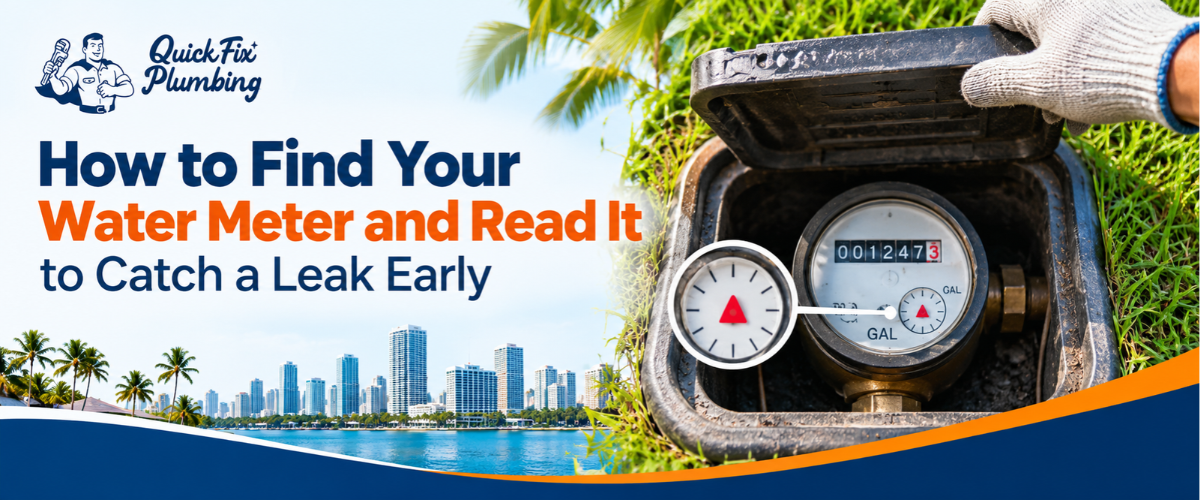
In most Florida homes, the water meter sits in a rectangular or round box set into the ground, usually near the street, the sidewalk, or the edge of your front yard by the swale. The lid is often plastic or metal and may be marked “water” or have the utility’s name on it.
Lift the lid carefully, since it can be heavy and spiders or ants sometimes nest inside. The meter sits below, often under a second flip-up cap to keep dirt off the dial. Wipe the face clean if you can’t read it. If you rent or live in a condo, your meter may be in a shared bank of meters, so check with your building before testing.
How Do I Read a Water Meter?
Analog (dial) meters
Digital meters
The Simple Two-Step Leak Test
This test takes a few minutes and confirms whether water is escaping somewhere you can’t see.
Step 1 — The quick check:
- Turn off every faucet, shower, washing machine, dishwasher, and ice maker, and make sure no toilet is filling
- Look at the leak indicator on the meter. If that small triangle or dial is moving at all, water is flowing somewhere it shouldn't be
- Write down the exact meter reading
- Leave the water off and don't use any for one to two hours
- Read the meter again. If the number went up, you have a leak even if the indicator looked still
What Your Meter Test Is Telling You
Use this to read the result and know your next move:
| What you see | What it likely means | What to do |
|---|---|---|
| Indicator still, reading steady | No active leak right now | Retest if your bill is high. |
| Indicator spinning fast | Larger active leak | Shut off the main, call a plumber. |
| Indicator creeping slowly | Small leak or running toilet | Check toilets, then call a plumber. |
| Reading rose after 1-2 hrs | Slow hidden leak | Book a leak inspection. |
| Wet ground near the box | Service line leak underground | Call for line repair. |
Not sure where the water is going? We use pro equipment to pinpoint a leak without tearing up your home. Contact us, and we'll find it fast.
When Should You Run the Test?
You don’t need to wait for a flood to check. A few everyday signs are worth a quick meter test, and catching them early saves money and damage.
Run the test if your water bill jumps for no clear reason, if you hear running water when nothing is on, if you see damp spots or smell must inside, or if the ground stays wet in one part of the yard. A sudden pressure drop can point to a leak too, and if you’ve recently fought banging pipes from water hammer, the stress of those surges can open a small leak over time.
It’s also smart to run a quick check after any big change to your plumbing, like a new appliance hookup or recent repair work. High incoming pressure speeds up wear on pipes and fittings, so if yours runs strong, a water pressure regulator can prevent some leaks before they start. A meter check every few months turns leak detection into a simple habit instead of an emergency.
PEX handles the same heat with less wear. Because it flexes, it absorbs the small movements that come from temperature swings instead of fighting them, so it’s far less prone to the brittle cracking that catches up with CPVC. For the hot water lines running to the water heater, that flexibility is a real advantage in a climate like Miami’s.
Humidity and salt air add to the case for fewer joints. Every glued connection is a spot that can weaken, and coastal homes see more of that stress. A pipe that needs fewer joints simply gives trouble fewer places to start, which is why most Florida repipes today use PEX.
What to Do If the Meter Shows a Leak
First, find your main shut-off valve and turn it off if the leak seems large, which stops the flow while you sort out the next step. Then try to narrow down where the water is going.
If the leak stops when you close the valve between the meter and the house, the leak is inside or under the home. If it keeps running with that valve shut, the leak is in the service line between the meter and that valve, which usually needs a water line repair. Many indoor leaks hide behind walls or under the floor, and a plumber uses electronic leak detection to find the exact spot without guesswork. If the water heater area is wet, the tank or its connections may be the source instead of a pipe.
Why Catching Leaks Early Matters in Miami
In South Florida, a small leak turns into a big problem faster than in a drier climate. Most homes here sit on concrete slabs, so a pipe leaking under the floor can run for weeks unnoticed and show up as a warm spot, a high bill, or a crack the early signs of a slab leak. The meter test is often the first thing that flags it.
Heat and humidity make it worse. Trapped moisture from a hidden leak feeds mold within days, not weeks, so early detection protects your health as well as your home. And because an older pipe is more likely to leak, homes that are due for whole-home repiping benefit most from a regular meter check.
A fast-spinning meter with the water off is not a wait-and-see situation. A line that’s actively losing water can flood a room quickly, which makes it an emergency plumbing call rather than a weekend project.
Frequently Asked Questions
How do I use my water meter to check for a leak?
Turn off all water in the home, then watch the meter’s leak indicator, the small triangle or dial. If it keeps moving with everything off, you have a leak. For slow leaks, record the reading, wait one to two hours without using water, and check if the number rose.
Where is my water meter located?
In most Florida homes, it’s in a covered box in the ground near the street, sidewalk, or front-yard swale. The lid is often marked “water.” Condo and rental meters may be in a shared bank, so check with your building first.
My water meter is spinning, but no water is running. What does that mean?
It means water is escaping somewhere, most likely a hidden leak in a pipe, a running toilet, or an underground service line. Shut off your main valve and call a plumber to locate it before it causes damage.
Can a running toilet make my meter move?
Yes. A toilet that keeps refilling is one of the most common reasons a meter creeps with no taps on. Check your toilets first, since a flapper or fill valve is often the easy fix.
How often should I check my water meter?
A quick check every few months, and any time your bill jumps or you suspect a leak, is enough for most homes. Older homes and slab homes benefit from checking a little more often.
A Five-Minute Check That Saves Thousands
Reading your water meter is one of the simplest things you can do to protect your home. Turn off the water, watch the indicator, and run the timed check if you suspect a slow leak. In Miami, where slab construction and humidity turn small leaks into costly damage fast; that five-minute habit can save you thousands. When the test points to a leak you can’t see, the QuickFix Plumbing team finds it and fixes it with the least disruption to your home.
Confirmed a leak, or just want peace of mind? Contact us today for fast leak detection and an honest repair quote. Call (305) 359-6882.
