
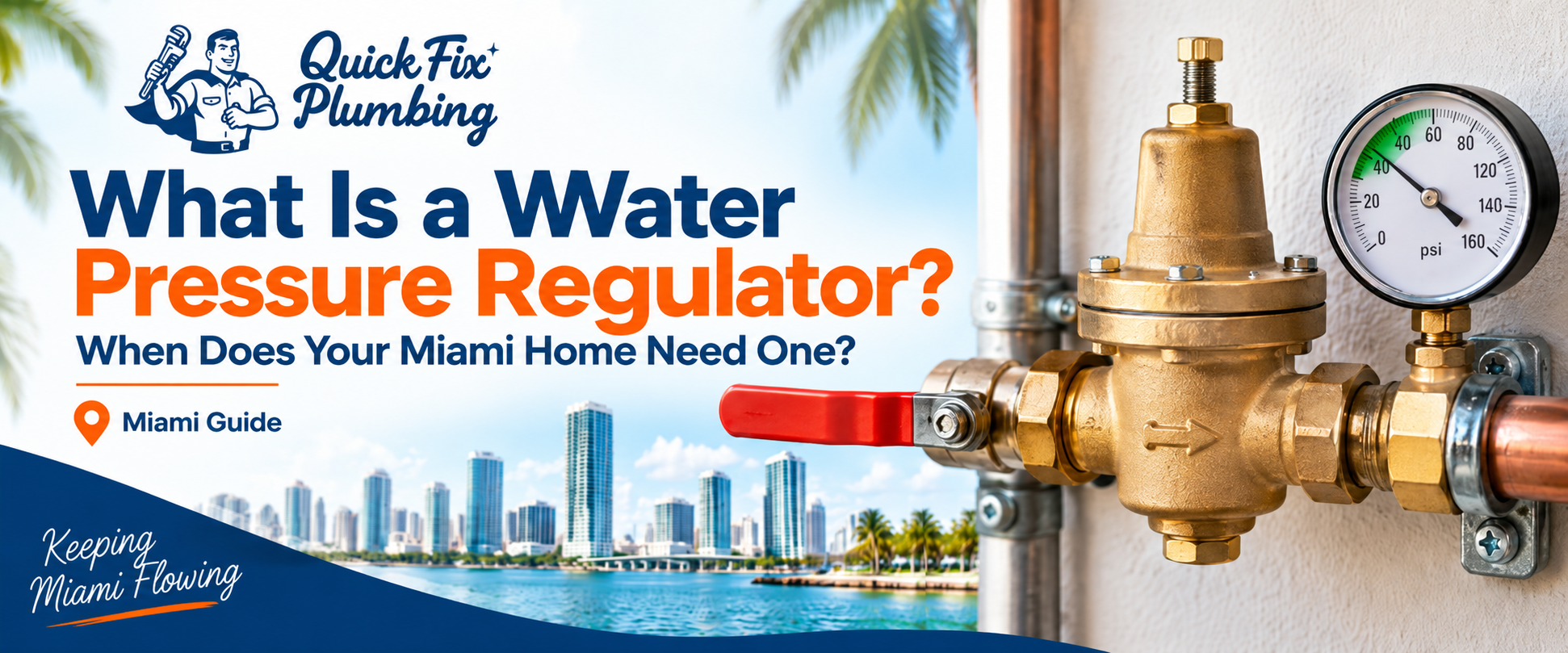
What Does a Water Pressure Regulator Do?
City water often arrives at your home at a much higher pressure than your plumbing is built to handle. The pressure has to be strong enough to reach every house on the block and the upper floors of taller buildings, so it can run well above what a single home needs.
What Is Safe Home Water Pressure?
Water pressure is measured in psi (pounds per square inch). Here’s what the numbers mean for your home:
| Pressure (psi) | What It Means | Action |
|---|---|---|
| 40 to 60 psi | The ideal range for most homes | No action needed |
| 60 to 80 psi | Acceptable but on the high side | Monitor it |
| Above 80 psi | Too high; damages pipes and fixtures | Install a regulator |
| Below 40 psi | Weak flow; a different problem | Check the supply line |
Plumbing code in most areas requires a regulator once street pressure passes 80 psi. You can check your own pressure with a $10 gauge that screws onto an outside hose bib, or a plumber can confirm it during any visit. If the reading sits high, the incoming water line is carrying more force than your fixtures were built for.
Signs Your Miami Home Needs a Water Pressure Regulator
High pressure leaves clues all over the house. Watch for these:
- Banging or knocking pipes when you shut off a faucet, known as water hammer
- Toilets that run on their own or faucets that keep dripping, often from pressure wearing out the fill valve and seals
- Water that blasts out hard the moment you crack a tap
- Appliances like washers, dishwashers, and water heaters failing early
- A water bill creeping up with no change in how much you use
A running or weak-filling toilet can point to pressure too, which overlaps with other reasons a toilet water level drops. When several of these show up together, pressure is usually the common thread.
Not sure what pressure your home runs at?
We can test it in minutes and tell you if a regulator would help. Contact us for a quick pressure check.
With a Regulator vs. Without One
Here’s what changes once a regulator brings the pressure into the safe range:
| Without a Regulator | With a Regulator | |
|---|---|---|
| Pipe stress | Constant strain; more leaks | Steady, safe pressure |
| Fixtures & appliances | Wear out early | Last their full life |
| Water hammer | Banging pipes common | Quiet plumbing |
| Water bill | Higher from waste and leaks | Lower, more controlled use |
| Water heater | Extra strain on the tank | Protected, longer life |
Why This Matters More in Miami
Miami homes face a double hit. Many neighborhoods get strong municipal water pressure to serve dense housing and mid-rise buildings, and the same hard water that scales up fixtures also wears seals faster. High pressure pushing mineral-heavy water through the system speeds up every kind of failure.
On top of that, a lot of Miami homes sit on concrete slabs with copper lines underneath. Excess pressure is one of the forces that drives pinhole leaks in those buried lines, and once a leak starts under the slab it is costly to reach. A regulator eases that strain and helps protect against slab leaks and the hidden water loss that follows.
Older homes feel it most. Decades-old pipe already weakened by corrosion is far more likely to spring a leak under high pressure, which is why a pressure problem sometimes turns into a whole-home repiping conversation if it has been ignored for years.
What High Water Pressure Damages
Left unchecked, too much pressure works against the whole system:
- Supply lines and joints, raising the odds of a hidden leak behind a wall
- Your water heater, which takes extra strain on the tank and the relief valve
- Washing machine and dishwasher hoses, a common cause of sudden floods
- Faucet cartridges and toilet parts that wear out years early
A burst supply hose under full pressure can flood a room in minutes, which is the kind of plumbing emergency a regulator helps you avoid in the first place.
When to Install or Replace a Regulator
Install one when a pressure test reads above 80 psi, when you add a new water heater or appliances you want to protect, or when water hammer and early fixture failures point to high pressure. Many Miami homes built without a regulator benefit from adding one.
Regulators also wear out, usually after 10 to 15 years. A failing one can let pressure spike or drop for no clear reason, or cause pressure that swings during the day. If your home already has a regulator and the pressure feels off, the valve itself may be the part that needs replacing.
How Much Does a Water Pressure Regulator Cost?
The regulator itself is an inexpensive part, usually $40 to $100 depending on the size and brand. Most of the cost is the labor to install it correctly on the main line and set the pressure.
A professional install typically runs a few hundred dollars, depending on where your main line sits and whether the old valve needs removing. It is a small, one-time cost against years of pipe, fixture, and appliance damage that high pressure causes, so it usually pays for itself the first time it prevents a leak or a failed water heater.
Can I Install One Myself?
Fitting a regulator means cutting into the main water line and soldering or connecting new fittings, so it is harder than a simple fixture swap. A mistake on the main line can flood the house or leave you without water.
Setting the pressure also takes a gauge and some know-how to dial it into the right range. For most homeowners this is a job worth handing to a licensed plumber, who can size the valve, install it to code, and confirm the pressure is correct before leaving.
Frequently Asked Questions
What is a water pressure regulator?
It’s a bell-shaped valve, also called a pressure reducing valve or PRV, fitted on your main water line. It lowers high city water pressure to a safe level, usually 50 to 60 psi, so the pressure won’t damage your pipes, fixtures, and appliances.
What water pressure is too high for a house?
Anything above 80 psi is too high and can damage plumbing. The ideal range is 40 to 60 psi. Most plumbing codes require a regulator once incoming street pressure passes 80 psi.
How do I know if my home needs a pressure regulator?
Test the pressure with a gauge on an outdoor spigot. If it reads above 80 psi, or if you notice banging pipes, running toilets, strong faucet blasts, or appliances failing early, your home likely needs a regulator.
How long does a water pressure regulator last?
Most last 10 to 15 years. A worn regulator can let pressure spike, drop, or swing during the day. If your pressure feels inconsistent and you already have a regulator, the valve itself may need replacing.
Can high water pressure cause leaks?
Yes. Constant high pressure strains pipes, joints, and seals, raising the risk of pinhole leaks, burst hoses, and hidden leaks behind walls or under a slab. A regulator reduces that strain.
Protect Your Pipes Before Pressure Does the Damage
A water pressure regulator is a small valve that quietly guards your whole plumbing system. It keeps city water at a safe level so your pipes, fixtures, and water heater last longer and your bills stay lower. In Miami, where strong municipal pressure meets hard water and slab-built homes, it is one of the simplest ways to prevent leaks and early failures. Our Miami plumbing team tests your pressure, installs or replaces regulators, and sets the level right for your home.
