
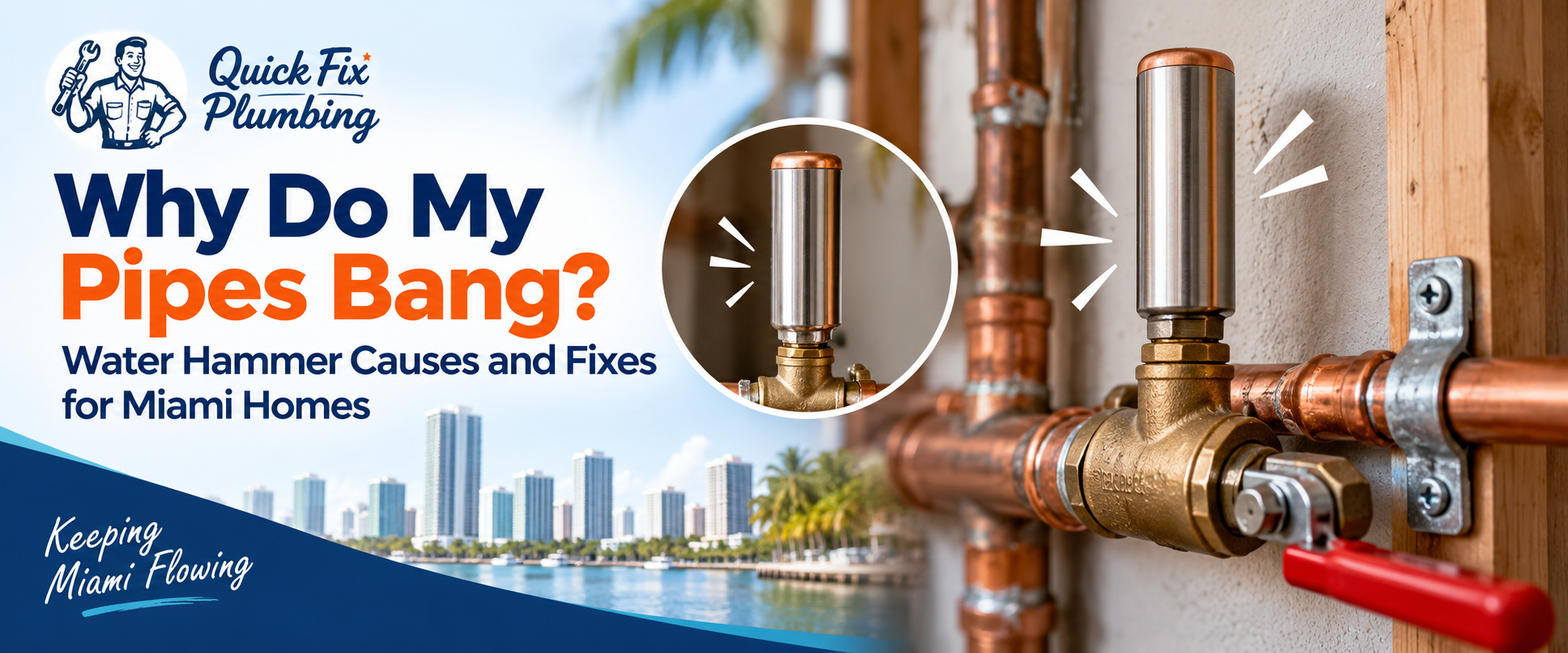
Pipes bang because of water hammer — the loud thud you hear when fast-moving water is suddenly stopped and slams against a closed valve or pipe wall. The most common causes are worn-out air chambers, high water pressure, loose pipes, and fast-closing valves on appliances like washers and dishwashers. The fixes range from a two-minute system drain to adding a water hammer arrestor or a pressure regulator. This guide explains each cause, the right fix for it, and when the banging means it’s time to call a plumber.
What Is Water Hammer?
Water moving through your pipes has weight and speed. When a valve or an appliance shuts off the flow suddenly, that moving water has nowhere to go, so it crashes into the closed valve and the pipe walls. The shock sends a bang or a hammering thud through the plumbing.
You usually hear it right after you turn off a faucet, when the washing machine or dishwasher switches between cycles, or when a toilet finishes filling. A single knock now and then is harmless, but repeated hammering puts real stress on your pipes and fittings over time.
What Causes Banging Pipes?
Worn-out air chambers
Many homes have air chambers — short vertical pipe stubs near fixtures that hold a cushion of air to absorb the shock when water stops. Over the years that air gets replaced by water, and the cushion disappears. Without it, the water slams directly into the pipe and bangs.
High water pressure
The harder the water is pushing, the harder it hits when it stops. High incoming pressure is one of the biggest drivers of water hammer, which is why a water pressure regulator often solves banging that nothing else fixes.
Loose or unsecured pipes
Pipes that aren’t strapped tightly to the framing can rattle and knock against studs and joists when water surges through them. This kind of banging is often more of a rattle than a single sharp thud, and it tends to travel along a wall.
Fast-closing appliance valves
Washing machines, dishwashers, and ice makers use solenoid valves that snap shut in a fraction of a second. That instant stop is a classic hammer trigger. A toilet with a fast-closing fill valve can do the same thing at the end of each flush.
Water Hammer Causes and Their Fixes
Match the cause to the right fix so you’re not guessing:
| Cause | How to Spot It | The Fix |
|---|---|---|
| Worn air chambers | Banging started gradually over time | Drain and refill the system |
| High water pressure | Strong flow, fixtures wear fast | Install a pressure regulator |
| Loose pipes | Rattling that travels along a wall | Secure pipes with straps/cushions |
| Fast-closing valves | Bang when an appliance cycles | Add a water hammer arrestor |
| Heavy, sudden flow | Loud knock when a tap snaps shut | Arrestor plus pressure check |
Fixes You Can Try Yourself
Some water hammer fixes are simple enough to do in an afternoon:
- Refill the air chambers: turn off the main, open the highest and lowest faucets to drain the system, then turn the water back on. This lets fresh air back into the chambers
- Secure any loose pipes you can reach with pipe straps or foam cushions where they pass through framing
- Add a screw-on water hammer arrestor at a noisy washing machine or dishwasher hookup
If the banging keeps returning after a system drain, the air chambers may be too clogged with mineral scale to recharge, or the real cause is pressure. In that case the fix is a device that absorbs the shock permanently rather than a temporary refill.
Fixes That Need a Plumber
When DIY steps don’t hold, a plumber has tools that solve the root cause. We can install a water hammer arrestor on the main line, fit a pressure regulator to bring high pressure into the safe range, or replace air chambers that scale has ruined. Each targets a different cause, so the right one depends on what’s actually driving the noise.
In older homes, banging sometimes exposes pipes that are already corroding or poorly supported. If the plumbing is near the end of its life, a whole-home repipe fixes the noise and the aging pipe at the same time, rather than patching one symptom at a time.
How to Find Which Fixture Is Causing It
Pinning down the source makes the fix much faster. Pay attention to exactly when the bang happens, because the timing points straight to the cause.
If it bangs right when the washer or dishwasher changes cycles, a fast-closing appliance valve is the culprit. A knock at the end of a toilet flush points to the fill valve. A thud when you shut off a sink or shower usually means worn air chambers or high pressure, and a rattle that runs along a wall is almost always a loose pipe. Note the pattern before you call a plumber, since it saves time on the diagnosis.
Why You Shouldn't Ignore Banging Pipes
Water hammer is more than an annoyance. Each shock wave stresses joints, fittings, and connections, slowly working them loose. Over months and years that strain leads to leaks, and a sudden hard hit can even split a weak pipe.
The same shock also batters your water heater connections and appliance hoses, shortening their life. Catching the cause early prevents the hidden damage that shows up later as a concealed leak behind a wall.
Think of it the way you would a strange noise in a car. The sound itself is not the real problem, but it tells you something underneath is working harder than it should. The longer a banging pipe goes unaddressed, the more small failures stack up quietly inside the walls.
Why Water Hammer Is Common in Miami Homes
Miami homes get hit from a few directions at once. Many neighborhoods receive strong municipal water pressure, which is the single biggest driver of water hammer, and the region’s hard water clogs air chambers with mineral scale faster, so they lose their cushion sooner.
Slab-on-grade construction adds to it. When pipes run through or under a concrete slab, they can’t be re-strapped as easily as pipes in a basement, so loose-pipe banging is harder to chase down. And because excess pressure also drives pinhole leaks, water hammer in a slab home can be an early warning worth checking before it leads to a slab leak under the floor.
A violent, repeated bang that shakes the walls should never be ignored. If a pipe or fitting gives way under the shock, it becomes an emergency plumbing problem fast.
Frequently Asked Questions
Why do my pipes bang when I turn off the water?
That sound is a water hammer. When you shut a tap quickly, the fast-moving water slams into the closed valve because there’s nothing to absorb the shock. Worn air chambers or high water pressure are the usual reasons it has started.
Is a water hammer dangerous?
A rare knock is harmless, but repeated water hammer stresses joints and fittings until they leak, and a hard shock can crack a weak pipe. It’s worth fixing before it causes hidden water damage.
How do I stop my pipes from banging?
Start by draining the system to refill the air chambers. If that doesn’t hold, secure loose pipes, add a water hammer arrestor at noisy appliances, or install a pressure regulator if your pressure is high.
What is a water hammer arrestor?
It’s a small device with an air-filled chamber or spring that absorbs the shock when water stops suddenly. Fitted near a fast-closing valve or on the main line, it cushions the surge so the pipes don’t bang.
Can high water pressure cause banging pipes?
Yes. The harder the water is pushing, the harder it hits when it stops. High pressure is one of the most common causes of water hammer, and a pressure regulator often fixes banging that other steps can't.
Silence the Bang Before It Causes Damage
Banging pipes are your plumbing reacting to a sudden stop in fast-moving water. The fix depends on the cause, from a quick system drain that refills the air chambers to a water hammer arrestor or a pressure regulator for the stubborn cases. In Miami, strong city pressure and hard water make the problem common, so the sooner you find the real cause, the less wear your pipes take. Our Miami plumbing team diagnoses water hammer and fixes it at the source, so your plumbing runs quiet again.
