
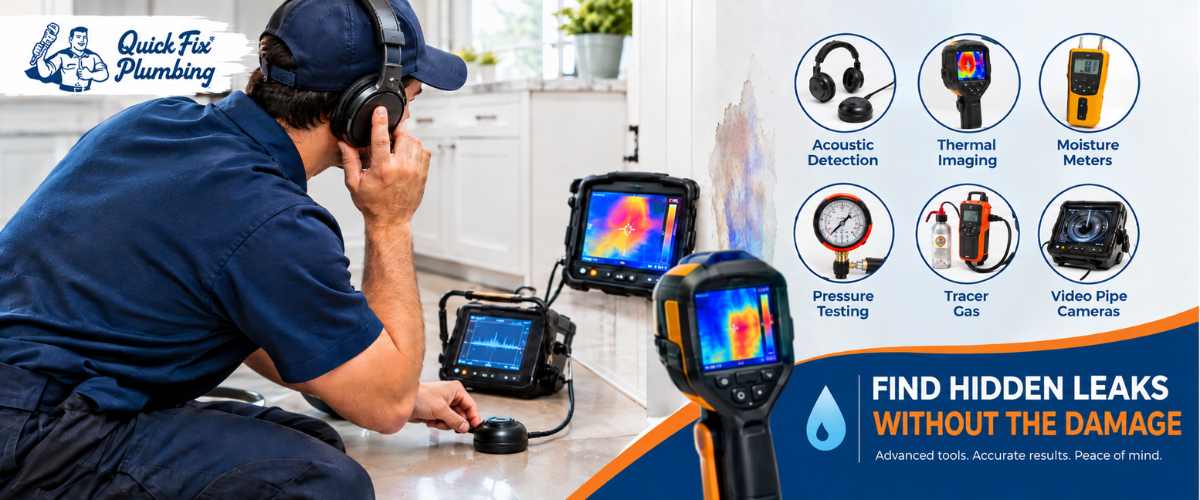
Plumbers find hidden leaks with electronic equipment — acoustic sensors, thermal imaging cameras, moisture meters, pressure tests, and tracer gas — that pinpoints the exact spot without tearing open walls or floors. The process runs in three stages: confirm a leak exists, narrow down the zone, then locate it precisely. This guide walks through each tool, how the process works, and why this modern approach saves you money over the old dig-and-guess method.
How the Leak-Detection Process Works, Step by Step
A skilled plumber narrows the search before opening anything. The process follows a clear order:
- Confirm the leak. A pressure test on the water lines shows whether pressure drops when it should hold steady — proof that water is escaping somewhere.
- Isolate the zone. By closing valves and separating hot and cold lines, the plumber narrows the leak to one section of the system instead of the whole house.
- Pinpoint the source. Acoustic, thermal, and moisture tools zero in on the exact spot behind the wall, under the floor, or beneath the slab.
- Mark and repair. Only the confirmed spot is opened, so the fix stays small and your finishes stay intact.
The whole point is to narrow first and cut last — the opposite of the old method of opening walls to hunt for a leak.
Suspect a hidden leak in your home?
The sooner it's found, the less damage it does behind your walls. Contact us and we'll locate it fast with electronic detection.
The Tools Plumbers Use to Find Hidden Leaks
Acoustic and electronic listening
Water escaping a pressurized pipe makes a distinct sound. Acoustic sensors, ground microphones, and listening discs amplify that sound through drywall, cabinets, and even concrete, letting the plumber trace it to within inches. This is the headline method behind most electronic leak detection.
Thermal imaging cameras
A thermal camera reads surface temperature differences caused by moisture. A cool patch on a wall or a warm line on a floor points to water where it shouldn’t be — all without touching the surface.
Moisture meters
These measure the water content inside walls, floors, and ceilings. Scanning an area quickly reveals where moisture spikes, confirming what the acoustic or thermal reading suggests.
Pressure testing
By pressurizing a line and watching the gauge, a plumber confirms both that a leak exists and which line it’s on. It’s the fastest way to check a whole segment before narrowing the location.
Tracer gas
For buried or slab leaks, a non-toxic gas is pumped into the line and escapes at the leak point, where a sensitive detector picks it up above ground. It’s precise enough to find a break under a driveway or patio, which is why it pairs so well with water line repair on underground supply lines.
Video pipe cameras
For drains and sewer lines, a waterproof camera inspection sends a flexible scope inside the pipe to show cracks, breaks, and blockages on a live screen — no digging required to see the damage.
How Plumbers Find Leaks Behind Walls vs. Under a Slab
Behind a wall, plumbers combine acoustic listening, thermal imaging, and moisture meters to triangulate the leak, then open only the small section over it.
Under a concrete slab, the mix shifts. Acoustic deck plates listen through the concrete, and tracer gas confirms the exact point. Once located, slab leak repair opens just a small area of flooring rather than the whole slab.
Leak Detection Methods Compared
Each tool has a job it does best. Here’s how they line up:
| Cause | What It Means | Who Fixes It |
|---|---|---|
| Stuck stopper or linkage | Mechanical part is jammed or bent | Often DIY; plumber if worn |
| Blocked plumbing vent | A vacuum holds water in the pipe | Plumber (roof vent) |
| Mineral scale (hard water) | Pipe walls narrowed by buildup | Drain cleaning |
| Bellied / sagging pipe | A low spot where water pools | Drain line repair |
| Main sewer line issue | Blockage or damage downstream | Sewer line repair |
Signs You Have a Hidden Leak
Call for professional detection when you notice:
- A water bill that climbs while your usage stays the same
- Damp spots, stains, or a musty smell on walls, floors, or ceilings
- A warm patch on the floor from a hot-water line under the slab
- The sound of running water when every fixture is off
- Your water meter still moving after you've shut everything down
Any one of these is worth a check, because hidden leaks only get more expensive the longer they run.
High water bill but can't find the source?
A hidden leak can waste water for months behind a wall or under the slab. Contact us and we'll pinpoint it without tearing your home apart.
Why Electronic Detection Saves You Money
The old way of finding a leak meant opening walls and floors until the pipe turned up — slow, messy, and expensive to repair afterward. Electronic detection flips that around by finding the exact spot first, so only one small area is opened.
That non-invasive approach spares your tile, drywall, and concrete, and it catches damage early before mold or rot sets in. Booking professional leak detection up front almost always costs less than the demolition and repairs that guessing leads to.
Why Miami Homes Need Precise Leak Detection
Miami’s slab-on-grade homes hide leaks under concrete, where nothing shows until a warm floor or a high bill gives them away. The region’s hard water also drives pinhole leaks in copper lines buried in walls and slabs, so leaks here are often out of sight from the start.
Humidity can mask damp spots, making guesswork even riskier. Precise electronic detection avoids jackhammering a whole floor to chase one pinhole, and when leaks turn out to be systemic, it points clearly toward a whole-house repipe instead of endless spot repairs.
Think water is escaping somewhere hidden?
Contact us today for precise, non-invasive leak detection and an honest repair plan with upfront pricing. Call (305) 359-6882.
Frequently Asked Questions
How do plumbers find a leak without breaking walls?
They use non-invasive tools — acoustic sensors, thermal cameras, and moisture meters — to pinpoint the leak’s exact spot first. Only that small area is opened for the repair, so most of the wall stays intact.
How do plumbers find a slab leak?
For leaks under concrete, plumbers use acoustic deck plates that listen through the slab and tracer gas that escapes at the leak point. Together they locate the spot precisely, so only a small section of flooring is opened.
What is electronic leak detection?
It’s a method that uses microphones, amplifiers, and sensors to hear the sound of water escaping a pressurized pipe. Because leaks make a distinct sound, the equipment traces it to the exact location behind walls or under floors.
How accurate is leak detection?
Very. Combining acoustic, thermal, and pressure methods lets a plumber narrow a hidden leak to within inches, which is why so little demolition is needed to reach and repair it.
How long does leak detection take?
Most residential leak detection takes one to two hours, depending on the home’s size and how many lines need testing. Confirming and isolating the leak is quick; pinpointing it is the careful part.
Find the Leak Before the Damage Spreads
Plumbers find hidden leaks by combining pressure testing, acoustic listening, thermal imaging, and tracer gas to locate the exact spot without tearing your home apart. The technology turns a guessing game into a precise diagnosis, which saves you money on both the repair and the restoration. Our Miami plumbing team uses this same equipment to find leaks fast, before a small drip becomes major water damage.
