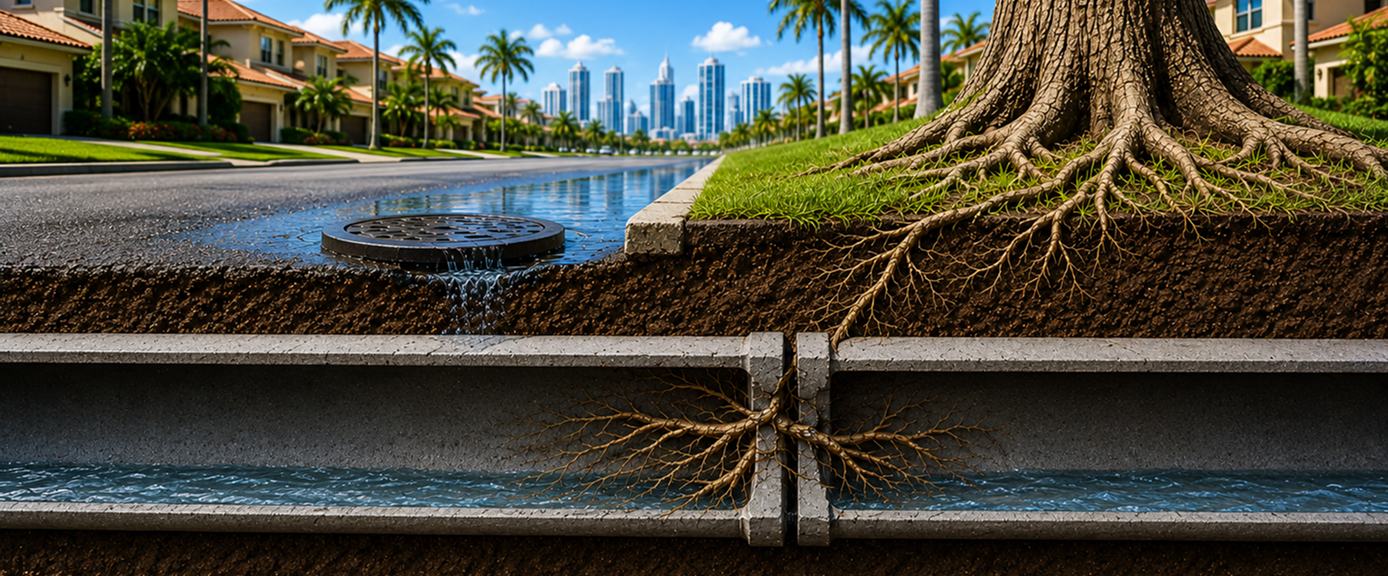
Tree roots in a sewer line usually happen when roots search for moisture and enter small cracks or weak pipe joints underground. The cheapest way to remove them is early professional root cutting or hydro jetting before the sewer line collapses and requires expensive excavation.
For Miami property owners, this is one of the most common causes of recurring drain backups, slow drains, foul sewer odors, and underground pipe damage. What starts as a small root intrusion can quickly turn into a major plumbing emergency that damages flooring, landscaping, and even your foundation.
The good news is that early detection can save thousands of dollars. A professional sewer camera inspection can identify root intrusion before the pipe completely fails, helping homeowners avoid emergency repairs and unnecessary digging.
If your drains keep backing up or your toilets gurgle repeatedly, now is the time to act before the damage gets worse.
Why Do Tree Roots Grow Into Sewer Lines?
Tree roots naturally search for water and nutrients underground. Even a tiny crack in a sewer pipe releases moisture that attracts nearby roots.
Once roots enter the pipe, they continue growing because the sewer line provides the following:
- Constant moisture
- Warm temperatures
- Organic nutrients
- Oxygen through pipe gaps
- Toilet paper
- Grease
- Food debris
- Waste buildup
Sewer Pipes Most Vulnerable to Root Intrusion
Root intrusion is especially common in
- Older Miami homes
- Cast iron sewer lines
- Clay pipes
- Aging underground plumbing systems
- Properties with mature landscaping
If your home is more than 20 years old, your sewer line may already have weak joints or corrosion that allows roots to enter.
For more information, also read How to unclog a main sewer line.
What Are the Warning Signs of Tree Roots in a Sewer Line?
Recognizing the warning signs early can help homeowners identify sewer line backup causes before major plumbing damage occurs.
1. Multiple Slow Drains
If several drains in your property slow down at the same time, the blockage may be inside the main sewer line.
2. Frequent Toilet Backups
A toilet that repeatedly clogs after plunging or snaking often points to deeper sewer line issues underground.
3. Gurgling Sounds in Pipes
Air trapped by root blockages can create bubbling or gurgling noises after flushing toilets or running sinks.
4. Sewer Odors Inside or Outside
5. Wet or Soggy Areas in the Yard
Why Ignoring Tree Roots Can Become Extremely Expensive
Many property owners ignore the early signs because the drains still “kind of work.” Unfortunately, tree roots continue growing every day.
Delaying repairs can lead to:
- Complete sewer line collapse
- Sewage backups inside the property
- Foundation damage
- Mold growth
- Emergency plumbing costs
- Landscape destruction
- Higher excavation expenses
A simple root cleaning service today can prevent a full sewer replacement later.
How Do Plumbers Confirm Tree Roots in Sewer Pipes?
The most accurate way to diagnose the problem is through a professional sewer camera inspection in Miami.
During the inspection, a high-resolution waterproof camera is inserted into the sewer line to identify:
- Root intrusion
- Pipe cracks
- Pipe corrosion
- Collapsed sections
- Offset joints
- Grease buildup
- Underground pipe damage
This process helps property owners avoid guesswork and unnecessary digging.
At Quick Fix Plumbing, sewer camera inspections help pinpoint the exact problem before recommending repairs. This saves homeowners time, money, and avoidable excavation costs.
Why Property Owners Choose Camera Inspections First
- Non-invasive diagnosis
- Faster repairs
- Lower long-term costs
- Prevents unnecessary excavation
- Helps identify hidden pipe damage
If you are experiencing recurring sewer issues, scheduling an inspection early can help prevent a plumbing emergency.
What Is the Cheapest Way to Remove Tree Roots From a Sewer Line?
1. Drain Snaking or Root Cutting (Most Affordable)
This is usually the cheapest professional solution for minor root intrusion. A specialized root-cutting machine mechanically slices through roots inside the sewer pipe to restore water flow.
Best For:
- Early-stage root intrusion
- Minor sewer clogs
- Temporary blockage removal
Benefits:
- Lower upfront cost
- Fast service
- Immediate flow restoration
- Minimal disruption
Important Limitation:
Root cutting removes the blockage, but it does not repair damaged pipes. Without additional maintenance, roots often return.
If your drains are slowing down repeatedly, early root cutting can help you avoid expensive sewer excavation later.
2. Hydro Jetting (Best Long-Term Cleaning Option)
Hydro jetting uses high-pressure water to completely clean the inside of the sewer pipe. Unlike traditional snaking, hydro jetting removes:
- Tree roots
- Grease buildup
- Sludge
- Debris
- Pipe scale
Best For:
- Moderate root intrusion
- Recurring backups
- Heavy sewer buildup
- Preventive maintenance
Benefits:
- Thorough pipe cleaning
- Better long-term performance
- Reduces recurring clogs
- Cleans entire pipe walls
- Pipe scale
3. Pipe Restoration or Brush Coating
If the sewer pipe has small cracks or corrosion, trenchless restoration solutions may help reinforce the pipe without major digging.
Quick Fix Plumbing offers brush coating solutions that help restore aging sewer pipes internally.
Benefits:
- Less invasive than excavation
- Protects aging pipes
- Helps reduce future root intrusion
- Minimal property disruption
Best For:
- Older cast iron pipes
- Minor structural damage
- Preventive pipe restoration
4. Sewer Line Excavation (When Pipes Are Severely Damaged)
If the roots have crushed or collapsed the sewer line, excavation may become necessary. This involves digging and replacing damaged underground pipe sections.
Signs You May Need Excavation:
- Constant backups
- Collapsed sewer pipes
- Severe root infestation
- Major pipe corrosion
- Recurring sewage flooding
Professional sewer line excavation in Miami helps safely replace broken sewer systems while minimizing additional property damage.
Can Chemical Root Killers Fix the Problem?
Chemical root killers may temporarily slow root growth, but they do not remove existing root masses or repair damaged sewer pipes.
Many store-bought products only provide short-term relief and can delay proper repairs.
For long-term protection, professional cleaning and inspection are usually the safest option.
How Can Property Owners Prevent Tree Roots in Sewer Lines?
-
Schedule Routine Sewer Camera Inspections
Preventive inspections help detect root intrusion before major backups occur. -
Address Slow Drains Early
Recurring slow drains are often the first sign of underground sewer problems. -
Avoid Planting Trees Near Sewer Pipes
Large root systems can eventually damage underground plumbing lines. -
Maintain Older Sewer Systems
Older cast-iron and clay sewer lines are far more vulnerable to root intrusion and cracking.
Frequently Asked Questions
Can tree roots completely block a sewer line?
Is hydro jetting better than snaking for tree roots?
Will homeowners' insurance cover root damage?
How much does tree root removal cost?
- Severity of the blockage
- Pipe damage
- Cleaning method used
- Whether excavation is required
Should I get a sewer camera inspection before repairs?
Final Thoughts
Tree roots in a sewer line rarely fix themselves. The longer roots grow inside underground pipes, the higher the risk of sewer backups, structural pipe damage, and costly excavation.
For most Miami property owners, the cheapest solution is early detection combined with professional root removal before the sewer line collapses.
If you are dealing with recurring drain backups, slow drains, foul sewer odors, or unexplained plumbing issues, scheduling a professional inspection now can help prevent major sewer damage later.
Why Miami Property Owners Trust Quick Fix Plumbing
Quick Fix Plumbing helps homeowners identify and solve sewer line problems before they become expensive emergencies.
Property owners choose our plumber in Pinecrest and throughout Miami because of:
- Advanced sewer camera inspections
- Fast response times
- Honest recommendations
- Non-invasive diagnostic methods
- Long-term sewer repair solutions
- Experienced local plumbing technicians
Whether you need sewer cleaning, root removal, hydro jetting, or underground pipe diagnostics, early action can help protect your property and reduce repair costs. Contact us today!
