
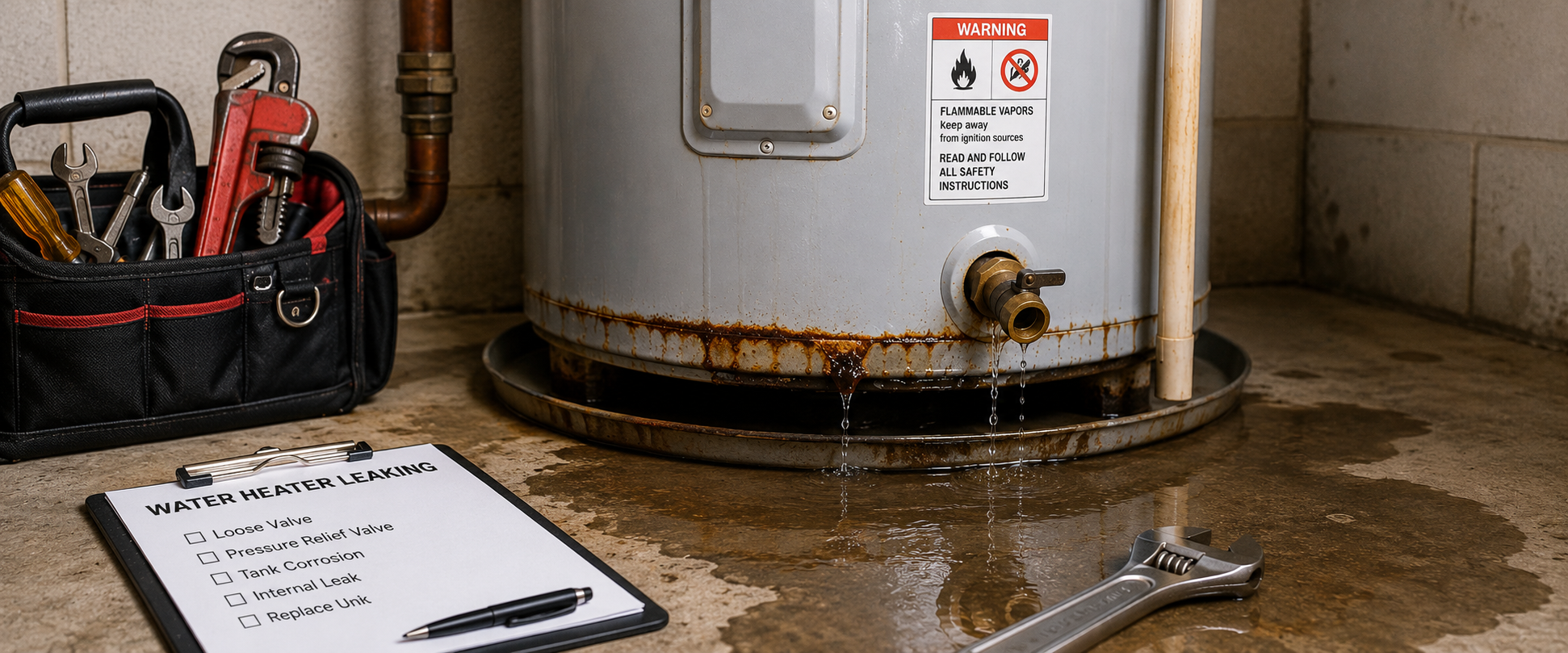
A water heater leaking from the bottom should not be ignored. The water may be coming from something relatively minor, such as a loose connection, drain valve, or condensation, but it can also indicate corrosion or a leaking water heater tank that needs to be replaced.
If water is actively pooling around the unit, turn off the water heater and its water supply if you can do so safely, and arrange a professional inspection.
The important first step is finding out where the water is actually coming from. Water visible at the bottom does not always mean the tank itself is leaking.
This guide explains why a water heater leaks from the bottom, whether a leaking water heater is dangerous, what you should do immediately, how long the unit may last, repair cost factors, and when replacement makes more sense.
If you are dealing with an active leak in South Florida, a professional plumber in Miami can inspect the system and identify the source before the problem causes more damage.
Why Is My Water Heater Leaking from the Bottom?
If your water heater is leaking from the bottom, several different components could be responsible.
The most common causes include:
- A leaking or loose drain valve
- Water traveling down from a pipe or fitting above the tank
- A faulty temperature and pressure relief valve
- Corrosion inside the water heater tank
- A leaking heating element or gasket on an electric water heater
- Condensation around a gas water heater
- Mineral and sediment buildup contributing to premature tank deterioration
Before assuming the entire water heater needs replacement, it is important to locate the actual source of the water.
1. The Drain Valve Is Leaking
The drain valve is located near the bottom of most tank-style water heaters, which makes it one of the first places to inspect when water appears around the base.
A drain valve may drip because it is loose, damaged, worn, or not completely closed.
If the tank itself is still in good condition, a leaking drain valve can often be repaired or replaced without replacing the entire water heater.
2. Water Is Running Down From a Connection Above
Sometimes a water heater appears to be leaking underneath even though the leak started higher on the unit.
Water from a supply connection, pipe fitting, or relief valve can travel down the outside of the tank before collecting around the bottom.
Carefully checking the top and sides of the water heater can help determine whether the water is actually coming from the tank base.
3. The Water Heater Tank Is Corroded
A leaking tank is more serious.
Traditional tank water heaters have an internal tank that can gradually corrode as the system ages. Once corrosion creates an opening in the tank itself, the damaged tank generally cannot be permanently repaired.
Common signs of tank corrosion include:
- Rust around the base
- Rust-colored hot water
- Water continuously appearing underneath the tank
- Visible corrosion on the exterior
- An older water heater with increasing problems
If the tank itself is leaking, replacement is normally the long-term solution.
4. Sediment and Mineral Buildup Are Affecting the Tank
Minerals naturally accumulate inside tank-style water heaters over time.
This sediment usually settles at the bottom of the tank. Heavy buildup can reduce efficiency, create popping or rumbling sounds, increase stress on the system, and contribute to premature wear.
Florida water conditions can make routine water heater maintenance particularly important.
If your water heater is making unusual noises in addition to leaking, sediment buildup should be checked during the inspection.
5. An Electric Water Heater Is Leaking Near the Bottom Panel
If an electric water heater is leaking from the bottom, water may sometimes be coming from the lower heating element or its gasket.
The water can collect behind the access panel and eventually run down toward the bottom of the heater.
Do not remove electrical panels or touch electrical components when water is present. Turn off power at the breaker if it is safe to do so and have the unit inspected.
6. A Gas Water Heater May Be Producing Condensation
If a gas water heater is leaking from the bottom, the water is not always coming from a failed tank.
Gas water heaters can sometimes produce condensation, particularly during startup or when a large amount of cold water enters the tank.
However, persistent pooling should not automatically be assumed to be condensation. A drain valve, plumbing connection, relief valve, or corroded tank may also be responsible.
Is a Water Heater Leaking from the Bottom Dangerous?
Yes, a water heater leaking from the bottom can be dangerous depending on the cause and severity of the leak.
The greatest concerns include water reaching electrical components, damage to flooring and walls, mold growth, corrosion, and problems involving excessive temperature or pressure.
Gas water heaters can create additional concerns if water reaches the burner or gas-control components.
You should be especially cautious if:
- Water is rapidly spreading around the unit
- Electrical components or outlets are wet
- The tank is heavily rusted
- You hear loud popping, banging, or rumbling
- The temperature and pressure relief system appears to be involved
- The leak is becoming worse
- Hot water temperature is behaving unusually
Do not continue operating a water heater simply because it is still producing hot water.
What Should I Do If My Water Heater Is Leaking From the Bottom?
If you discover water around the bottom of your water heater, take action before trying to determine whether the problem is minor.
1. Stop Using the Water Heater
Do not continue running a leaking water heater until you know where the water is coming from.
2. Turn Off the Energy Source
For an electric water heater, turn off the appropriate breaker if you can safely reach the electrical panel without entering standing water.
For a gas water heater, follow the manufacturer’s shutdown instructions or contact a professional if you are unsure.
3. Shut Off the Cold-Water Supply
Closing the water heater’s cold-water inlet can help reduce additional water entering the tank.
If the leak is severe and you cannot safely isolate the water heater, shutting off the property’s main water supply may be necessary.
4. Look for the Source Without Disassembling the Unit
Check whether the water appears to be coming from:
- The drain valve
- A pipe connection
- The relief valve or discharge pipe
- The side of the tank
- An electric access panel
- The actual bottom of the tank
Avoid opening electrical panels or attempting repairs around wet electrical or gas components.
5. Schedule a Professional Inspection
A plumber can determine whether the problem is a replaceable component or a leaking tank.
For Miami-Dade property owners, professional water heater repair in Miami can help determine whether repairing or replacing the unit makes more financial sense.
Can I Still Use a Leaking Water Heater?
It is generally better not to continue operating a leaking water heater until the source has been identified.
A very small drip from an accessible fitting may turn out to be a simple repair, but water around the bottom can also indicate a failing tank or a problem involving electrical, gas, temperature, or pressure components.
Stop using the unit immediately if:
- Water is actively pooling
- The leak is getting worse
- Rust-colored water is coming from the tank
- Water is near electrical components
- The heater is making loud or unusual noises
- The tank itself appears corroded
Continuing to operate a failing water heater may turn a manageable repair into water damage or an emergency replacement.
How Much Does It Cost to Fix a Water Heater Leak?
The cost to fix a leaking water heater depends primarily on what is actually leaking.
A simple connection or valve repair is normally much less involved than replacing a damaged tank.
Common water heater leak repairs include:
| Problem | Typical Solution | Cost Level |
|---|---|---|
| Loose plumbing connection | Tighten or reseal connection | Lower |
| Leaking drain valve | Repair or replace valve | Lower to moderate |
| T&P valve problem | Diagnose pressure and replace valve if needed | Moderate |
| Electric heating element gasket | Replace gasket or heating element | Moderate |
| Heavy sediment buildup | Flush or service system if appropriate | Moderate |
| Corroded internal tank | Replace water heater | Highest |
The final price can vary based on the water heater type, required parts, accessibility, labor, age of the system, and whether emergency service is required.
If the tank itself is cracked or corroded, spending money on temporary repairs usually does not solve the underlying problem.
Quick Fix Plumbing provides upfront pricing after the system has been inspected and the cause of the leak has been identified.
How Do I Know If the Water Heater Tank Is Corroded?
- Rust-colored water
- Water around the base of the tank
- Metallic smells
- Reduced hot water supply
- Visible rust on the exterior
Can Sediment Buildup Cause Water Heater Leaks?
Yes. Sediment buildup is extremely common in Florida water heaters. Over time, minerals settle at the bottom of the tank and create excessive heat buildup inside the unit.
This can cause:
- Tank overheating
- Internal cracking
- Reduced efficiency
- Strange noises
- Premature tank failure
Routine flushing helps extend the water heater’s lifespan and improve efficiency. If your unit makes rumbling or popping sounds, sediment buildup may already be damaging the system.
Should I Repair or Replace My Water Heater?
The answer depends on the unit’s age and overall condition.
Repair is usually recommended if:
- The leak comes from a valve or connection
- The heater is under 8 years old
- The tank itself is undamaged
Replacement is usually smarter if:
- The tank is leaking internally
- Rust and corrosion are widespread
- Repairs are becoming frequent
- The unit is over 10 years old
Homeowners comparing new systems often research tankless vs tank water heater options to improve energy efficiency and long-term performance.
Can Leak Detection Services Help Find Water Heater Problems?
Yes. Professional leak inspections help confirm whether the water heater is the source of the leak or if nearby plumbing pipes are involved.
Advanced leak detection services can identify:
- Hidden pipe leaks
- Slab leaks near utility rooms
- Moisture behind walls
- Water line damage
When Should I Call a Professional Plumber?
You should call a plumber immediately if:
- Water is leaking continuously
- Hot water suddenly stops
- Water smells metallic or rusty
- The unit makes loud noises
- The leak spreads across the flooring
A licensed plumber in Miami can inspect the heater, identify the source of the leak, and recommend the safest repair solution.
For severe leaks after hours, homeowners often search for information about emergency plumber costs before scheduling urgent service.
Frequently Asked Questions
Why is my water tank leaking from the bottom?
A water tank leaking from the bottom may have a damaged drain valve, a leaking fitting, water running down from another component, or corrosion inside the tank. The exact source should be identified before deciding whether the heater needs repair or replacement.
Is a leaking water heater dangerous?
It can be. Water can damage electrical components, flooring, walls, and nearby materials. Pressure-related problems or leaks involving gas or electrical components require especially prompt attention.
Can a leaking water heater be repaired?
Yes, if the leak comes from a replaceable component such as a valve, connection, gasket, or heating element. If the internal tank itself has corroded and is leaking, replacement is usually required.
Can I still use water if my water heater is leaking?
You may still be able to use cold water elsewhere in the property after the water heater has been safely isolated. However, you should not continue operating a leaking water heater until the cause has been identified.
Why is my gas water heater leaking from the bottom?
Possible causes include condensation, a leaking drain valve, plumbing connections, a relief-valve problem, or tank corrosion. Persistent pooling should be professionally inspected.
Why is my electric water heater leaking from the bottom?
An electric water heater may leak from the drain valve, tank, plumbing connections, or a lower heating element gasket. Water around electrical components is a safety concern, so power should be turned off if it can be done safely.
How long does a water heater last in Florida?
Many traditional tank water heaters last approximately 8 to 12 years. Hard water, sediment buildup, heavy usage, installation quality, and maintenance can all affect lifespan.
Does rusty water mean my water heater needs replacement?
Not always, but rusty hot water combined with corrosion or leaking around the tank base may indicate deterioration inside the tank. A plumber should inspect the system before the leak becomes worse.
Final Thoughts
A water heater leaking from the bottom should never be ignored because small leaks can quickly become expensive plumbing emergencies. Some leaks are caused by simple valve issues, while others signal serious tank corrosion or internal failure.
The safest approach is to schedule a professional inspection as soon as you notice water around the heater. Fast action can help prevent structural damage, mold growth, rising utility costs, and complete system failure.
Protect Your Home Before a Small Water Heater Leak Becomes Major Damage
A leaking water heater can quickly damage flooring, walls, and nearby plumbing systems if the issue is not repaired early. Quick Fix Plumbing provides professional water heater repair, leak detection, plumbing inspections, and emergency plumbing services throughout Miami-Dade. If you notice water around your heater, schedule an inspection today before the leak turns into a costly plumbing emergency.
