
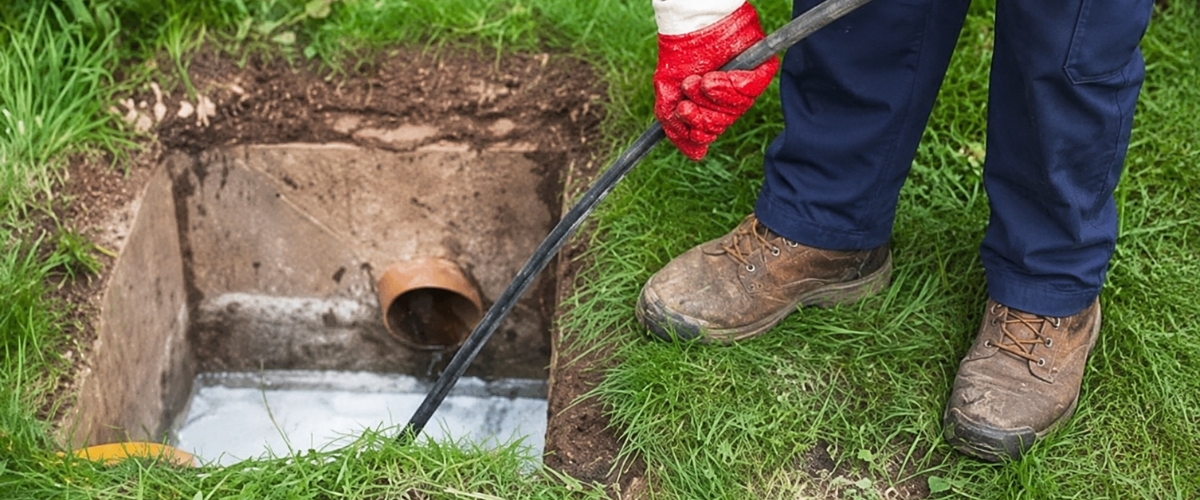
A slow sink or clogged toilet does not always mean your main sewer line is clogged. But when several drains slow down together, toilets start gurgling, or wastewater backs up into a tub or floor drain, the problem may be farther down the drainage system.
If you suspect a main sewer line clog, the first thing to do is stop using water. Continuing to flush toilets, run showers, or use the washing machine can send more wastewater into a line that is already struggling to drain.
Some isolated drain clogs can be handled with basic DIY methods. A true main sewer blockage is different. It can involve grease, wipes, tree roots, heavy buildup, foreign objects, or damaged piping, and the correct solution depends on what is actually blocking the line.
How Do You Know if Your Main Sewer Line Is Clogged?
The biggest clue is that more than one drain is affected.
A clog limited to one bathroom sink, shower, or toilet is usually closer to that fixture. When several fixtures develop problems around the same time, the blockage may be in a shared branch or the main sewer line.
Common signs include:
- Multiple drains becoming slow at the same time
- A toilet bubbling or gurgling when another fixture drains
- Water backing up into a bathtub, shower, or floor drain
- Recurring toilet backups
- Sewage odors combined with drainage problems
- Wastewater appearing at one of the home's lowest drains
If you notice a toilet making a gurgling sound when another fixture is used, trapped air caused by restricted drainage is one possible explanation.
These symptoms help identify where to investigate, but they do not tell you exactly what caused the blockage.
What Should You Do First When the Main Sewer Line Is Backed Up?
Stop Using Water
This is the most important immediate step.
Do not repeatedly flush toilets or run sinks to test whether the clog has cleared. If wastewater cannot leave the property normally, additional water can increase the amount that backs up through another fixture.
If sewage is already entering the home, keep children and pets away from the affected area and avoid direct contact. EPA notes that sanitary sewer overflows can contain bacteria, viruses, protozoa, and other disease-causing organisms. EPA guidance on sanitary sewer overflows
Check Whether One Drain or Several Drains Are Affected
If just one fixture is clogged while everything else drains normally, start with that fixture.
If toilets, tubs, showers, and sinks are all showing symptoms, the problem is more likely to be farther downstream.
Find the Sewer Cleanout
A sewer cleanout provides direct access to the property’s main drainage line.
If you do not know where yours is located, see Quick Fix Plumbing’s guide on where your sewer cleanout is.
Locating the cleanout is reasonable DIY troubleshooting. Opening a cleanout during an active backup is different.
If wastewater is standing behind the cap, loosening it can release sewage. Do not force open a stuck cleanout or place yourself directly in front of the cap when a complete blockage is suspected.
How to Clear a Main Sewer Line Clog Yourself
What you should try depends on whether you actually have a main sewer clog.
If Only One Fixture Is Clogged
For an isolated sink, shower, or toilet clog, reasonable first steps may include:
- Using the appropriate type of plunger
- Removing visible debris from the drain opening
- Cleaning an accessible trap where appropriate
- Using a small hand-operated drain snake for a nearby obstruction
If the fixture begins draining normally and the rest of the home’s plumbing was unaffected, the obstruction probably was not in the main sewer line.
If Multiple Fixtures Are Backing Up
DIY options become much more limited.
A powered sewer machine is significantly different from a small household drain snake. The cable can bind inside a pipe, damage compromised plumbing, or injure an inexperienced operator.
If several drains are backing up together, professional drain cleaning in Miami is usually more appropriate than repeatedly trying fixture-level tools.
Can You Snake a Main Sewer Line Yourself?
Technically, main sewer lines can be cleared with professional-sized cable equipment, but access, pipe diameter, blockage type, and pipe condition all matter.
If you already know how to operate sewer-cleaning equipment, follow the manufacturer’s instructions and stop if the cable will not advance or repeatedly binds.
For an inexperienced homeowner, a recurring or whole-house backup is not a good place to learn how to operate a powered sewer machine.
Should You Use Chemical Drain Cleaner on a Main Sewer Line?
Chemical cleaner is generally a poor diagnostic tool for a suspected main sewer blockage.
It cannot tell you whether the problem is:
- Tree roots
- A foreign object
- Heavy grease
- A collapsed pipe
- An offset joint
- Severe corrosion
- Another structural restriction
There is also a safety issue. Many non-enzymatic drain cleaners contain concentrated acids or alkalis that can cause serious chemical burns. Poison Control’s drain-cleaner safety guidance
If you already poured a chemical cleaner into the plumbing, tell the plumber or drain technician before work begins.
What Causes a Main Sewer Line Clog?
1. Grease, Fats, and Oils
Cooking grease can enter a drain as a liquid and then cool and adhere to pipe surfaces.
As buildup increases, the opening becomes smaller and can catch other material moving through the sewer.
Miami-Dade specifically warns that fats, oils, and grease can clog sewer pipes and contribute to wastewater backups and overflows.
Instead of pouring cooking grease down the sink, allow it to cool and dispose of it with household waste according to local guidance.
2. Wipes and Other Non-Flushable Material
Just because something disappears when the toilet flushes does not mean it belongs in a sewer line.
Miami-Dade’s wastewater guidance tells residents to flush only pee, poop, and toilet paper and specifically identifies wipes, paper towels, sanitary products, rags, and other items that should go in the trash instead.
These materials can combine with grease, roots, or existing pipe defects and contribute to a larger blockage.
3. Tree Roots
Roots can enter sewer piping through cracks, separated joints, or other openings.
Once inside, they can restrict the pipe and trap toilet paper and other material.
EPA identifies tree roots entering sewer defects as a cause of blockages.
For a deeper explanation of diagnosis and removal options, see Quick Fix Plumbing’s guide to tree roots in a sewer line.
4. Heavy Buildup Inside the Pipe
Grease, sludge, scale, and other deposits can gradually narrow a sewer line.
This may begin as slower drainage and eventually develop into recurring backups.
Clearing a narrow opening through the obstruction can restore flow temporarily, but significant buildup may require a more thorough cleaning method.
5. Damaged or Deteriorated Sewer Pipe
Sometimes what appears to be a clog is partly a structural problem.
Cracks, offsets, corrosion, deformation, or collapse can restrict the pipe and repeatedly catch waste.
In that situation, clearing the blockage may restore drainage temporarily without correcting the damaged pipe itself.
Recurring problems may require sewer line repair in Miami rather than repeated clog removal.
What Do Plumbers Use to Unclog a Main Sewer Line?
There is no single method that is best for every sewer blockage.
The right approach depends on what is blocking the pipe and the condition of the line.
Mechanical Sewer Cabling
Professional sewer machines use larger cables and different cutting or clearing attachments than household drain snakes.
They can break through or retrieve many types of obstructions, including paper buildup, debris, and some root intrusion.
Hydro Jetting
Hydro jetting in Miami uses high-pressure water to remove grease, sludge, debris, and buildup from inside drain and sewer piping.
It can be useful when the goal is to clean substantial material from the interior of a pipe rather than simply create an opening through a clog.
Hydro jetting is not a repair for a collapsed or severely damaged sewer line. Pipe condition matters when deciding whether high-pressure cleaning is appropriate.
Sewer Camera Inspection
When a blockage keeps returning, a sewer camera inspection can help show visible conditions inside accessible piping, including root intrusion, cracks, offsets, corrosion, and other defects.
A camera is not always the first step. If a line is completely blocked or filled with debris, enough of the obstruction may need to be cleared before useful footage can be obtained.
Sewer Line Repair
If inspection shows significant structural damage, cleaning alone may not provide a lasting solution.
A cracked, badly offset, deteriorated, or collapsed section may require sewer line repair in Miami.
What Is the Best Way to Unclog a Main Sewer Line?
There is no universal “best” tool.
The best method is the one that matches the cause:
- A cable or auger may clear many solid obstructions.
- Hydro jetting can be useful for substantial grease and buildup.
- Root intrusion may require cutting or cleaning followed by inspection.
- A foreign object may need mechanical retrieval.
- A collapsed pipe requires repair rather than stronger drain cleaning.
This is why recurring sewer problems should be diagnosed rather than repeatedly treated as unrelated clogs.
If your property has already experienced more than one backup, review these common sewer line backup causes.
Can a Main Sewer Line Unclog Itself?
Sometimes the symptoms can temporarily disappear, but that does not mean the underlying cause is gone.
A partial blockage can shift. Wastewater may slowly pass around an obstruction. Lower water use can also make a restricted pipe appear normal for a while.
But grease does not disappear because drainage temporarily improves, roots do not leave the pipe on their own, and structural damage does not repair itself.
If several drains backed up together and then started working again, keep an eye on the system. A recurring problem deserves investigation.
When Should You Call a Plumber for a Sewer Line Clog?
Stop DIY troubleshooting when:
- Sewage is actively backing up indoors
- Several fixtures will not drain
- Wastewater appears through a tub, shower, or floor drain
- The same blockage keeps returning
- The cleanout appears full or pressurized
- A sewer cable will not advance
- You suspect tree roots
- You suspect broken or collapsed piping
- Sewer odors occur with recurring drainage problems
- You do not know where the blockage is located
A main-line blockage is different from a routine sink clog. The goal is not only to restore drainage but also to understand why the line stopped flowing.
How Can You Prevent Main Sewer Line Clogs?
Keep Grease Out of the Drain
Dispose of fats, oils, and cooking grease with household waste rather than washing them into the plumbing.
Be Careful What You Flush
Stick to toilet paper and human waste.
Wipes, paper towels, sanitary products, cotton products, dental floss, and similar materials belong in the trash.
Do Not Ignore Gurgling and Multiple Slow Drains
One sluggish fixture can be a small problem.
Several drains slowing down together deserve more attention.
Investigate Repeat Backups
If the same sewer line needs frequent clearing, ask why.
Roots, deterioration, heavy buildup, offsets, or another pipe defect may be responsible.
Use Camera Inspection When the Cause Is Unclear
A camera inspection can be especially useful when blockages keep returning or structural pipe problems are suspected.
Frequently Asked Questions
How Do I Know if My Main Sewer Line Is Clogged?
Multiple drains slowing or backing up together are stronger signs of a main-line problem than one isolated clogged fixture.
A toilet that gurgles when another fixture drains is another clue.
What Is the Fastest Way to Unclog a Main Sewer Line?
It depends on what is causing the blockage.
Mechanical cabling can clear many clogs, while hydro jetting may be more appropriate for heavy grease or buildup. Structural pipe damage may require repair rather than cleaning.
Can I Snake a Main Sewer Line Myself?
An experienced person can use appropriate sewer-cleaning equipment according to the manufacturer’s instructions.
However, a powered sewer machine is not the same as a small household drain snake. If several fixtures are backing up or you do not know the condition of the pipe, professional service is the safer option.
Will Hydro Jetting Fix Every Sewer Clog?
No.
Hydro jetting is a cleaning method. It cannot repair a collapsed, badly broken, or severely displaced sewer pipe.
The method should be selected after considering the type of blockage and the condition of the line.
Can a Sewer Line Unclog Itself?
A partial clog can shift enough for drainage to temporarily improve, but that does not mean the cause has been corrected.
Recurring symptoms are a reason to investigate the line.
Is a Sewer Backup Dangerous?
Yes. Raw sewage can contain disease-causing microorganisms.
EPA notes that sanitary sewer overflows can contain bacteria, viruses, protozoa, and other pathogens. EPA sewer-overflow health information
Avoid direct contact with sewage and keep children and pets away from contaminated areas.
Need Help With a Clogged Main Sewer Line in Miami?
If several drains are backing up, the blockage keeps returning, or wastewater is entering your home, stop adding water to the plumbing system and have the line evaluated.
Quick Fix Plumbing provides drain cleaning in Miami, hydro jetting in Miami, sewer camera inspections, and sewer line repair in Miami based on what the sewer line actually needs.
Call (305) 359-6882 or book service online.
