
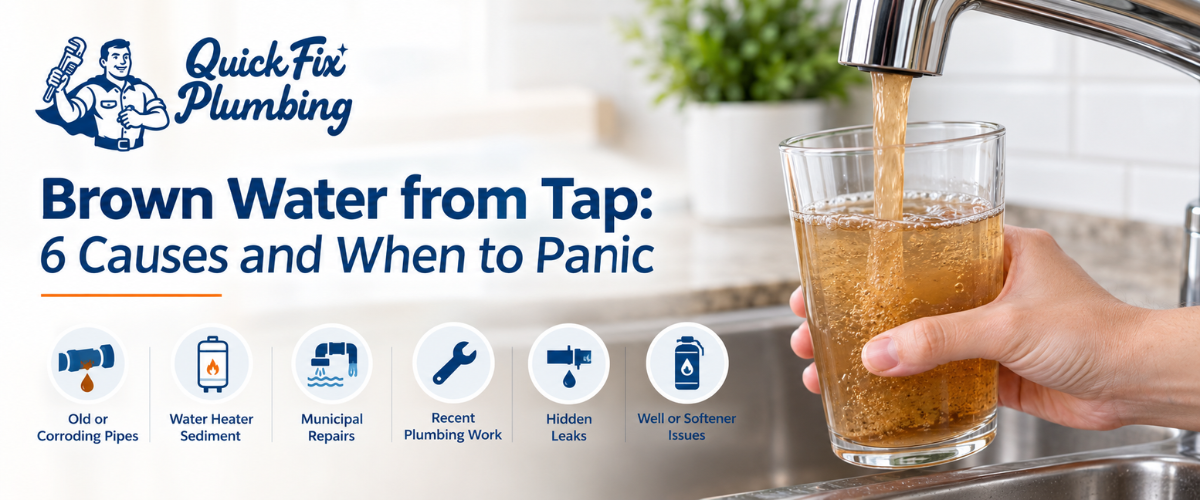
Brown water from your tap is usually caused by rust or sediment disturbed inside old pipes, a water heater, or the city’s water main, and it’s rarely an emergency if it clears up after running the tap for a minute. Understanding the most common brown water from tap causes can help you determine whether the problem is temporary or a sign of a plumbing issue that needs attention. It becomes a reason to act quickly, though, if the discoloration is constant, paired with low pressure, or shows up alongside a strange smell. Below, we’ll walk through the six most common causes we see in Miami homes and how to tell which one applies to you.
If the discoloration keeps returning or is limited to one area of the house, it’s often worth having a technician check for water leak repair in Miami, since a hidden leak can sometimes stir up sediment in a specific section of pipe.
Cause 1: Corroding Galvanized or Old Pipes
Older homes with galvanized steel or aging pipes are one of the most common sources of brown water, since rust builds up on the interior pipe walls over years of use. Once disturbed, that rust flakes off and travels straight to your faucet.
- Most common in homes built before the 1980s with galvanized plumbing.
- Rust color tends to be reddish-brown rather than a muddy or gray tint.
- Usually affects hot and cold water differently, depending on which lines are corroded.
- Gets worse over time rather than appearing suddenly and then stopping.
Cause 2: Sediment Buildup in Your Water Heater
A water heater with heavy sediment buildup can release rust-colored, silty water, especially right after the tank has been disturbed, like after running hot water heavily or during a temperature change. This is one of the most common causes we diagnose during service calls.
- Usually it only affects hot water, not cold.
- Often paired with a rumbling or popping noise from the tank.
- More common in homes that haven't flushed their water heater in over a year.
- Tends to clear temporarily after a flush, though it may return without regular maintenance.
Cause 3: Water Main Breaks or Municipal Repairs
Sometimes the cause has nothing to do with your home’s plumbing at all. City water main repairs, breaks, or hydrant flushing can stir up sediment in the municipal supply line, sending it directly into homes nearby.
- Usually affects an entire neighborhood or street, not just one house.
- Often temporary, clearing up within a few hours to a day.
- City utility websites or local news sometimes post advisories during active repairs.
- Cold water is typically affected first and most noticeably in these cases.
Cause 4: A Recent Plumbing Repair or Nearby Construction
Any recent work on your plumbing system, or even nearby construction affecting underground lines, can temporarily stir up sediment that had settled inside pipes. This is one of the more predictable and least concerning causes.
- Common after a repipe, repair, or fixture replacement.
- Usually resolves within a few hours of flushing the affected faucets.
- Can affect just one fixture or the whole house, depending on where the work occurred.
- Not typically a sign of an ongoing problem once it clears.
Cause 5: A Hidden Leak Disturbing Sediment in the Line
A leak inside a wall or underground can change water flow and pressure in ways that stir up settled sediment, even if the leak itself isn’t visible yet. This cause is worth taking seriously, since it often comes with other clues.
- Discoloration may be paired with an unexplained rise in your water bill.
- You might notice a sewer gas smell in house areas near the affected line if the leak is close to a drain or vent connection.
- Water pressure may fluctuate at the same fixture, producing brown water.
- Often limited to one section of the house rather than affecting every faucet.
Cause 6: Aging or Failing Well or Water Softener Equipment
Homes on well water, or with a softener or filtration system nearing the end of its lifespan, can experience brown or discolored water from mineral buildup or equipment failure. This cause is more specific but worth ruling out if it applies to your home.
- Well water discoloration is often tied to iron or manganese content in the groundwater.
- A failing resin bed in a softener can release discolored water intermittently.
- Comparing a water softener vs whole house filter setup is worth doing if discoloration keeps recurring, since each addresses different water quality issues.
- Regular equipment maintenance can prevent most of these cases from developing in the first place.
When Is Brown Water an Emergency?
Most brown water situations resolve on their own or with a simple flush, but a few specific patterns mean it’s time to act quickly rather than wait it out. Knowing the difference can prevent a small issue from becoming a bigger one.
- Not an emergency: Brief discoloration after construction, repairs, or a water main flush that clears within a few hours.
- Worth monitoring: Recurring hot-water-only discoloration, likely tied to water heater sediment.
- Worth a call soon: Discoloration limited to one area of the house that doesn't clear after flushing.
- Call immediately: Brown water paired with low pressure, a strong odor, or visible leaking anywhere in the home.
Is It Safe to Drink or Use Brown Water?
Brown water is generally more of an aesthetic and plumbing concern than an immediate health hazard, especially if it clears quickly. Still, it’s reasonable to avoid drinking or cooking with it until the cause is identified.
- Avoid drinking or cooking with visibly discolored water until it clears.
- It's generally safe for bathing and washing, though some people prefer to wait it out.
- Persistent discoloration should be tested if you're on well water, since causes can vary more widely.
- When in doubt, treating it as a precaution rather than an emergency is the safer approach.
Could Brown Water Mean You Need a Repipe?
If brown water keeps coming back across multiple fixtures, especially in an older home, it’s often a sign that the underlying pipe material has reached the end of its usable life. At that point, ongoing flushes and patch fixes become less effective.
- Recurring discoloration across multiple rooms often points to system-wide corrosion.
- Homes with galvanized pipes are the most common candidates for this pattern.
- A whole-house repiping in Miami evaluation can confirm whether your pipes are the root cause.
- Repiping typically resolves recurring discoloration permanently, unlike temporary fixes.
When Should You Call a Plumber About Brown Water?
A single instance that clears quickly usually isn’t worth an emergency call, but a pattern of recurring discoloration deserves a professional look. Catching the cause early can prevent bigger plumbing issues down the line.
- The discoloration doesn't clear after running the tap for several minutes.
- It's paired with low water pressure or an odor.
- It keeps returning over weeks or months.
- It's affecting only your home and not confirmed as a citywide issue.
If you’re looking for a plumber in North Miami FL, our technicians can pinpoint whether the cause is your water heater, pipes, or something upstream and recommend the right next step.
Frequently Asked Questions
Why is only my hot water brown?
This usually points to sediment buildup inside your water heater tank, since cold water bypasses the tank entirely and comes straight from the supply line.
How long should I wait before calling a plumber?
If discoloration doesn’t clear within a few hours or keeps returning, it’s reasonable to call rather than continuing to wait it out.
Can brown water damage my appliances?
Yes, sediment-heavy water can affect appliances like dishwashers and washing machines over time, making it worth addressing the root cause rather than just flushing repeatedly.
Is brown water more common in older Miami neighborhoods?
Yes, homes with older galvanized plumbing or original water heaters tend to experience this more often than newer construction with updated piping.
Conclusion
Brown water from your tap is often caused by rust, sediment, or recent plumbing work, but recurring discoloration should never be ignored. Identifying the source early can help prevent pipe damage, appliance wear, and costly repairs. If the problem persists or comes with low pressure or unusual odors, having your plumbing system professionally inspected is the safest next step.
Need Help Finding the Cause of Brown Water?
If brown water keeps returning, don’t rely on temporary fixes. The experienced team at Quick Fix Plumbing can inspect your pipes, water heater, and plumbing system to identify the exact cause and recommend the right solution. Whether it’s a hidden leak, aging pipes, or a system-wide issue, we’ll restore clean, reliable water with fast, professional service.
