
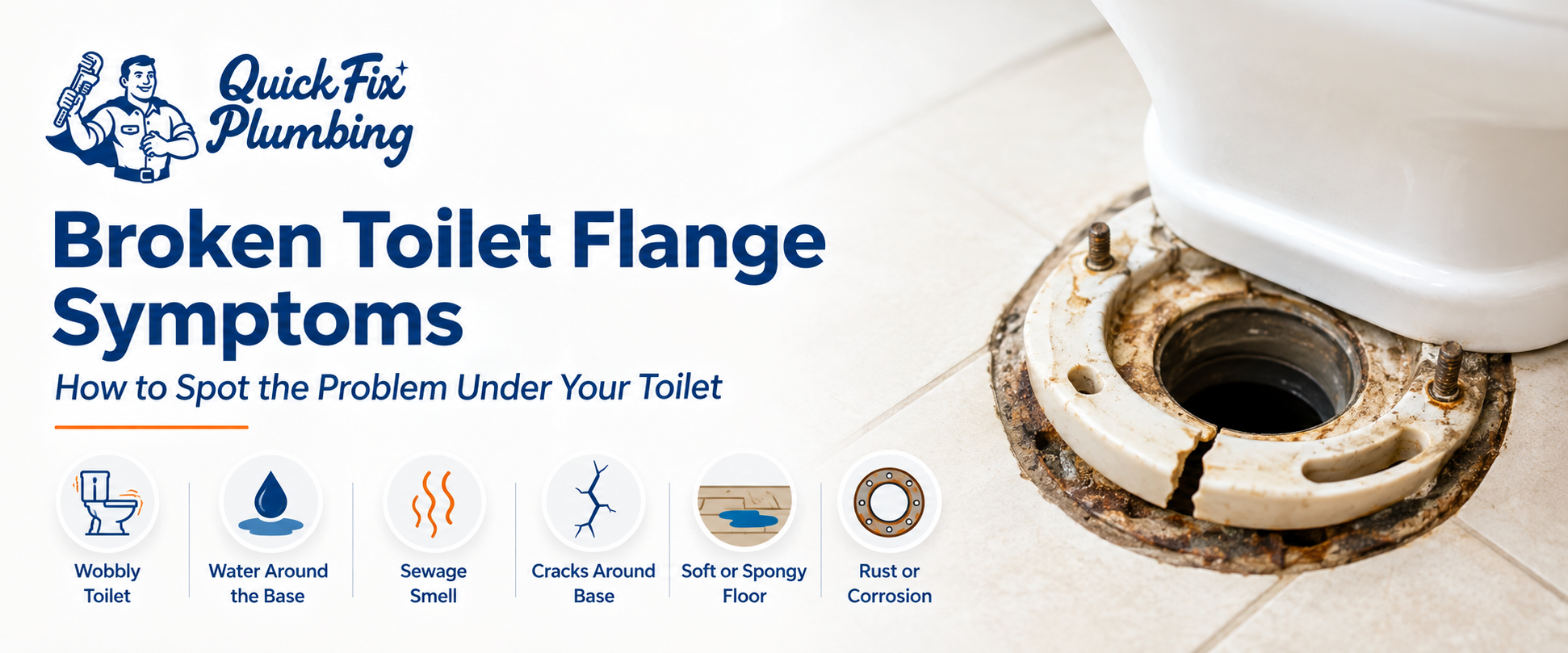
A broken toilet flange usually shows up as a wobbly toilet, a ring of water around the base, or a sewage smell that won’t go away no matter how much you clean. If you’ve noticed any of that, the flange, not the toilet itself, is probably the real culprit.
Most homeowners blame the toilet. They tighten the bolts, buy a new wax ring, and maybe even replace the whole unit. And then, a few weeks later, the same problem creeps back. That’s usually the moment someone finally calls a toilet repair Miami technician, and it’s usually the moment they find out the flange was the actual issue all along.
Key Takeaways
- A wobbly, rocking toilet is the #1 red flag of a cracked or broken flange.
- Water pooling at the base after every flush almost always points to a failed wax seal caused by flange damage.
- A sewage smell in the bathroom means gas is escaping past a broken seal, not just a "dirty toilet."
- Soft, spongy, or discolored flooring around the toilet base signals long-term leaking and possible subfloor rot.
- Ignoring these signs doesn't fix them. It just gives water more time to damage your subfloor and joists.
What Is a Toilet Flange, Anyway?
Think of the flange as the toilet’s anchor point. It’s the plastic or metal ring that connects your toilet to the drain pipe in the floor, and it’s what your toilet actually bolts down to.
Here’s the part most people don’t realize: the flange also holds the wax ring in place, which is your only real barrier against water and sewer gas leaking under the toilet. When the flange cracks, breaks, or corrodes, that whole seal falls apart. Everything above it, tank, bowl, water, and waste, is now sitting on a shaky foundation.
7 Toilet Flange Broken Symptoms You Shouldn't Ignore
1. The Toilet Rocks or Wobbles
This is usually the first thing people notice, and it’s the clearest of all the toilet flange broken symptoms. You sit down, and the toilet shifts slightly side to side. Tightening the bolts might help for a day or two. Then it’s right back to wobbling.
Why does re-tightening fail? Because a cracked flange can’t hold a firm connection no matter how hard you crank the bolts. You’re not fixing the problem; you’re just fighting it temporarily.
2. Water Pooling Around the Base
Notice a little puddle forming near the toilet after each flush? That’s not condensation, and it’s not “just a splash.” That’s water escaping past a broken wax seal, and it’s one of the more urgent signs to act on.
Left alone, this kind of leak doesn’t stay small. It spreads under the flooring, works its way into the subfloor, and quietly rots wood you can’t even see.
3. A Persistent Sewage Smell
You’ve scrubbed the bathroom top to bottom. Bleach, air freshener, the works. The smell’s still there.
A broken flange lets sewer gas sneak past the wax ring and into your bathroom air. No amount of cleaning fixes that, because the smell isn’t coming from the surface. It’s coming from underneath.
4. Cracks Visible Around the Toilet Base
Sometimes you can actually see it. Hairline cracks in the caulk or grout ring around the toilet base often mean the toilet has been shifting, which is exactly what happens when the flange underneath isn’t holding steady anymore.
5. Soft or Spongy Flooring Near the Toilet
Step near the base and feel a slight give in the floor? That’s a sign water’s been leaking for a while, long enough to soften the subfloor.
This one matters because it’s no longer just a “toilet” problem. It’s a structural one, and it tends to get expensive fast the longer it sits.
6. Difficulty Flushing or a Loose-Feeling Flush
A flange that’s shifted out of alignment can throw off the connection between the toilet and drain pipe, leading to weak flushes or a strange, loose sensation when you flush.
7. Visible Rust or Corrosion on a Metal Flange
Older homes often have metal flanges, and metal corrodes. If you can see rust flakes or a crumbling ring where the toilet meets the floor, that flange isn’t sealing anything properly anymore.
Why Do Toilet Flanges Break in the First Place?
A few usual suspects:
- Old age. Flanges wear down over decades, especially in older Miami-Dade homes.
- Over-tightened bolts. Cranking bolts too hard can crack plastic flanges.
- A toilet that's been rocked repeatedly. Every wobble stresses the flange a little more.
- Water damage. Slow leaks weaken the flange and the subfloor around it over time.
- Incorrect height. A flange installed too high or too low from the start never seals right, which is a common issue during a rushed toilet installation in a Miami job.
Should You Fix a Broken Flange Yourself?
Honestly? This isn’t the best DIY starting point. Replacing a flange means pulling the toilet, cutting out the old ring, resetting it flush with the finished floor, and getting a clean wax seal on the first try. Miss any one of those steps, and you’re right back to leaking, just with a bigger repair bill waiting on the other side.
If you’re in Miami-Dade and something feels off underneath your toilet, it’s worth having a licensed plumber take a look before the subfloor gets involved. A tech who’s dealt with hundreds of these knows what to check in the first five minutes, no guesswork, no trial and error.
A Quick Story From the Field
We once got a call from a homeowner in Westchester who’d replaced her wax ring twice in six months. Twice. Both times the leak came right back within weeks. Turned out her flange had cracked clean through on one side, so no wax ring, no matter how new, was ever going to hold. One proper flange replacement later, the leak was gone for good. If you’re dealing with something similar, our plumber in Westchester, FL, can usually spot a cracked flange in minutes rather than months of guessing.
Don't Confuse This With Other Plumbing Issues
Not every wet spot near the bathroom traces back to the toilet. If water’s showing up somewhere in the yard instead, that could point to drainage grading or even signal it’s time to look into French drain installation in Florida options for your property. And if the smell you’re chasing seems to come from outside rather than under the toilet, it’s worth checking where your sewer cleanout is before assuming the flange is to blame.
Frequently Asked Questions
Can a broken flange cause a toilet to leak from the bottom?
Yes, a cracked or misaligned flange can break the wax seal underneath the toilet, allowing water and waste to leak out at the base.
Is it safe to keep using a toilet with a broken flange?
You can still use it short-term, but every flush pushes more water past the failing seal and can speed up damage to your subfloor.
How do I know if my toilet flange is broken?
Look for a wobbling toilet, water pooling at the base after flushes, a lingering sewage smell, or visible cracks around the toilet’s base. If you notice drainage issues too, knowing where is my sewer cleanout can help you check for related sewer problems.
How much does it cost to fix a broken toilet flange?
Cost depends on the flange type, subfloor condition, and whether the toilet needs to be reset, so it’s best to get an upfront, on-site quote from a licensed plumber.
The Bottom Line
A wobbly toilet, a ring of water, or a smell that won’t quit, none of these are things to just live with. They’re early warnings, and catching them early is the difference between a straightforward flange swap and a full subfloor repair.
If you’ve spotted even one of these broken toilet flange symptoms, don’t wait around for it to get worse. Quick Fix Plumbing handles toilet repairs across Miami-Dade with upfront pricing and same-day appointments, so give us a call before that small leak turns into a much bigger project.
