
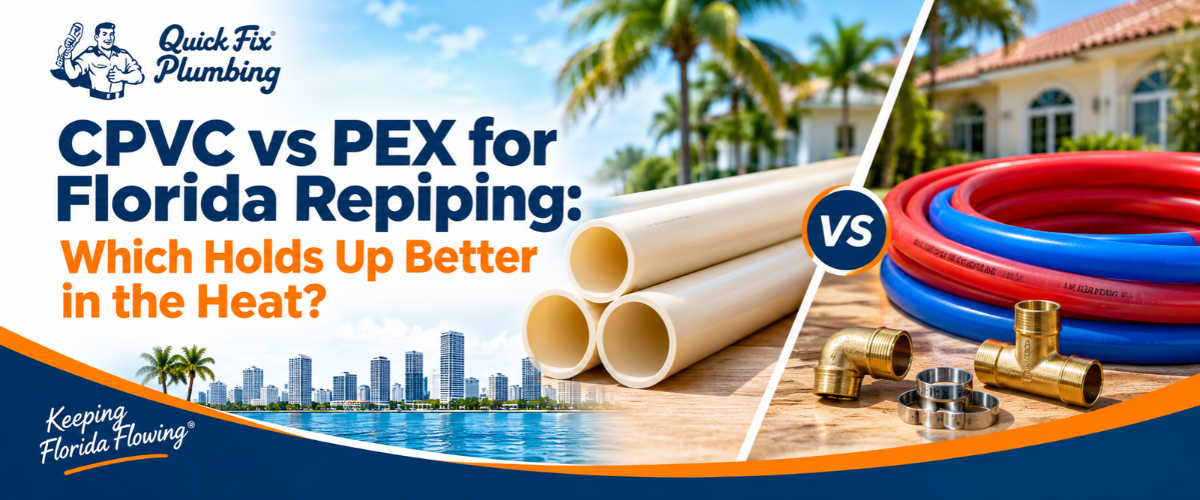
For most Florida homes, PEX holds up better in the heat than CPVC. PEX is flexible, so it has fewer joints to leak, it resists cracking, and it handles the swing between hot attics and cold water lines without getting brittle. CPVC is cheaper up front and takes very hot water well, but over years in a hot Florida attic, it tends to turn brittle and crack. Both are a big step up from old polybutylene. This guide breaks down how each pipe behaves in Florida heat, what each one costs, and which is the better choice for your repipe.
CPVC vs PEX: What's the Difference?
Both are plastic water pipes used to replace older metal or failing lines, and both are approved for hot and cold water. The difference is in how they’re built and how they behave over time.
CPVC is a rigid cream-colored pipe that’s cut to length and joined with glued fittings, a lot like the PVC used for drains but rated for pressure and hot water. PEX is a flexible tubing, usually red, blue, or white, that bends around corners and connects with crimp or push fittings. That one difference, rigid versus flexible, drives almost everything else, from how many joints a repipe needs to how each pipe survives a Florida summer.
If your home still has gray plastic supply lines, you’re likely here because you’re replacing old polybutylene pipes, and choosing the right new material is the most important decision in that project.
What Is CPVC, and How Does It Hold Up?
CPVC (chlorinated polyvinyl chloride) has been used in homes for decades. It’s inexpensive, widely available, and handles very hot water, which is why some plumbers still favor it for hot lines.
Where it does well:
- Takes high water temperatures without softening
- Stands up to chlorine in city water very well
- Low material cost
Where it struggles in Florida:
- Gets brittle with age, especially in hot attics, and can crack years down the line
- Every joint is a glued connection, so a repipe has many more potential leak points
- A rigid pipe can crack if it takes a hard knock or a pressure surge
That brittleness is the real catch in Florida. A pipe that’s fine for ten years can start splitting at the joints once the plastic ages in constant heat, and high pressure makes it worse, which is one more reason a water pressure regulator is worth having on any home.
What Is PEX, and Why Do Plumbers Prefer It?
PEX (cross-linked polyethylene) is the pipe most plumbers reach for today. It arrives in long, flexible coils that snake through walls and around corners, so a whole home can be run with far fewer fittings than CPVC.
Why it works well in Florida:
- Flexible, so fewer joints behind walls and fewer places to leak
- Handles hot water and resists the brittleness that ages rigid pipe
- Expands slightly instead of cracking under pressure or a rare cold snap
- Faster to install, which lowers labor cost on a repipe
Its limits are easy to design around:
- Breaks down in direct sunlight, so it can't be run outdoors uncovered
- Rodents can chew it, so exposed runs need protection
For a slab home where a line has already failed, PEX is often the easier fix, because it can be rerouted through walls and the attic instead of breaking concrete, the same approach used to deal with a slab leak.
CPVC vs PEX: Side-by-Side Comparison
Here’s how the two stack up on the things that matter most for a Florida repipe:
| Feature | CPVC | PEX |
|---|---|---|
| Type | Rigid, glued joints | Flexible, fewer joints |
| Heat aging | Gets brittle over time | Resists brittleness |
| Leak points | More (every joint glued) | Fewer (long runs) |
| Pressure / cold snap | Can crack | Flexes, resists cracking |
| Chlorine resistance | Excellent | Good (quality PEX) |
| Outdoor / UV | Handles some exposure | Must stay out of sunlight |
| Install speed / labor | Slower, more labor | Faster, lower labor |
Which Holds Up Better in Florida Heat?
Florida attics get brutally hot, often 130 degrees or more in summer, and that heat never really lets up. Rigid CPVC sitting in that heat year after year slowly loses its flexibility and becomes more likely to crack, usually at the glued joints where stress builds up.
PEX handles the same heat with less wear. Because it flexes, it absorbs the small movements that come from temperature swings instead of fighting them, so it’s far less prone to the brittle cracking that catches up with CPVC. For the hot water lines running to the water heater, that flexibility is a real advantage in a climate like Miami’s.
Humidity and salt air add to the case for fewer joints. Every glued connection is a spot that can weaken, and coastal homes see more of that stress. A pipe that needs fewer joints simply gives trouble fewer places to start, which is why most Florida repipes today use PEX.
What Does Each One Cost?
CPVC pipe is cheaper to buy, but it takes longer to install because every joint has to be cut, glued, and cured. PEX costs a little more per foot, but it goes in faster with fewer fittings, so the labor savings often cancel out the material difference.
In practice, a whole-home repipe in the Miami area usually lands in a similar range whichever material you pick, with PEX frequently coming out even or slightly lower once labor is counted. If a quote for one material is far cheaper, ask why, because corners on fittings or support are where future hidden leaks start. For a job limited to one run, like a main water line replacement, the material choice matters less than the quality of the install.
Which Should You Choose for Your Miami Repipe?
For most Miami homes, PEX is the better long-term choice. The flexibility, the lower joint count, and the resistance to heat aging all line up with what Florida does to plumbing. It’s faster to install, easier to route in slab homes, and less likely to crack as it ages.
CPVC still has its place. If a home needs only a short section replaced, or a homeowner wants the lowest material cost on a simple layout, it can be the right call, especially where very hot water is a factor. The honest answer is that the best pipe depends on your home, which is why a plumber should look before quoting. The team at QuickFix Plumbing quotes both so you can compare them side by side.
Frequently Asked Questions
Is PEX or CPVC better for a Florida home?
PEX is better for most Florida homes. It flexes instead of cracking, has fewer joints to leak, and resists the brittleness that catches up with rigid CPVC in hot attics. CPVC can still suit short runs or very hot lines.
Does CPVC get brittle in the heat?
Yes. Over years in a hot Florida attic, CPVC slowly loses flexibility and can crack, usually at the glued joints. That aging is the main reason many plumbers now prefer PEX for full repipes here.
How long does PEX last?
Quality PEX is expected to last about 40 to 50 years. Keeping it out of direct sunlight and protecting any exposed runs from rodents helps it reach its full lifespan.
Can I mix CPVC and PEX in the same house?
Yes. The two can be joined with the right transition fittings, which is common when part of a system is being replaced. A plumber will make sure each connection is done correctly so it doesn’t leak.
Is PEX safe for drinking water?
Yes. PEX is approved for drinking water across the US and is used in millions of homes. Choosing quality tubing and a reputable installer ensures safe, reliable water.
Pick the Pipe That Lasts, Not Just the Cheapest One
A repipe is something you want to do once and forget about. For most Miami and Broward homes, PEX gives you fewer leak points and better resistance to heat aging, while CPVC can still fit the right smaller job. The real key is a careful install from a plumber who knows how Florida heat, pressure, and humidity treat each pipe. If a line ever fails before you plan the work, don’t wait on it, because a burst pipe quickly becomes an emergency plumber problem.
