
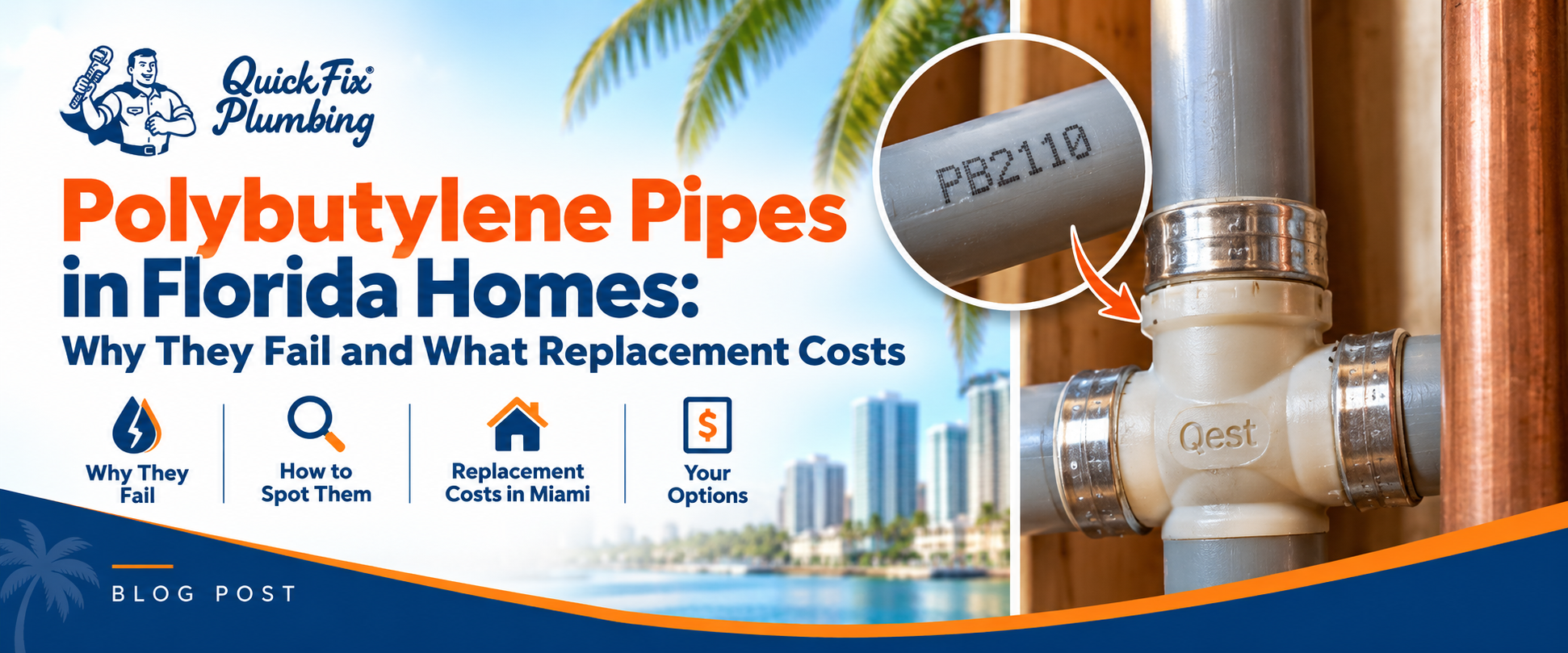
Polybutylene pipes fail because the chlorine in city water slowly attacks the plastic from the inside, making it brittle and flaky until it cracks and leaks, often with no warning. These gray plastic pipes were installed in millions of homes between 1978 and 1995, including many across South Florida. If your home has them, replacement in the Miami area usually runs about $4,000 to $12,000 depending on the size of the house and how the pipes are routed. This guide shows you how to spot polybutylene, why Florida is especially hard on it, what a repipe costs, and why waiting for a leak is the most expensive choice you can make.
What Are Polybutylene Pipes?
Polybutylene is a flexible plastic that was used for water supply lines from the late 1970s into the mid-1990s. Builders liked it because it was cheap, easy to bend, and fast to install compared with copper. For about fifteen years it was the go-to pipe in new construction across the Sun Belt, Florida, very much included.
The problem showed up later. Pipes meant to last fifty years started leaking after ten or fifteen; a major class-action settlement in the 1990s paid out on failed systems, and the material stopped being made for home plumbing. Today no plumber installs it, and most insurers treat a home that still has it as a risk.
Why Do Polybutylene Pipes Fail?
The failure happens from the inside out. Chlorine and chloramine, the disinfectants that cities add to tap water, react with the plastic and break down its structure over time. The pipe wall gets brittle, tiny flakes shed into the water, and micro-cracks spread until the pipe splits or a fitting blows out.
Most of the damage is invisible. The outside can look fine while the inside is crumbling, which is why so many failures seem sudden when the pipe had really been weakening for years.
A few things speed it up. High water pressure stresses an already-weak pipe, which is one reason a water pressure regulator matters so much on older systems. Hot water breaks the plastic down faster than cold, so hot lines tend to go first. And the more chlorine in the supply, the quicker the whole system ages.
How Do I Know If I Have Polybutylene Pipes?
You can often spot polybutylene yourself with a quick look. It’s most commonly gray, though it also comes in blue, black, and off-white. Check where the pipe is exposed, which usually means near the water heater, under sinks, at the main shut-off, and in the garage.
Here's what to look for:
- A dull gray (sometimes blue or black) plastic pipe, usually 1/2 inch to 1 inch wide, with a slightly flexible feel
- The stamp "PB2110" printed along the pipe, the industry code for polybutylene
- Gray or white plastic Qest fittings and metal crimp rings at the joints
- A build date between 1978 and 1995 on the home, which lines up with the years it was installed
Copper is a hard metal, and PEX is a brighter modern plastic, so neither should be confused with the dull gray of polybutylene. A plumber can confirm it in minutes. Keep in mind that much of the poly runs behind walls and under the slab, so what you see at the water heater may be only part of the picture.
Polybutylene vs Modern Pipe: How They Compare
If you’re deciding whether to replace, it helps to see polybutylene next to the materials a plumber would install today:
| Polybutylene | Copper | PEX | |
|---|---|---|---|
| Material | Soft gray plastic | Rigid metal | Flexible modern plastic |
| Typical lifespan | 10-15 years (often less) | 50+ years | 40-50 years |
| Failure risk | High; breaks down from chlorine | Low | Low |
| Insurer view | Often refused or non-renewed | Accepted | Accepted |
| Still installed? | No | Yes | Yes (most common today) |
What Does Polybutylene Pipe Replacement Cost in Florida?
Replacing polybutylene means repiping the home with copper or PEX. In the Miami area, most jobs land between $4,000 and $12,000. A small condo or a two-bedroom house sits at the low end, while a larger single-family home with two stories or a long pipe run sits at the top.
The number of bathrooms and fixtures is the biggest factor, since each one adds pipe and labor. Slab homes, common in South Florida, can cost more because buried pipe is usually rerouted through walls or the attic rather than dug out. Drywall repair is sometimes separate, so ask whether a quote includes patching.
It sounds like a lot until you compare it to a single failure. A burst poly line inside a wall can cause thousands of dollars in water damage in a few hours, and that’s before you count a hidden leak that goes unnoticed for weeks. Planned replacement is almost always cheaper than emergency repair plus restoration.
Why Florida Insurers Care So Much About Polybutylene
Florida’s insurance market is tight, and polybutylene is one of the first things a carrier looks for. Many insurers in the state will not write a new policy on a home that still has it, and some drop coverage or refuse to renew once they find out. Others charge a higher premium to take on the risk.
This matters even if your pipes haven’t leaked. If you’re buying or selling in Miami-Dade or Broward, polybutylene can hold up the sale or force a price cut, because the buyer’s insurance may depend on it being gone. Replacing it isn’t only about avoiding a leak; it’s about keeping your home insurable.
Should You Replace Polybutylene Before It Leaks?
For almost every Florida home, the answer is yes. Polybutylene has no reliable way to be made safe. You can’t tell from the outside how far gone it is; patching one bad spot doesn’t stop the rest of the system from aging, and the damage only moves in one direction.
If your pipes have already leaked once, treat it as a warning for the whole system rather than a one-off repair. A whole-home repipe replaces every weak line at once, so you’re not chasing leak after leak. For a slab home where a line has failed underground, a plumber may also need to handle a slab leak before rerouting the system.
Why Miami Homes Are Especially at Risk
South Florida is hard on polybutylene for reasons that stack up. The region treats its water heavily with chlorine and chloramine to keep it safe in a warm climate, and those are the exact chemicals that break the plastic down. More disinfectant means faster aging.
Heat adds to it. Pipes in Miami attics and garages sit in high temperatures much of the year, and warm surroundings speed the breakdown. Many homes built here during the poly years also sit on concrete slabs, which makes a failed line harder and costlier to reach once it goes.
High municipal pressure in many neighborhoods is the final strain. The same pressure that drives banging pipes and water hammer puts extra stress on brittle poly, and a sudden surge is often what finally splits it. When that happens inside a wall, it turns into an emergency plumbing call in a hurry.
Frequently Asked Questions
How do I know if I have polybutylene pipes?
Look for dull gray (sometimes blue or black) flexible plastic pipe near the water heater, under sinks, and at the main shut-off, often stamped “PB2110.” A home built between 1978 and 1995 in Florida is a strong sign. A plumber can confirm it in minutes.
How much does it cost to replace polybutylene pipes in Florida?
Most Miami-area repipes run $4,000 to $12,000. Smaller homes and condos are at the low end, and larger two-story homes are at the high end. The number of bathrooms, the pipe routing, and whether drywall repair is included all affect the price.
Are polybutylene pipes still dangerous if they haven't leaked?
Yes. The plastic breaks down from the inside, so a pipe can look fine on the outside while it’s close to failing. Most poly systems leak well before their expected lifespan, so a leak-free pipe today is not a safe one.
Will my Florida home insurance cover polybutylene pipes?
Often not. Many Florida insurers won’t write or renew a policy on a home with polybutylene, and some charge more or exclude related claims. Replacing it usually makes a home easier to insure and to sell.
How long does a repipe take?
Most single-family homes can be repiped in a few days. Modern methods route new pipe through walls and attics with minimal cutting, so the disruption is far smaller than people expect.
Don't Wait for the First Leak
Polybutylene pipes fail quietly, and in South Florida the chlorine, heat, and pressure all push them toward that failure faster. If your home was built between 1978 and 1995 and you can find gray plastic pipe at the water heater, it’s worth having the whole system checked. Replacing it protects your home from water damage, keeps it insurable, and takes a known risk off the table. The team at QuickFix Plumbing inspects and repipes homes across Miami-Dade and Broward, including full water line replacement, with honest pricing and no scare tactics.
