
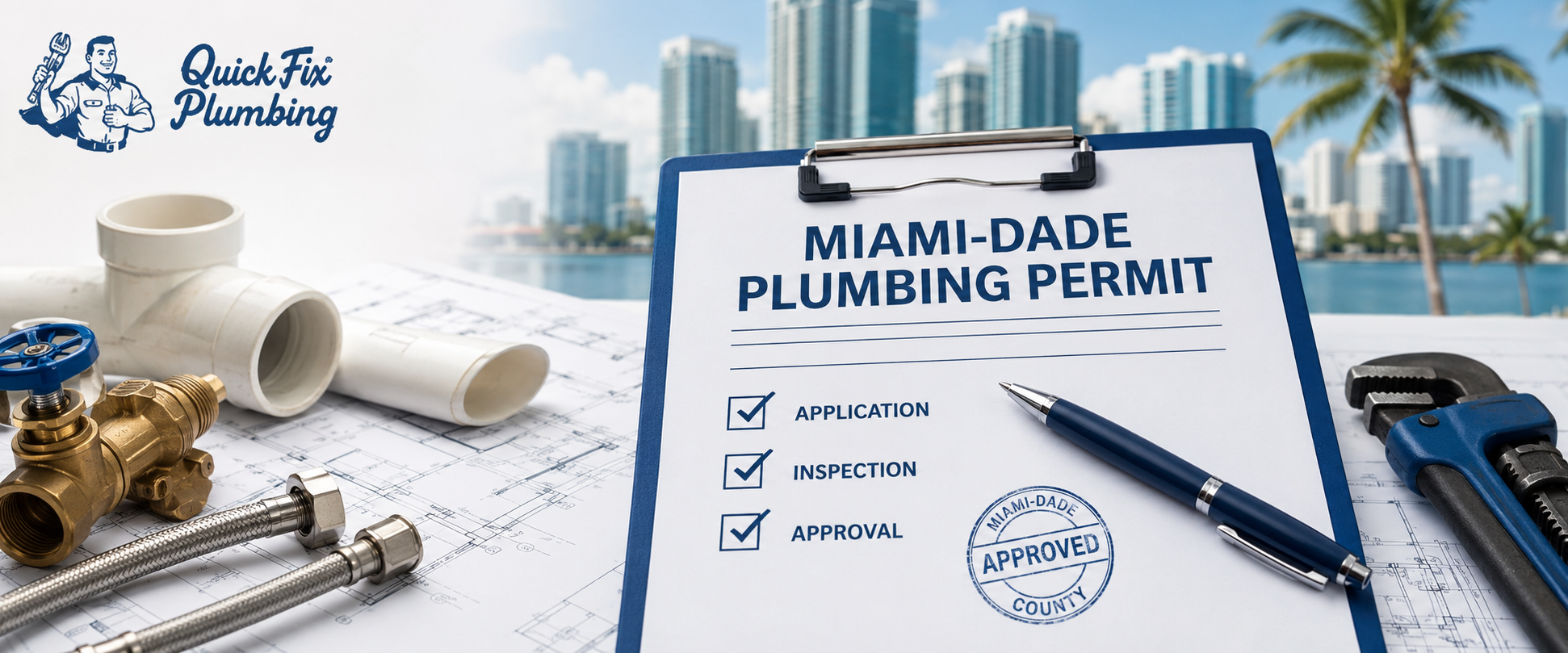
Why Does Miami-Dade Require Plumbing Permits?
Permits exist to confirm that plumbing work meets Florida building code and won’t create safety or health hazards down the line. An inspector reviews the work to catch problems before they’re sealed behind walls or under a slab.
- Protects against improperly installed systems that could lead to leaks, backups, or contamination.
- Confirms work was done by a licensed, insured contractor.
- Creates an official record for future buyers, inspectors, or insurance claims.
- Helps ensure new work integrates safely with existing plumbing and sewer connections.
Which Plumbing Projects Require a Permit in Miami-Dade?
Most significant plumbing changes require a permit, while minor repairs generally don’t. The general rule of thumb is that if the work changes the structure of your plumbing system, it likely needs one.
- Water heater replacement, including both tank and tankless installations.
- Whole or partial repiping, whether switching materials or replacing damaged sections.
- Sewer line repair or replacement, including excavation work.
- New fixture installations, like adding a bathroom or relocating a kitchen sink.
- Water service line replacement connecting your home to the municipal supply.
- Backflow preventer installation, often required alongside other permitted work. Many backflow prevention Miami projects also require permitting and inspection to ensure the device meets local code requirements.
Which Plumbing Projects Usually Don't Require a Permit?
Routine maintenance and small repairs are generally exempt, since they don’t alter the structure of your plumbing system. Still, it’s worth confirming with your local building department if you’re ever unsure.
- Fixing a leaky faucet or replacing a faucet cartridge.
- Clearing a clogged drain or running a camera inspection.
- Replacing a toilet with a like-for-like model in the same location.
- Minor caulking, gasket, or seal replacements.
- Snaking a line or performing routine drain cleaning. Likewise, routine grease trap cleaning in restaurants Miami services are generally considered maintenance rather than plumbing alterations, though repairs or replacements to the grease trap system may require a permit.
How Do You Get a Plumbing Permit in Miami-Dade?
The permitting process varies slightly by municipality within Miami-Dade County, but the general steps are consistent across most jurisdictions. Working with a licensed plumber in Miami-Dade who regularly pulls permits can make this process considerably smoother.
- Submit an application through your city or county's building department, either online or in person.
- Provide project details, including scope of work, materials, and sometimes a site plan.
- Pay the permit fee, which varies based on project size and municipality.
- Schedule inspections, often both a rough-in inspection and a final inspection.
- Receive final approval, which closes out the permit once the work passes inspection.
Who Is Responsible for Pulling the Permit?
In most cases, the licensed contractor performing the work pulls the permit on the homeowner’s behalf, since permits are typically tied to a contractor’s license. This is one of the reasons hiring an expert plumber in Brickell, Miami, matters beyond just the quality of the work itself.
- Licensed plumbers are authorized to pull permits under their contractor license.
- Homeowners can sometimes pull owner-builder permits, though this comes with added liability.
- Using an unlicensed contractor for permitted work can void the permit process entirely.
- A reputable plumbing company will handle the permit as part of the project scope.
What Happens If You Skip a Required Permit?
Unpermitted plumbing work can create real problems down the line, even if the work itself was done correctly. This is especially relevant if you plan to sell your home in the future.
- Failed home inspections during a future sale, since unpermitted work often gets flagged.
- Insurance complications if damage occurs and the work is later found to be unpermitted.
- Fines or forced removal of the work if discovered by the county.
- Difficulty proving code compliance without an inspection record on file.
How Long Does the Permitting Process Take?
Timelines vary depending on the municipality, project complexity, and current permit office workload. Planning ahead for this timeline helps avoid delays on larger projects.
- Simple permits, like a straightforward water heater swap, can sometimes be approved within a few days.
- Larger projects, like a whole-house repipe or sewer line replacement, may take longer for both approval and scheduling inspections.
- Peak seasons or high permit volume in Miami-Dade can extend typical processing times.
- Working with a contractor experienced in local permitting tends to keep the process moving efficiently.
Do Permit Requirements Differ Across Miami-Dade Cities?
Miami-Dade County includes numerous municipalities, each with its own building department and, occasionally, slightly different procedures or fee structures. This is one of the more confusing parts of the process for homeowners handling it themselves.
- Cities like Miami, Coral Gables, and Palmetto Bay each maintain their own permitting offices.
- Fee schedules and processing times can vary noticeably between municipalities.
- Some cities offer online permit tracking, while others require in-person submission.
- A local, experienced plumbing company will already be familiar with your specific municipality's process.
When Should You Loop In a Professional Plumber?
Navigating permits alongside the actual plumbing work is easier with a licensed professional managing both. This is especially true for larger projects where multiple inspections are involved.
- You're unsure whether your specific project requires a permit.
- You're planning a significant project like repiping, sewer line repair, or a water heater replacement.
- You want to avoid delays caused by permit application errors or missing documentation.
- You're preparing to sell your home and want to confirm past work was properly permitted.
Our licensed technicians handle the permitting process as part of major projects, so homeowners across Miami-Dade don’t have to navigate city building departments on their own.
Frequently Asked Questions
Do I need a permit to replace my water heater?
Yes, water heater replacement typically requires a permit in Miami-Dade, regardless of whether it’s a tank or tankless system.
Can I pull my own plumbing permit as a homeowner?
In some cases, yes, through an owner-builder permit, though this shifts liability and responsibility for code compliance onto you directly.
How much does a plumbing permit cost in Miami-Dade?
Fees vary by municipality and project scope, so it’s best to check with your specific city’s building department or ask your contractor for an estimate.
What happens during a plumbing inspection?
An inspector reviews the completed or in-progress work against code requirements, checking things like pipe sizing, venting, and proper installation before granting approval.
Conclusion
Understanding plumbing permits Miami-Dade requirements help you avoid delays, fines, and costly corrections. Whether you’re replacing a water heater, repiping your home, or repairing a sewer line, obtaining the proper permit ensures your project meets local building codes. Working with a licensed plumber simplifies the process and helps protect your property, investment, and long-term peace of mind.
Need Help with Plumbing Permits in Miami-Dade?
Planning a plumbing project? Our experienced team handles both the plumbing work and the permitting process from start to finish. Whether you need a licensed plumber, a commercial plumber in Miami, we’ll help ensure your project meets local code requirements and passes inspection without unnecessary delays. Contact us today to schedule your service.
