
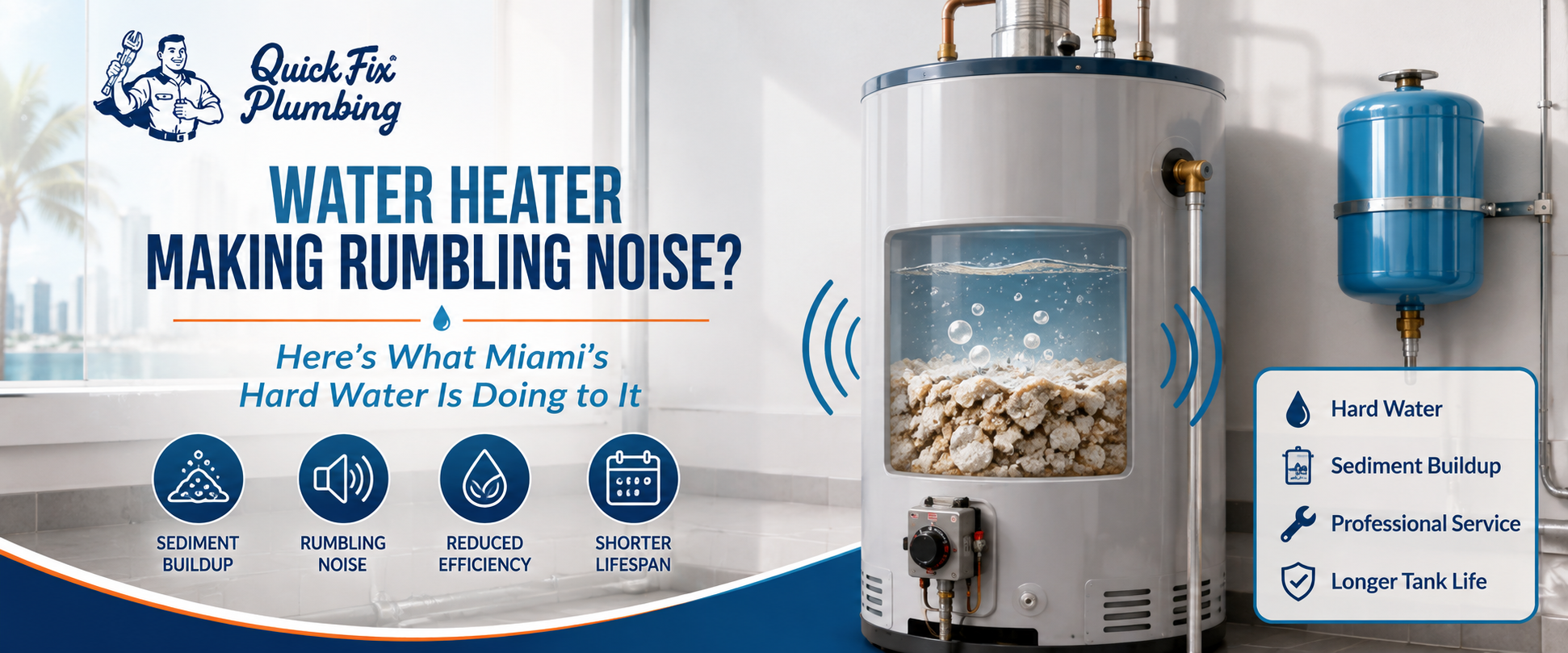
A rumbling or popping noise from your water heater is almost always caused by mineral sediment building up at the bottom of the tank, and Miami’s naturally hard water makes this happen faster than in many other regions. As water heats, it escapes through pockets in that sediment layer, creating the rumbling or crackling sound many homeowners describe. Below, we’ll explain exactly why this happens, what it means for your water heater’s lifespan, and when the noise signals it’s time to call a professional.
Left unaddressed, sediment buildup can reduce efficiency, shorten your water heater’s lifespan, and eventually lead to costly water heater repair in Miami.
What's Actually Causing the Rumbling Sound?
If your water heater is making a rumbling noise, it comes from water trapped underneath a layer of hardened sediment at the bottom of the tank. As the burner or heating element heats the water, steam bubbles form and try to escape through that sediment layer, creating the sound.
- Sediment layer: Minerals from hard water settle and harden at the tank's base over time.
- Trapped water: Water beneath the sediment heats faster than water above it.
- Steam bubbles: These bubbles push through the sediment, causing the popping or rumbling sound.
- Increased heating time: The tank works harder to heat water through the insulating sediment layer.
Why Does Miami's Hard Water Make This Worse?
South Florida’s water supply carries higher mineral content, primarily calcium and magnesium, than many other parts of the country. This mineral-rich water is exactly what accelerates sediment buildup inside a water heater tank.
- Miami-Dade's water is classified as moderately to significantly hard in most areas.
- Higher mineral content means faster sediment accumulation compared to soft water regions.
- Homes without a water softener tend to see buildup happen noticeably sooner.
- Older water heaters without regular flushing are especially vulnerable to accelerated sediment layers.
Is a Rumbling Water Heater Dangerous?
A rumbling noise on its own usually isn’t an immediate emergency, but ignoring it allows the underlying problem to get worse. Left unchecked, sediment buildup can lead to more serious issues over time.
- Reduced efficiency: The tank uses more energy to heat water through the sediment layer.
- Shortened lifespan: Sediment buildup is one of the leading causes of premature water heater failure.
- Overheating risk: In severe cases, trapped water can create excess pressure or stress on the tank.
- Tank damage: Prolonged sediment buildup can lead to small cracks or weak points in the tank lining.
What Other Noises Should You Watch For?
Rumbling isn’t the only sound sediment buildup can cause, and different noises sometimes point to slightly different stages of the problem. Paying attention to the specific sound can help a technician diagnose the issue faster.
- Popping or crackling: Early to moderate sediment buildup, the most common early sign.
- Rumbling or banging: More significant buildup, especially in gas water heaters.
- Hissing: Can indicate a leak or pressure issue separate from sediment.
- Ticking as the tank cools: Often normal, related to metal expansion and contraction, though worth mentioning to a technician if paired with other symptoms.
Can You Flush Sediment Out Yourself?
Some homeowners attempt a basic flush themselves, and it can help with early-stage sediment buildup. However, tanks that have gone years without flushing often need a more thorough professional approach.
- Turn off power (electric) or the gas supply (gas units) before starting.
- Connect a hose to the drain valve and run water into a safe drainage area.
- Flush until the water runs clear, which can take longer in heavily built-up tanks.
- If sediment is heavily hardened, a standard flush may not fully clear it, and professional descaling may be needed.
Does This Affect Gas and Electric Water Heaters Differently?
Both gas and electric water heaters can develop sediment-related noise, but the sound and underlying mechanics differ slightly between the two. Gas units in particular tend to produce a more noticeable rumbling sound.
- Gas water heaters: The burner heats from below, directly beneath the sediment layer, often producing a louder rumbling sound.
- Electric water heaters: Heating elements sit inside the tank and can become coated in sediment themselves, sometimes causing a different, more subtle noise.
- Repair approach: A gas water heater repair in Miami visit typically includes checking both the burner assembly and sediment levels together, since the two are often related.
- Element replacement: Electric units may need element replacement if sediment coating has caused damage over time
Could the Noise Be Related to Anything Else in the System?
Sediment is the most common cause, but a rumbling water heater is a good reason to have the surrounding system checked as well. Related components sometimes show early wear around the same time.
- A water heater expansion tank should be checked during the same visit, since pressure issues can sometimes accompany sediment-related symptoms.
- Water pressure fluctuations can occur alongside sediment buildup, particularly in older systems.
- If you also notice unrelated symptoms nearby, like a hidden water leak behind wall surfaces close to the water heater closet, mention it to your technician so both issues can be assessed together.
How Often Should You Flush Your Water Heater in Miami?
Given Miami’s harder water, flushing more frequently than the general national recommendation helps keep sediment buildup manageable. Staying ahead of it is far easier than dealing with years of accumulated buildup at once.
- Most manufacturers recommend flushing once a year under average conditions.
- Miami homeowners often benefit from flushing every 6–9 months given local water hardness.
- Homes with a water softener installed can typically stretch closer to the standard annual interval.
- Tankless units also benefit from regular descaling, though the process differs from tank flushing.
When Should You Call a Plumber Instead of Handling It Yourself?
A rumbling noise is a good early warning sign, but certain situations call for professional attention rather than a DIY flush. Catching these signs early usually means a simpler, less expensive fix.
- The noise is loud, sudden, or accompanied by leaking around the tank base.
- A basic flush doesn't reduce or eliminate the sound.
- Your water heater is more than 8–10 years old and has never been professionally serviced.
- You notice reduced hot water output alongside the noise.
If you’re searching for a plumber in Doral, FL, our technicians can help inspect and diagnose the exact cause and let you know whether a repair or replacement makes more sense for your unit’s age.
Frequently Asked Questions
Is a rumbling water heater an emergency?
Not usually, but it shouldn’t be ignored for long, since the underlying sediment buildup continues to reduce efficiency and shorten the tank’s lifespan over time.
Can flushing fix the rumbling noise completely?
Often yes, especially if caught early. Tanks with years of hardened sediment sometimes need professional descaling for a full fix.
How do I know if it's time to replace my water heater instead of repairing it?
If your unit is near or past its expected lifespan and showing multiple symptoms, like reduced hot water and rumbling noise together, replacement is often more cost-effective than repeated repairs.
Does a water softener prevent this from happening?
A water softener significantly slows mineral buildup, which can meaningfully extend the time between required flushes in hard water areas like Miami.
Conclusion
A water heater making a rumbling noise is usually an early warning that sediment has built up inside the tank, especially in Miami’s hard water conditions. Addressing the problem early with routine flushing or professional service can improve efficiency, extend your water heater’s lifespan, and help you avoid more expensive repairs or unexpected breakdowns later.
Don't Ignore That Rumbling Water Heater
If your water heater is making unusual noises, our experienced plumbers can identify the cause and recommend the most cost-effective solution. Whether your unit needs a professional flush, repair, or replacement, we’re here to help restore reliable hot water before a small issue turns into a major repair. Schedule your inspection today with Quick Fix Plumbing.
